


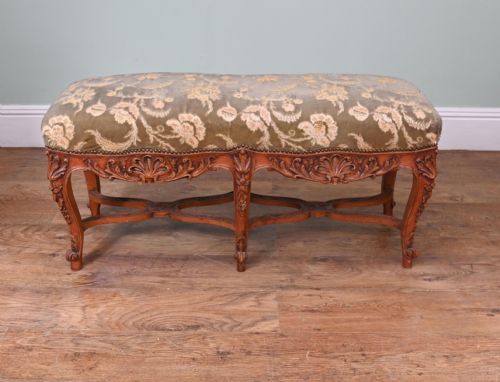

French Padded Bench
A french padded bench brings upholstered comfort and carved timber elegance into a hallway or bedroom.
French Padded Bench
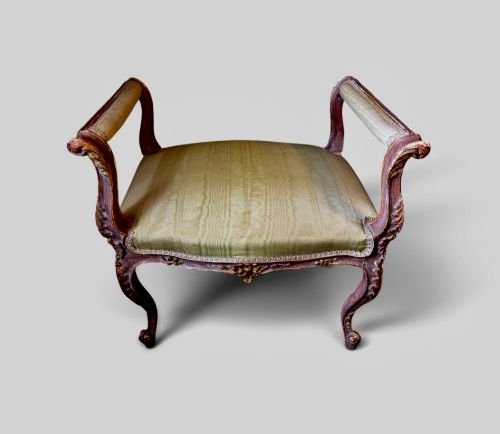
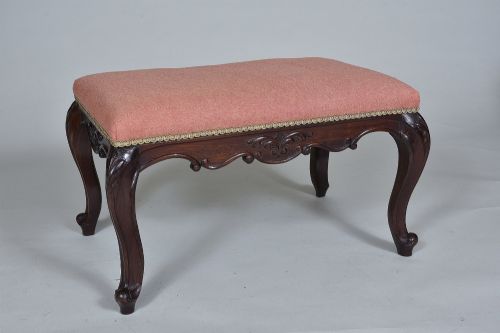
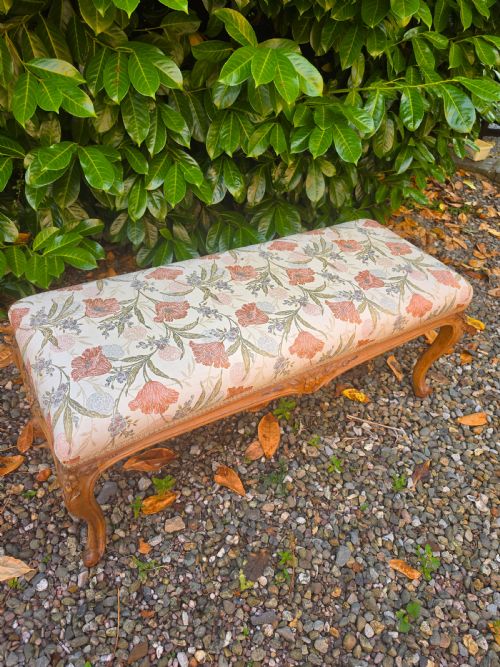
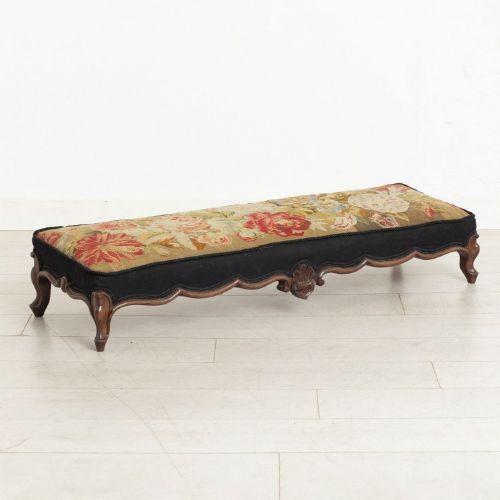
When you search for a french padded bench, you encounter seating built across the nineteenth and early twentieth centuries, spanning periods from Victorian to Swedish Empire and Rococo Revival. The forms on this page include window seats, footstools, ottomans, hall seats, and smaller settees designed for domestic interiors.
The most common version met here is the nineteenth century carved walnut or giltwood stool featuring cabriole legs and textile upholstery. These pieces function equally well as low footstools or as long benches positioned beneath windows and at the foot of beds.
How they were made
Makers shaped these frames from solid hardwoods like walnut, mahogany, and oak, alongside softwood timber prepared for gilding or paint finishes. Carvers worked timber by hand to produce detailed flourishes, cabriole legs, and parcel gilt highlights.
Upholsterers applied fabric, velvet, and textile coverings over padded foundations, occasionally retaining original materials. Brass accents and painted details completed the ornamentation of these seating forms.
Listings feature walnut, mahogany, oak, giltwood, and painted wood, paired with velvet, fabric, and textile upholstery across nineteenth and early twentieth century periods.
What varies in quality
The standard of carving distinguishes fine examples from simpler production, with deep hand-carving on walnut and giltwood frames representing the upper tier. Crisp execution of revival styles, such as Louis XV or French Rococo, separates ambitious workshop output from standard commercial seating.
The integrity of the frame construction and the preservation of original parcel gilding or paint finishes determine the merit of an individual bench. Pieces retaining their original fabric and solid timber joints command stronger interest from buyers seeking period authenticity.
The French Padded Bench Glossary
- Giltwood
- Timber treated with gold leaf or gilt preparation. This finish appears frequently on nineteenth century window seats and revival frames.
- Cabriole leg
- A furniture leg that curves outward and then tapers inward, finishing in a pad or scroll foot. This form is characteristic of walnut and mahogany stools on this page.
- Window seat
- An elongated upholstered stool designed to sit beneath a window recess. These forms often feature carved wooden frames and padded tops.
- Parcel gilt
- A decorative technique where only specific portions of a carved wooden surface receive gold leaf. This creates contrast against painted or exposed walnut timbers.
- Revival
- A design movement drawing inspiration from historical French periods such as Louis XIV or Rococo. Makers in the nineteenth century reinterpreted these earlier aesthetics for contemporary homes.
French Padded Bench: Frequently Asked Questions
Where should I place a french padded bench?
These benches sit comfortably at the end of a bed, beneath a window, or along a hallway wall.
Their modest proportions allow them to function as extra seating or as low footstools in living spaces.
How do I identify a nineteenth century piece?
Examine the timber framing for hand-carved details, traditional joinery, and patination consistent with nineteenth century workshop practices.
Revival styles and specific woods like walnut and mahogany help indicate the manufacturing era.
Are the fabrics original on these benches?
Some pieces retain original upholstery fabrics, while others have been recovered during their working life to suit newer interiors.
Inspect the textile attachment methods and wear patterns to gauge whether the covering dates to the period of the frame.
What is the difference between a stool and a settee?
Stools provide backless seating designed for placement at the foot of a bed or beneath a window.
Settees and window seats incorporate backrests or arm supports, offering more structured seating for a hallway or room.