
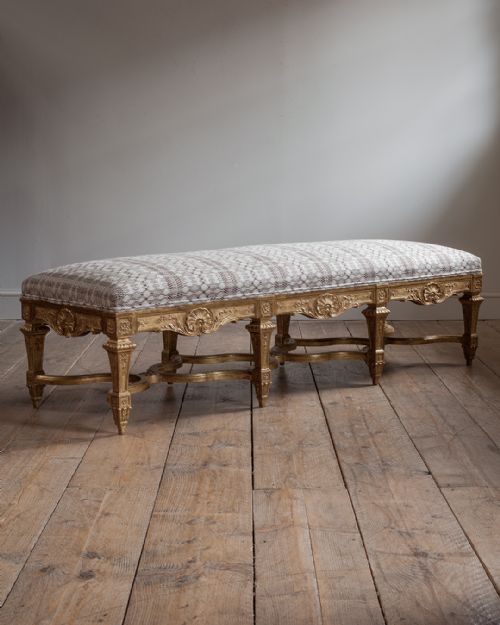
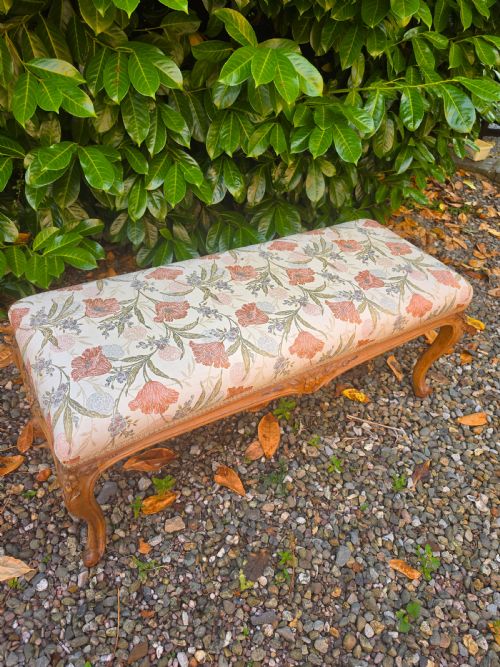
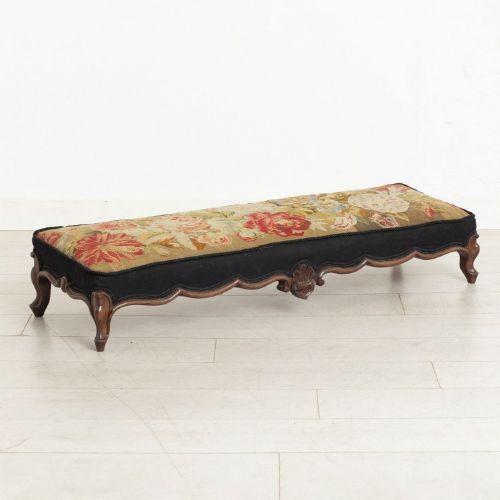


French Style Long Stool
These french style long stool pieces bring antique seating into a room, offering low profiles and traditional craftsmanship.
French Style Long Stool
A french style long stool covers low seating forms including benches, footstools, and window seats originating across the nineteenth and early twentieth centuries. The selection on this page centres primarily on Victorian and twentieth-century examples, spanning walnut, mahogany, and painted wood.
Makers shaped these forms with cabriole legs and extensive carved detailing, drawing heavily on Louis XIV, Louis XV, and Régence revivals. Buyers encounter everything from compact footstools to large three-seater upholstered benches suited for domestic placement.
Materials and construction
Carpenters utilised solid hardwoods such as walnut, mahogany, and timber for the structural frames, often finishing surfaces with paint, gilding, or giltwood. Carvers shaped cabriole legs and decorative flourishes directly into the wood.
Upholstery techniques incorporated fabric, textile, and tapestry, sometimes retaining original fabric coverings alongside structured padding to support the long seat forms.
Listings feature periods spanning from the nineteenth century through the 1930s, utilising walnut, mahogany, and painted timber.
Judging quality in these pieces
Quality rests in the depth and crispness of the wood carving, distinguishing standard turned supports from elaborately shaped cabriole legs and carved rails. The choice of primary material also marks a difference, with giltwood and walnut finishes indicating finer production than plain painted timber.
The integrity of the frame construction and the preservation of original upholstery or textiles elevate specific pieces above standard utilitarian seating.
The French Style Long Stool Glossary
- Cabriole leg
- A furniture leg that curves out and tapers inward, mimicking an animal's curving leg. This form appears frequently on eighteenth-century revival seating.
- Giltwood
- Wood that has been treated with gold leaf or a gold-coloured finish. It provides a bright decorative surface on revival frames.
- Window seat
- A long stool or bench designed specifically for placement beneath a window. These forms often double as low coffee or magazine tables.
French Style Long Stool: Frequently Asked Questions
What are french style long stool pieces used for?
These long stools serve as low seating options, footstools, or occasional benches in living spaces and bedrooms. Some larger variants also function as window seats or low coffee tables.
Their elongated proportions allow multiple people to sit, or provide an extended surface for resting feet alongside traditional armchairs and sofas.
How do I date a french style long stool?
Dating relies on examining the timber species, joinery methods, and the specific revival style employed by the maker. Nineteenth-century examples often display Victorian proportions or Louis XIV and XV revival carving.
Later pieces from the early twentieth century adopt similar decorative vocabulary but utilise twentieth-century timber preparation and framing techniques.
Are these stools comfortable for daily seating?
Many of these pieces feature upholstered tops covered in fabric, textile, or tapestry designed to provide firm support. The level of comfort depends on the padding material and whether the upholstery is original or restored.
Low profiles make them suitable for pairing with low chairs or positioning at the foot of a bed.
How do I maintain the wood and fabric?
Maintenance involves dusting timber frames regularly and keeping giltwood or painted surfaces away from direct sunlight. Fabric and tapestry require gentle vacuuming to protect the textile fibres.
Harsh chemical cleaners should be avoided to preserve the integrity of both the polished wood and the original upholstery.