
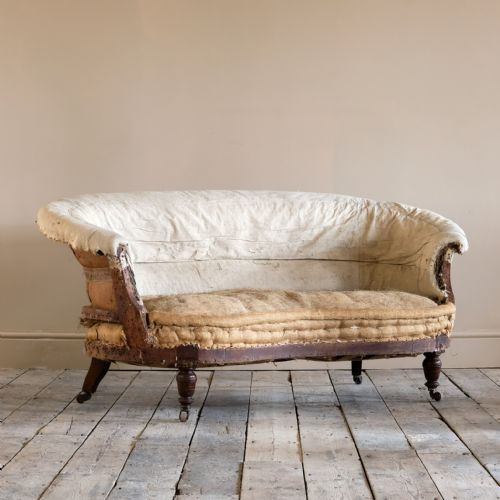


Vintage Two Seater
A vintage two seater delivers compact comfort, bringing together period craftsmanship and intimate proportions for smaller rooms.
Vintage Two Seater
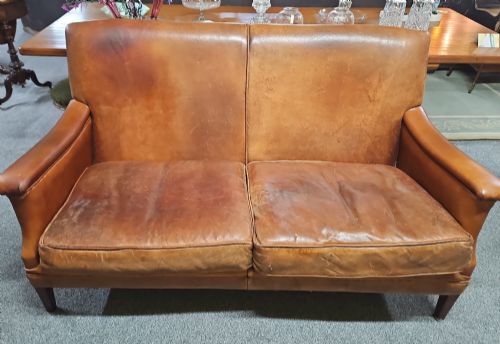
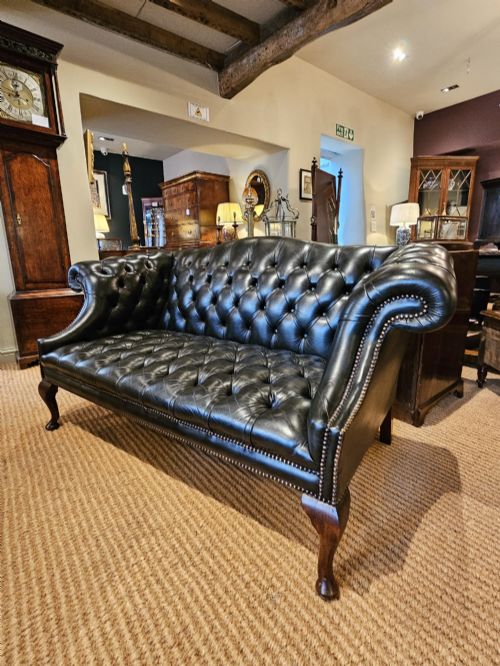
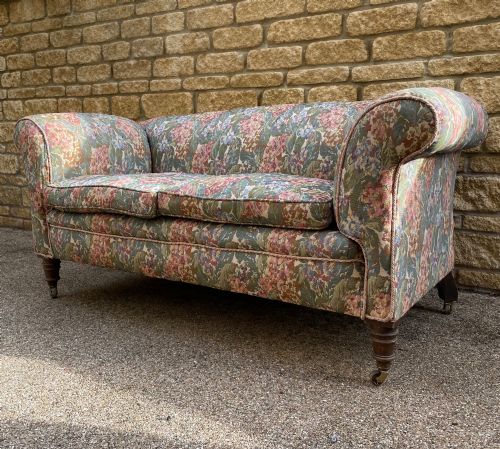
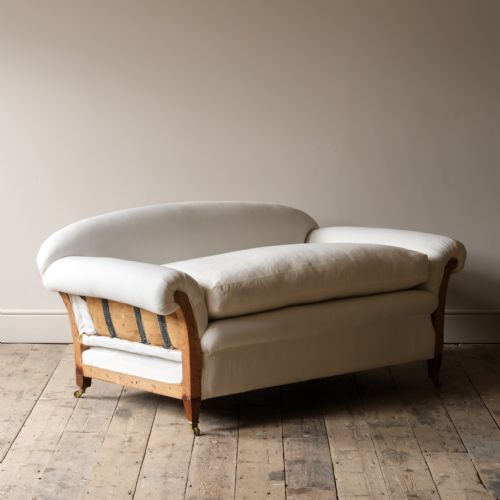
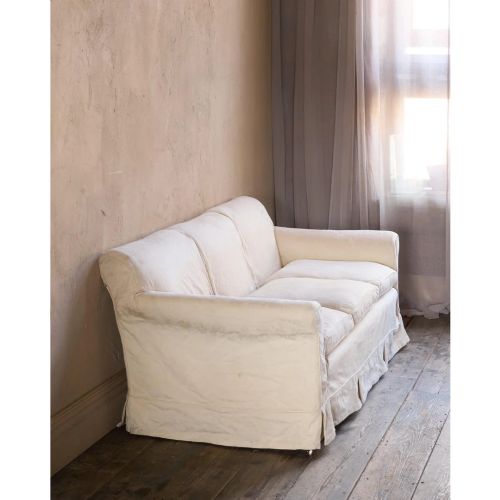
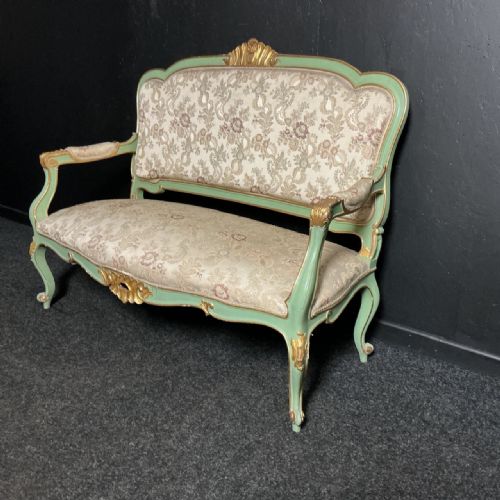
A vintage two seater spans compact sofas, settees, and garden benches from the Victorian, Edwardian, and early twentieth century periods. These pieces range from deep-seated English country house designs upholstered in leather to French giltwood and painted frames in Louis styles.
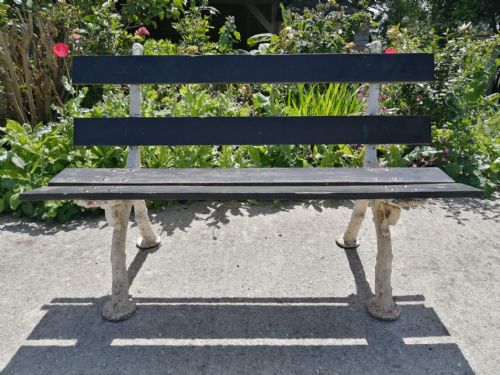
The selections on this page most frequently include Edwardian and nineteenth-century settees alongside walnut and mahogany framed seating. Buyers also encounter painted canework couches, drop-arm variants, and outdoor faux bois garden benches.
Originating from domestic drawing rooms, conservatories, and country houses, these smaller seats provide dual capacity without overwhelming limited floor space. Their forms bridge formal period reception furniture and relaxed daily seating.
How they were made
Frames rely on dense timbers such as walnut and mahogany, alongside gilded or painted hardwoods, supporting traditional upholstery fabric, velvet, and leather. Cabinet makers shaped structural supports through turned legs, carved woodwork, and cane panelling.
Surface treatments combine hand-applied gilding, painted finishes, and polished wood grains paired with button-backed or sprung upholstery systems. Metal elements appear in brass details and cast iron garden structures.
A tiny carved end-of-bed sofa proves that even Victorian rooms required miniature lounging spots for weary ankles.
What varies in quality
Construction integrity distinguishes workshop-built frames from simpler production pieces, seen in the depth of wood carving and the rigidity of the joined frame. Superior examples maintain stable joinery in the arms and legs despite decades of use.
The refinement of materials sets apart finer items, evident in the choice of supple leather, dense hardwoods like walnut, and hand-woven cane work. Original surface patination and preserved gilt details also separate standard examples from notable ones.
Hampton and Sons·Howard and Sons·Thonet·Coalbrookdale
The Vintage Two Seater Glossary
- Corbeille
- A French style of chair or sofa featuring a rounded, basket-like back that curves continuously into the armrests. This enclosed form offers a particularly snug seating position.
- Giltwood
- Timber treated with a thin layer of gold leaf or gilt finish. It appears frequently on decorative nineteenth-century French frames.
- Bergere
- An enclosed armchair or settee with upholstered sides and a exposed wooden frame. The back and sides often incorporate cane work or full upholstery.
- Faux bois
- An artistic imitation of wood grain applied to hard materials like cast iron or concrete. This technique was popular for nineteenth-century garden benches such as those by Coalbrookdale.
- Drop-arm
- A sofa mechanism allowing one or both armrests to lower into a horizontal position. This adjustment transforms a compact seat into a daybed.
Vintage Two Seater: Frequently Asked Questions
Where did people place these small sofas?
These compact seats suited smaller reception rooms, bedrooms as end-of-bed furniture, and drawing rooms where full-scale couches took up too much space. Window seats and parlours also accommodated their restricted dimensions.
Conservatories and garden spaces housed lighter wicker and metal variations. Their modest footprint allowed for flexible placement across domestic interiors.
How do I identify an Edwardian settee?
Edwardian seating typically exhibits lighter proportions than heavy Victorian pieces, often utilising mahogany or inlaid walnut frames. Design influences frequently draw on eighteenth-century revivals like Queen Anne styles.
These pieces tend to feature cleaner lines, tapered or turned legs, and refined upholstery treatments suited to early twentieth-century drawing rooms.
What is a conversation seat?
A conversation seat is a specialised multi-directional piece designed so two occupants can sit facing opposite directions while maintaining proximity. These arrangements encouraged intimate dialogue in Victorian drawing rooms.
Their shared central upholstered backrest allowed face-to-face interaction without awkward posture.
How do I care for leather upholstery?
Leather surfaces require regular dusting with a soft, dry cloth to prevent particulate accumulation. Conditioning treatments help maintain the suppleness of older hides.
Keeping these pieces away from direct sunlight and heat sources prevents the material from drying out and cracking over time.