

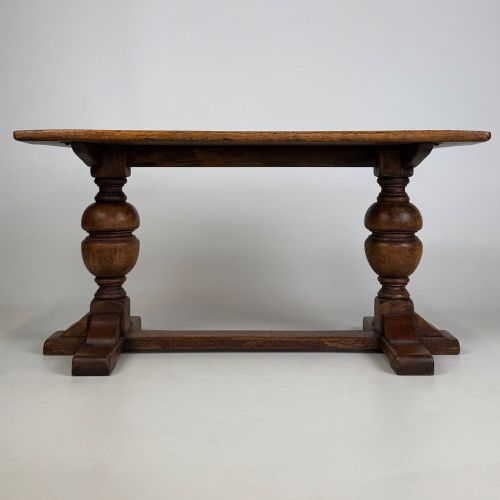
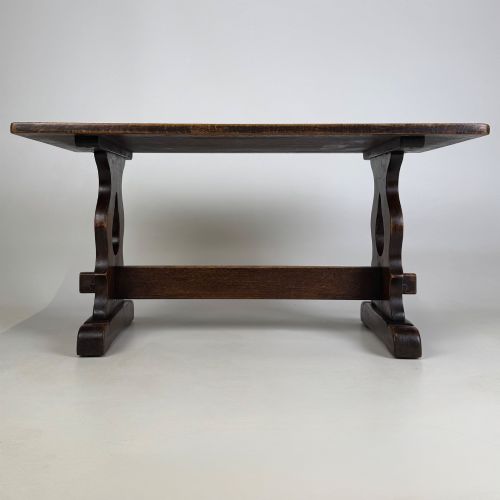


Vintage Trestle Low Table
These vintage trestle low table pieces combine sturdy timber framework with low surfaces, offering practical character for modern sitting rooms.
Vintage Trestle Low Table
A vintage trestle low table brings together centuries of furniture design traditions, spanning from the nineteenth century through the Edwardian era and into the nineteen thirties. These items often adapt traditional formats like coffee tables, benches, and village tables into low formats suited for contemporary living spaces.
The selections on this page draw from diverse stylistic traditions, including rustic farmhouse, Jacobean revival, Arts and Crafts, and French country aesthetics. Most pieces you meet here utilise solid timber construction with characteristic low proportions designed for placement before seating.
Origins and periods vary widely across the selection, ranging from English regional oak and elm examples to French sycamore and Burmese teak village tables. Buyers searching for a vintage trestle low table will encounter both purpose-built low coffee tables and adapted forms derived from longer benches and dining tables.
How these timbers and finishes were shaped
Makers relied on substantial native and imported hardwoods like oak, mahogany, walnut, elm, sycamore, pine, and teak to construct these pieces. Carpenters joined these durable timbers using traditional jointing methods suitable for supporting weight across low spans.
Surfaces frequently show the natural grain of the wood, sometimes enhanced with scrubbed finishes, paint, or carved detailing in styles such as Regency revival and rustic country. Brass fittings and marble tops appear on select examples from the Victorian period, adding contrasting textures to the woodwork.
Vintage Trestle Low Table Retail Price Guide 2026
Typical asking prices for vintage trestle low table among the pieces listed under this phrase on Sellingantiques today, from the lower quarter to the upper quarter. They describe what is for sale here now, not the wider market.
Several items began life as agricultural pig benches before finding retirement as respectable drawing room coffee tables.
What separates the finest examples
Quality in these pieces rests upon the selection of timber and the integrity of the original construction rather than surface embellishment alone. Dense hardwoods like walnut and oak, handled with skillful carving and balanced proportions, mark out the superior specimens.
The distinction between a standard piece and a finer one often lies in the harmony of the timber selection and the restraint of decorative carving. Untouched patination accumulated over decades of use also separates pieces that retain their original character from heavily restored alternatives.
The Vintage Trestle Low Table Glossary
- Trestle table
- A table structure consisting of two or more supports carrying a horizontal top. This form allows for sturdy support without traditional corner legs.
- Pig bench
- A low wooden bench historically used in agricultural settings, often constructed from heavy timbers like elm or pine. These forms are frequently repurposed as low coffee tables today.
- Gateleg table
- A table with hinged legs that swing out to support folding leaves. Smaller variations of this form appear in low table formats.
- Scrubbed finish
- A surface treatment achieved by repeated washing and scrubbing of softwood or hardwood. This process leaves a clean, pale timber texture often seen on French country tables.
- Patina
- The surface sheen and colour acquired by materials through age, wear, and polishing. A rich patina indicates long use and proper care.
Vintage Trestle Low Table: Frequently Asked Questions
What is a vintage trestle low table used for?
These pieces serve primarily as low coffee tables or central display surfaces in sitting rooms and living spaces. Their sturdy frames provide stable surfaces for everyday items while adding historic character to a room.
Because they originate from various utilitarian forms like benches and village tables, they bring unusual proportions and varied timber tones to interior schemes.
How do I care for antique timber tables?
Maintain wooden surfaces by dusting regularly with a soft, dry cloth and avoiding excessive moisture. Keep timber away from direct heat sources and strong sunlight to prevent warping and drying of the grain.
Apply traditional beeswax occasionally to nourish the wood and preserve the natural patina without sealing the surface beneath a heavy artificial shine.
How can I tell the period of a low table?
Dating relies on observing the timber species, tool marks, construction methods, and stylistic details typical of specific eras like the Edwardian period or the nineteenth century. Revival styles often borrow motifs from earlier centuries while retaining construction techniques of their own time.
Examining the underside and joints often reveals clues about how the piece was assembled and whether elements have been altered or reduced in height.
Are these tables suitable for daily use?
Solid hardwood construction makes these pieces exceptionally durable for daily family life and general household use. Their sturdy trestle frames and dense timbers like oak, walnut, and teak withstand regular placement of everyday objects.
Their low heights make them particularly practical in front of sofas and low seating arrangements where stability and accessibility matter.