




Vintage Tobacco Cabinet
These vintage tobacco cabinets are purposeful receptacles for smoking gear, offering secure storage and handsome joinery for the serious collector.
Vintage Tobacco Cabinet
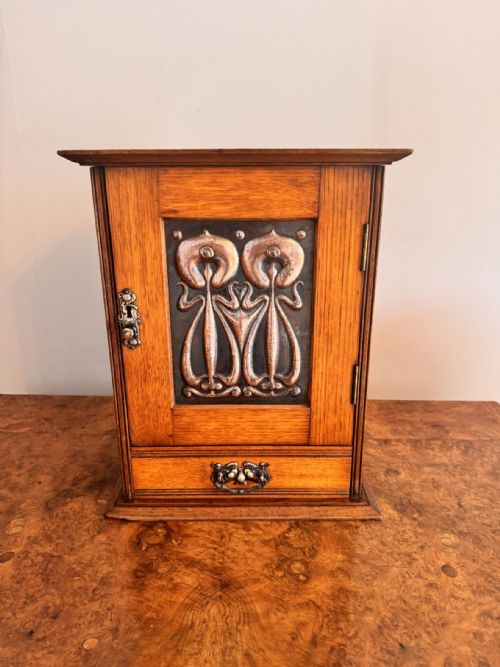
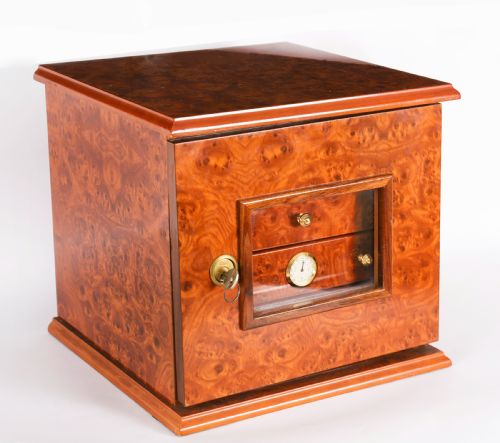
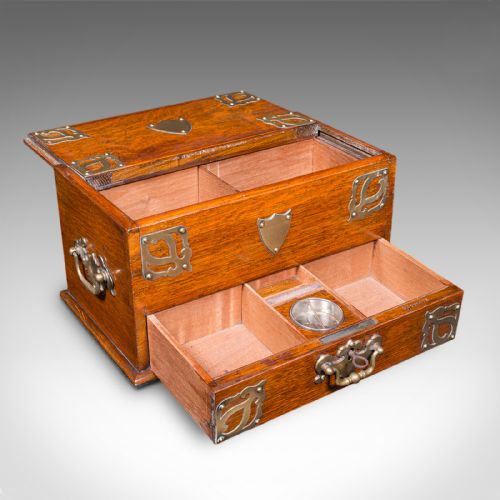
When you search for a vintage tobacco cabinet, you encounter sturdy wooden containers designed to hold cigars, pipes, and smoking accessories securely. The examples on this page span from the late nineteenth century through the Edwardian period and into the twentieth century, taking forms such as table top boxes, wall cabinets, and humidor chests.
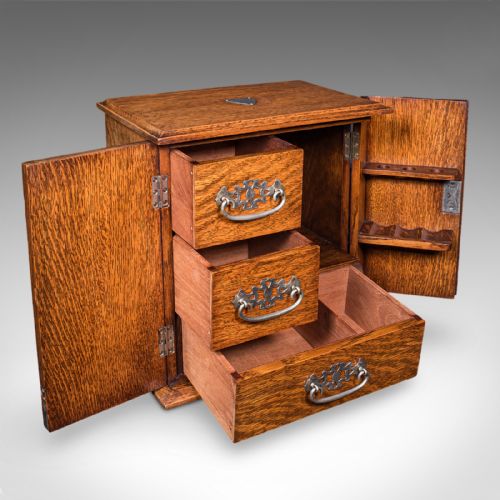
The most common formats you will meet are compact oak and burr walnut boxes, often featuring multiple internal drawers or dedicated spaces for pipes. Makers produced these pieces in styles ranging from plain Victorian utility to decorative Art Nouveau and Edwardian designs, occasionally incorporating shop display cases or novelty shapes like coal wagons.
How they were made
Craftsmen built these cabinets primarily using solid oak, burr walnut, burr elm, and cedar, often housing delicate inner drawers and humidifying elements. Timber selection dictated the external grain pattern, with burr veneers chosen for decorative impact on principal surfaces.
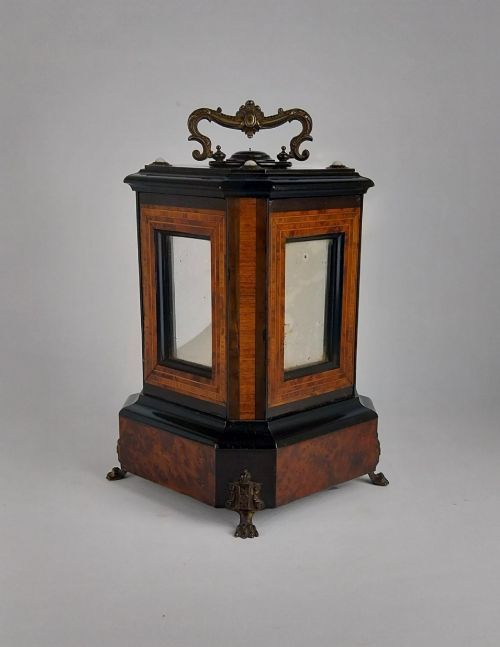
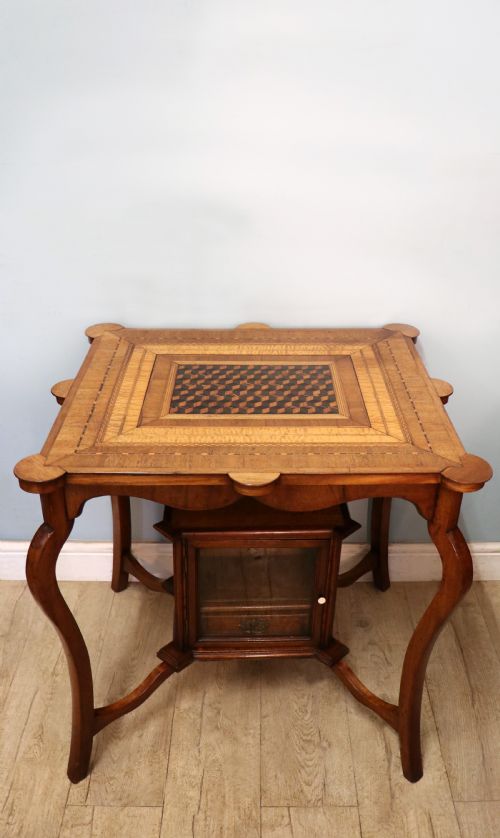
Hardware played a central role in construction, utilising brass for hinges, locks, carrying handles, and advertising plaques. Glazed doors and glass panels appeared frequently on larger table and wall cabinets to display the contents without opening the case.
Listings feature oak, burr walnut, burr elm, and cedar combined with brass and glass across Victorian and Edwardian periods.
What varies in quality
Quality rests heavily on the choice of timber and the precision of the internal joinery, such as tightly fitted cedar linings and smooth-running drawers. Cabinets that employ high-grade burr veneers and substantial brass hardware stand apart from simpler utilitarian boxes.
The sophistication of the locking mechanisms and the presence of integrated musical movements or specialised humidor fittings elevate certain examples above standard production models. Superior proportions and intact original glazing also define the finer pieces.
Alfred Dunhill·H. Upmann·Wills Capstan
The Vintage Tobacco Cabinet Glossary
- Humidor
- A moisture-controlled box designed to keep cigars fresh. These internal compartments often utilise cedar wood to maintain proper humidity.
- Tambour
- A type of sliding door made from narrow strips of wood glued to a fabric backing. This mechanism allows the door to curve smoothly around corners.
- Ebonised
- Wood treated with a dark finish to imitate expensive ebony. Makers used this technique to create high contrast details or dark frames.
- Burr
- A growth on a tree that produces highly figured wood grain with intricate swirling patterns. Cabinetmakers sliced these growths into veneers for decorative surfaces.
Vintage Tobacco Cabinet: Frequently Asked Questions
How do I use a vintage tobacco cabinet today?
These cabinets serve well for storing modern cigars, loose tobacco, pipes, or small desk accessories in a study or living room.
Many retain functional internal drawers and compartments that organise smoking equipment just as they did over a century ago.
Can I store cigars in any vintage cabinet?
Not every vintage cabinet functions as a true humidor, as some were built simply for dry pipe tobacco or general smoking accessories.
Check the interior for cedar linings or dedicated humidifying elements if you intend to store perishable cigars.
How do I date an oak smokers cabinet?
Examine the hardware, locking mechanisms, and prevailing style, as Edwardian and Victorian pieces display distinct decorative motifs.
Golden oak and Arts and Crafts influences typically point toward the late nineteenth or early twentieth century.
Where were these cabinets placed in a home?
Victorian and Edwardian households typically kept them on smoking tables, club lounge sideboards, or mounted directly to walls.
They were designed to keep gentleman's smoking gear neat and secure within reception rooms or private studies.