



Antique Tobacco Chest
An antique tobacco chest gathers the smoke room's finest gear, offering solid oak or burr walnut housings to keep cigars and leaf fresh.
Antique Tobacco Chest
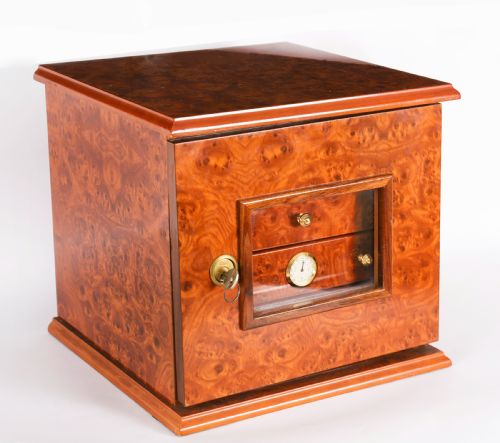
An antique tobacco chest represents the formal storage of pipes, cigars, and leaf within gentleman's clubs and private studies during the nineteenth and twentieth centuries. These pieces appear most frequently as oak or burr walnut smoking cabinets, desktop humidors, and fitted cigar boxes.
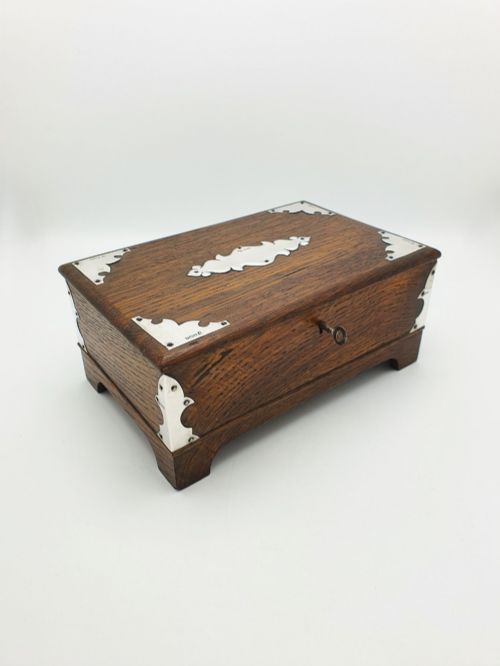
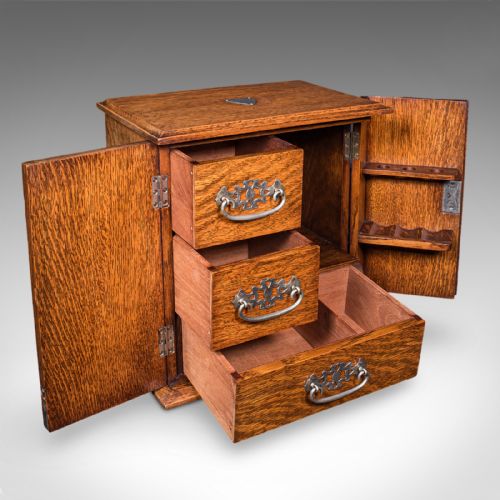
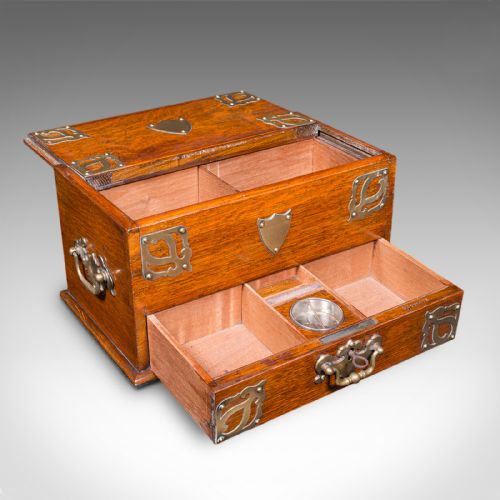
The selection ranges from sturdy Edwardian oak cases with sterling silver mounts to nineteenth-century walnut humidors and novelty railway coal wagon designs. Buyers encounter everything from simple wooden boxes to multi-drawer cabinets fitted with brass hardware and glass compartments.
How they were made
Cabinetmakers constructed these chests using durable timbers such as oak, burr walnut, burr elm, and exotic hardwoods, often selecting burl veneers for decorative grain patterns on the exterior panels. Structural joints and carcases relied on traditional joinery to withstand daily desktop use.
Metalworkers fitted the timber frames with cast brass hinges, lock plates, corner brackets, and occasionally copper overlays, while silversmiths added sterling silver mounts and plaques. Interiors frequently incorporated glass panels, metal humidifiers, and fitted drawers for organised smoking accessories.
The inventory spans Victorian, Edwardian, Arts and Crafts, and twentieth-century design periods.
What varies in quality
Quality rests upon the choice of timber and the precision of the veneer work, where figured burr walnut and burr elm command attention for their rich patterning. Plain oak boxes sit at the utilitarian end of the scale, whereas intricately mounted cabinets with tambour doors or novelty forms represent superior craftsmanship.
The integration of precious metals, such as hallmarked sterling silver mounts and substantial brass hardware, elevates a piece beyond standard utilitarian storage. Interior complexity also dictates value, distinguishing basic lidded boxes from multi-drawer cabinets with specialised smoking accessories.
Alfred Dunhill
The Antique Tobacco Chest Glossary
- Humidor
- A specialised moisture-controlled box or cabinet designed to keep cigars fresh. These interiors often incorporate cedar linings and metal humidifying elements.
- Smoker's cabinet
- A tabletop or wall-hanging chest fitted with compartments for pipes, tobacco jars, and cigars. They frequently feature locking doors and drop-front panels.
- Tambour
- A flexible sliding door made from narrow strips of wood glued to a fabric backing. This mechanism allows smooth closure around curved cabinet corners.
- Snuff box
- A small pocket-sized or tabletop container used for holding powdered tobacco. Examples range from simple wooden forms to heavily decorated metal and silver pieces.
- Sterling silver mounts
- Decorative metal fittings, corners, and plaques cast from high-purity silver. These additions provide both structural reinforcement and visual contrast against dark timbers.
Antique Tobacco Chest: Frequently Asked Questions
What is an antique tobacco chest?
An antique tobacco chest is a wooden container or cabinet designed for storing cigars, pipe tobacco, and smoking accessories.
These pieces range from simple desktop boxes to elaborate Victorian and Edwardian cabinets featuring brass and sterling silver mounts.
How were these chests used?
Owners utilised them to keep smoking leaf, cigars, and pipes organised and protected in studies, club lounges, and drawing rooms.
Many examples incorporated specialised compartments, humidifiers, and locks to preserve the contents and restrict access.
How do I date an oak humidor?
Dating relies on examining the timber preparation, hardware styles, and construction techniques visible on the cabinet carcase.
Edwardian and Victorian pieces often display distinct brass lock mechanisms, silver hallmarks, or stylistic cues like Arts and Crafts copper work.
What woods are common in these pieces?
Cabinetmakers primarily built these items using oak, walnut, burr walnut, and burr elm for their durability and attractive grain patterns.
Exotic hardwoods and secondary softwoods also appear in Middle Eastern and British provincial workshops.