




Vintage Timber Tray
A vintage timber tray is a piece of historical utilitarian furniture crafted to serve or display, and these examples combine honest construction with period character.
Vintage Timber Tray
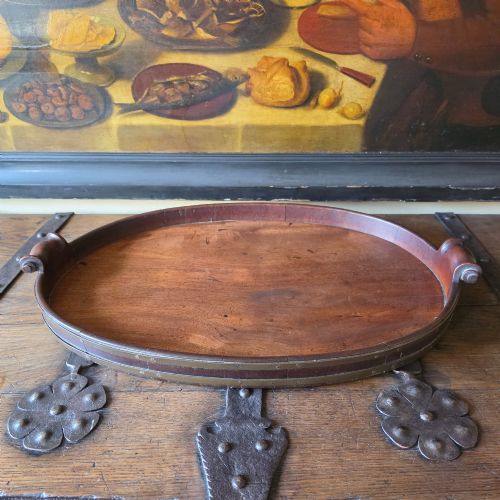
When you search for a vintage timber tray, you encounter everything from grand Georgian card trays to Edwardian inlaid tea trays and carved Anglo-Indian platters. These items served functional roles in domestic life, moving from the pantry or kitchen to the drawing room for the delivery of drinks or correspondence.
The selection here spans centuries of woodworking, drawing upon periods as early as the eighteenth century alongside Victorian and Edwardian iterations. Alongside standard serving trays, the evidence includes smaller coin trays and specialised occasional pieces designed for specific household tasks.
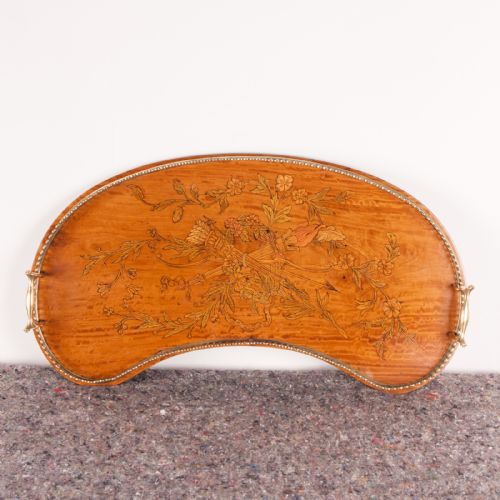
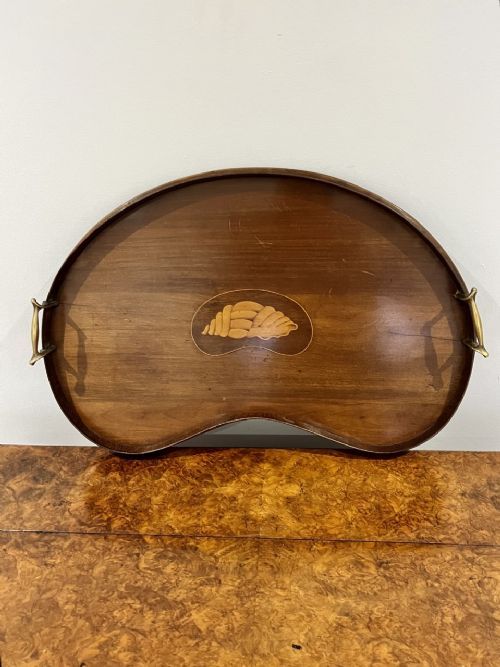
You are most likely to meet mahogany and walnut specimens, often shaped into traditional ovals or kidney forms. The surfaces frequently display period details such as marquetry, contrasting lightwood inlay, or integrated brass handles designed for practical carriage.
How they were made
Makers utilised dense cabinet timbers like mahogany, walnut, satinwood, and maple, selecting them for stability and attractive grain patterns. These woods were frequently shaped into trays with raised rims, sometimes bolstered by brass galleries or sturdy corner joints.
Decoration relied on fine carpentry techniques rather than applied ornament, incorporating contrasting stringing, botanical inlay, and hand-carved borders. Surfaces were finished to highlight the natural figure of the timber while providing a durable barrier against everyday use.
What varies in quality
The distinction between ordinary and superior examples lies in the crispness of the timber carving and the precision of any inlay work. Finer pieces demonstrate meticulous attention to structural joints, ensuring that handles and raised edges remain robust despite centuries of handling.
Material selection dictates the upper tier of the range, where figured satinwood, richly patinated mahogany, or intricate Kashmiri walnut elevate a utilitarian object into a decorative centrepiece. The subtlety of the polish and the integrity of the original hardware further separate standard domestic items from exhibition-grade specimens.
The Vintage Timber Tray Glossary
- Kidney shaped
- A curved, asymmetrical form popular in Edwardian serving trays. This ergonomic silhouette allowed the tray to rest comfortably against the carrier.
- Inlay
- A decorative technique where contrasting timbers such as satinwood or maple are fitted flush into the primary wood surface. This creates crisp geometric or botanical patterns.
- Card tray
- A small domestic accessory utilised for presenting visiting cards in formal households. These compact specimens usually feature raised rims and diminutive proportions.
- Gallery
- A raised pierced metal or timber border fitted around the perimeter of a serving tray. Its primary function was to prevent glassware and decanters from sliding off during transit.
- Marquetry
- The art of applying thin veneers of various woods to a structural carcase to form elaborate pictorial designs. It requires exceptional joinery skill to execute cleanly.
Vintage Timber Tray: Frequently Asked Questions
How were serving trays used historically?
These items were used by domestic staff to transport beverages, glassware, and correspondence between rooms in larger residences. They provided a stable, portable surface for entertaining guests in the drawing room.
In more modest settings, smaller versions sat upon side tables to hold daily ephemera or calling cards. Their transition from kitchen utility to parlor display meant craftsmanship matched the social standing of the household.
How do I care for a wooden tray?
Keep wooden surfaces away from direct heat sources and strong sunlight to prevent the timber from drying out and splitting. Period finishes respond best to occasional gentle waxing with a natural product rather than modern silicone sprays.
Avoid submerging antique timber in water or using abrasive cleaners on the surface. Wipe spills promptly with a soft, dry cloth to preserve the historical polish.
What woods were commonly utilized?
Cabinetmakers relied heavily on dense hardwoods like mahogany and walnut for their structural stability and rich natural grain. Lighter timbers such as satinwood and maple were introduced for contrast and decorative inlay work.
Regional variations also brought teak and regional pines into domestic service, depending on the period and the origin of the workshop. Each wood dictates the weight and visual presence of the piece.
How do I distinguish different periods?
Georgian examples often favor restrained lines in solid mahogany, prioritizing proportion and timber quality over overt decoration. Edwardian and later Victorian pieces frequently embrace elaborate satinwood inlay, kidney shapes, and decorative brass handles.
Construction methods inside the base and rim offer clues to the era of manufacture. Examining the joinery and finish helps anchor the object within its historical timeframe.