
Vintage Three Tier Tables
Vintage three tier tables are stacked tier pieces offering multiple display surfaces, appealing to collectors seeking compact tiered utility.
Vintage Three Tier Tables
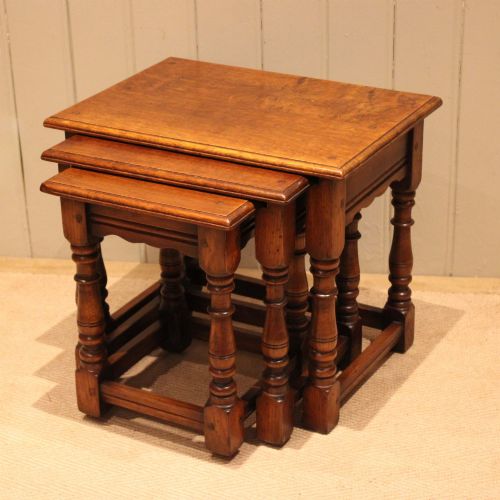
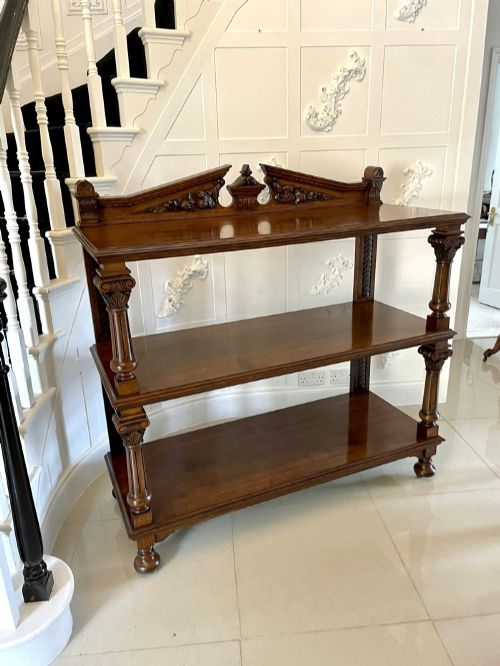
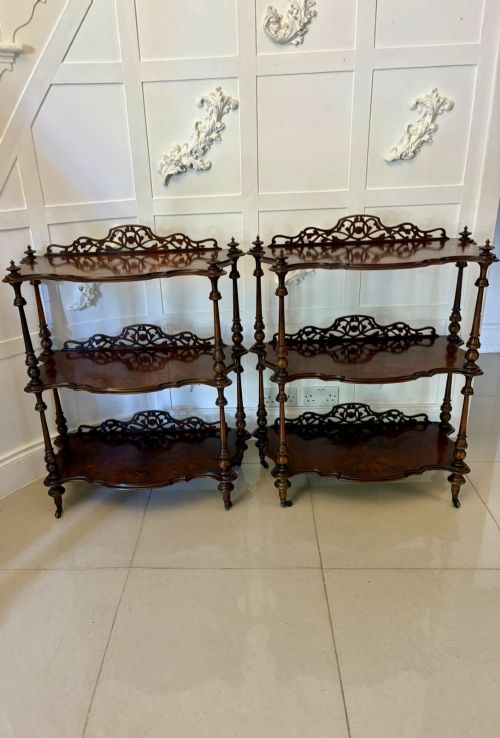
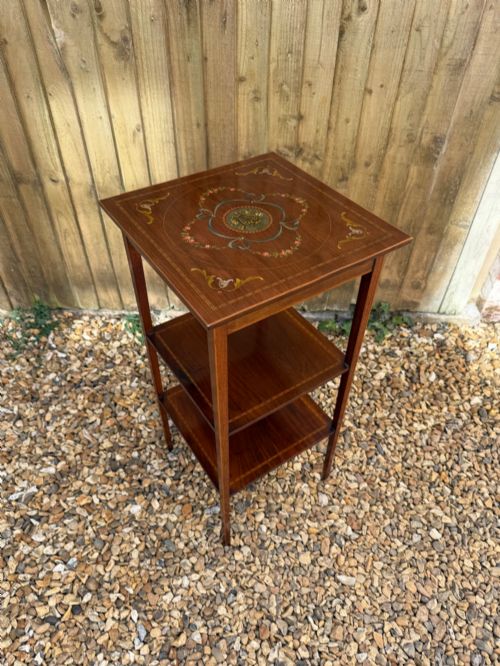
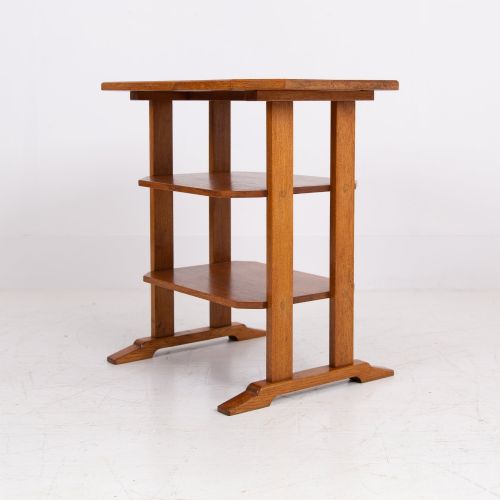
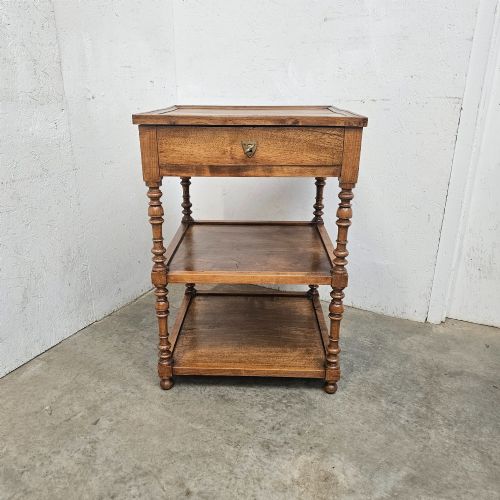
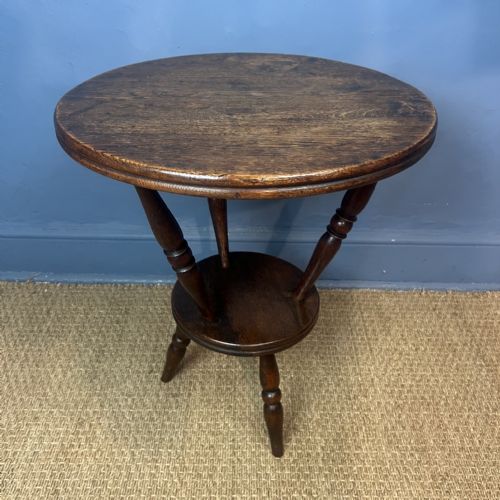
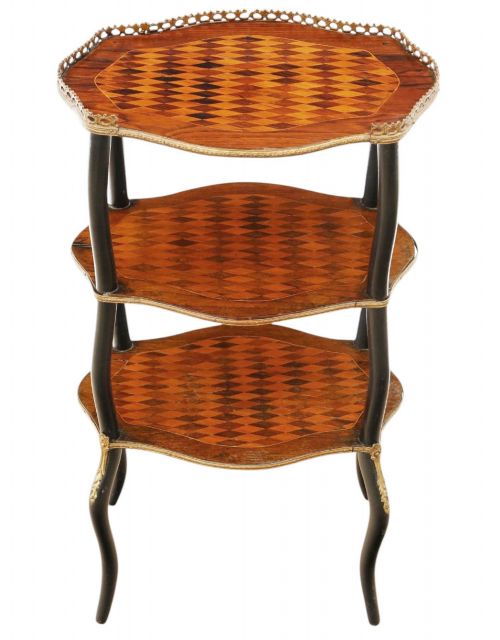
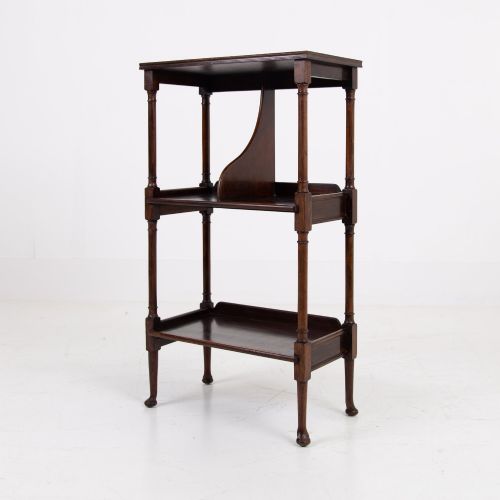
Vintage three tier tables comprise multi-decked structures designed to maximise display and storage space in domestic interiors. These pieces appear across several forms, including etageres, whatnots, dumb waiters and occasional tables.
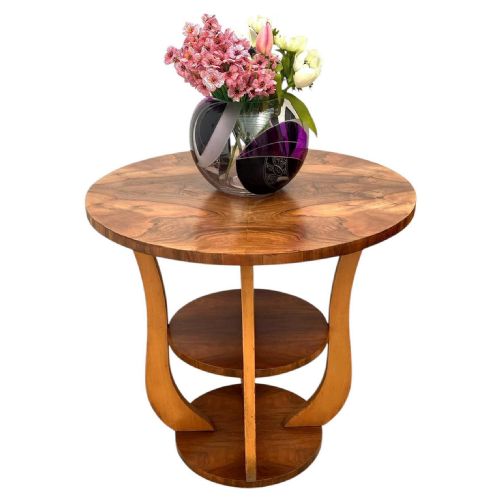
The selection ranges from Victorian burr walnut examples and Edwardian mahogany nests to Art Deco walnut occasional centre tables. Buyers encounter diverse origins, spanning English country workshops to French provincial cabinet makers.
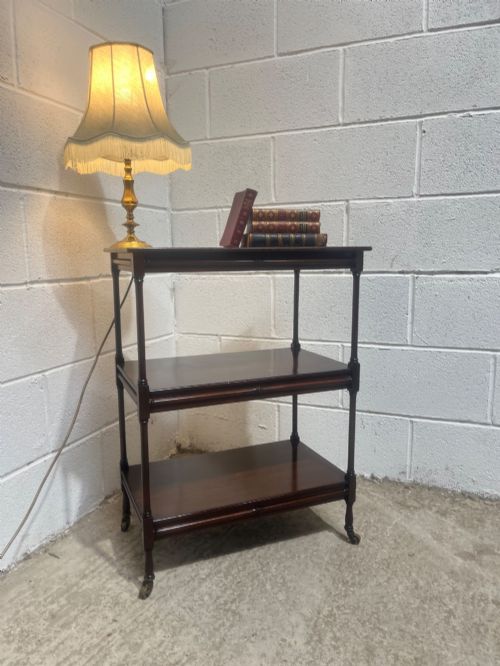
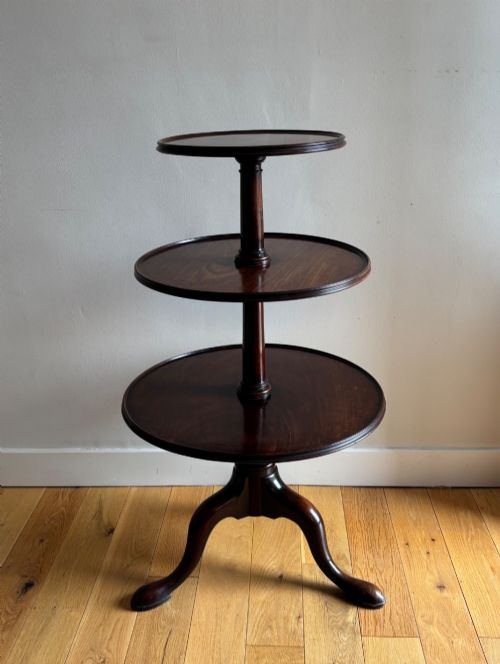
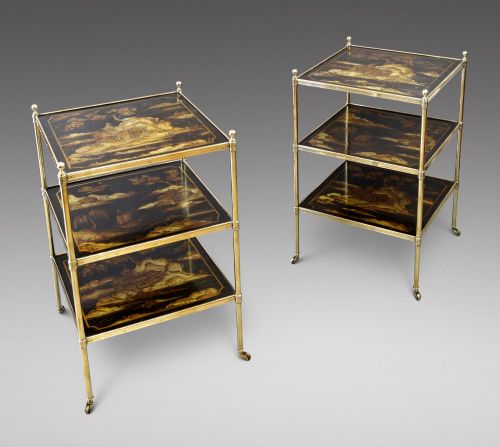
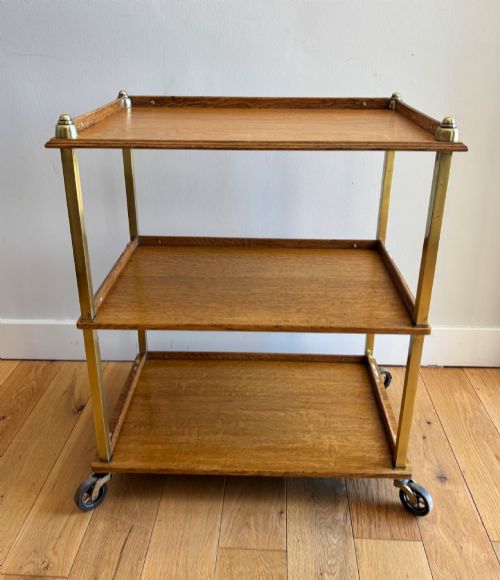
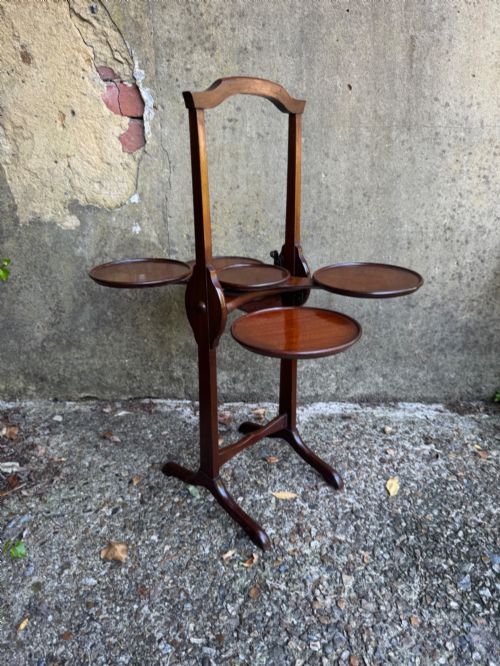
Earlier iterations connect directly to Georgian and Victorian dumb waiters, whilst subsequent twentieth-century designs introduce modernist walnut and brass-mounted formats. Each tier provides distinct functional utility for lamps, books and decorative objects.
Materials and construction
Cabinet makers utilised dense hardwoods such as mahogany, walnut and oak as the structural foundation for tier supports and turned legs. Burr walnut veneer and marquetry inlay provide decorative surface detail on refined etageres.
Secondary elements incorporate brass mounts, marble inserts and canework, particularly within French and Art Deco designs. Joinery techniques reflect the period, employing solid framing alongside turned and carved uprights.
Assessing quality in tiered furniture
Quality rests upon the selection of timber veneers, the crispness of turned or carved supports, and the structural integrity of the stacked tiers. Superior pieces exhibit fine grain matching in walnut or mahogany, alongside precise marquetry inlay.
The integration of secondary materials, such as brass mounts or marble tops, distinguishes standard utilitarian items from finer decorative examples. Joinery stability across multiple levels determines the enduring utility of each tier.
The Vintage Three Tier Tables Glossary
- Etagere
- An open piece of furniture with shelves for displaying small objects or ornaments. These tiered stands developed in France during the eighteenth century.
- Whatnot
- A standing set of open shelves used for books or ornaments. Victorian examples frequently feature multiple tiers and turned supports.
- Dumb waiter
- A tiered serving table used to hold dishes or utensils. Early versions feature graduating circular trays on a central column.
- Marquetry
- Decorative veneer work forming geometric or pictorial patterns. Craftsmen apply thin slices of wood to the primary surface.
Vintage Three Tier Tables: Frequently Asked Questions
What are vintage three tier tables used for?
These tiered tables serve primarily as display surfaces for lamps, books and decorative objects in living spaces. Their stacked configuration provides maximum surface area whilst maintaining a compact footprint on the floor.
Historically, similar tiered designs functioned as serving pieces or bedside stands. Modern interiors utilise them beside seating or within hallways for practical storage.
How do I identify an Edwardian tiered table?
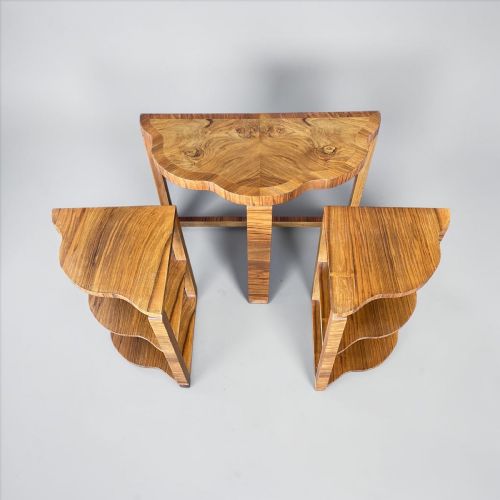
Edwardian examples frequently utilise lightweight mahogany construction, sometimes arranged as nests of tables or delicate occasional stands. These pieces often display subtle inlay work or slender tapered legs.
Makers working in this period favoured refined proportions over the heavy ornamentation seen in earlier Victorian furniture.
What is the difference between an etagere and a whatnot?
An etagere is typically a French-influenced open display stand, often incorporating decorative ormolu mounts, marble or marquetry. A whatnot is a British term for multi-tiered shelving units designed for general storage.
Both forms share the stacked multi-tier construction characteristic of the category.
How should I care for walnut veneer tiers?
Maintain walnut surfaces by dusting gently with a dry, soft cloth to prevent abrasive particle buildup. Avoid placing these tables in direct sunlight or near heat sources to protect the delicate veneer.
Periodic application of suitable furniture wax preserves the polished finish without sealing the wood.