


Vintage Thermometer Barometer Clock
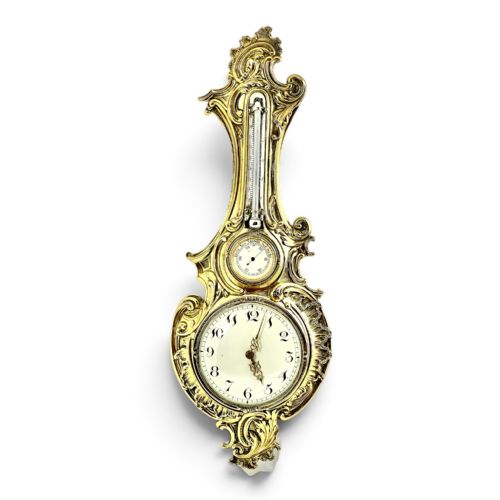
These vintage thermometer barometer clock combinations unite timekeeping and weather tracking in one desk or wall piece, serving both utility and display.

Vintage Thermometer Barometer Clock
When searching for a vintage thermometer barometer clock, you encounter multi-function pieces that combine time, temperature and atmospheric pressure in a single housing. These multifunctional objects appear across several historical periods, notably the Victorian, Edwardian and Art Deco eras.
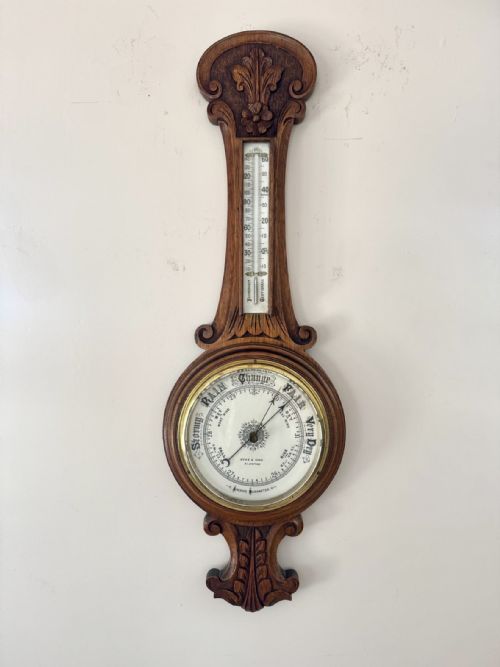
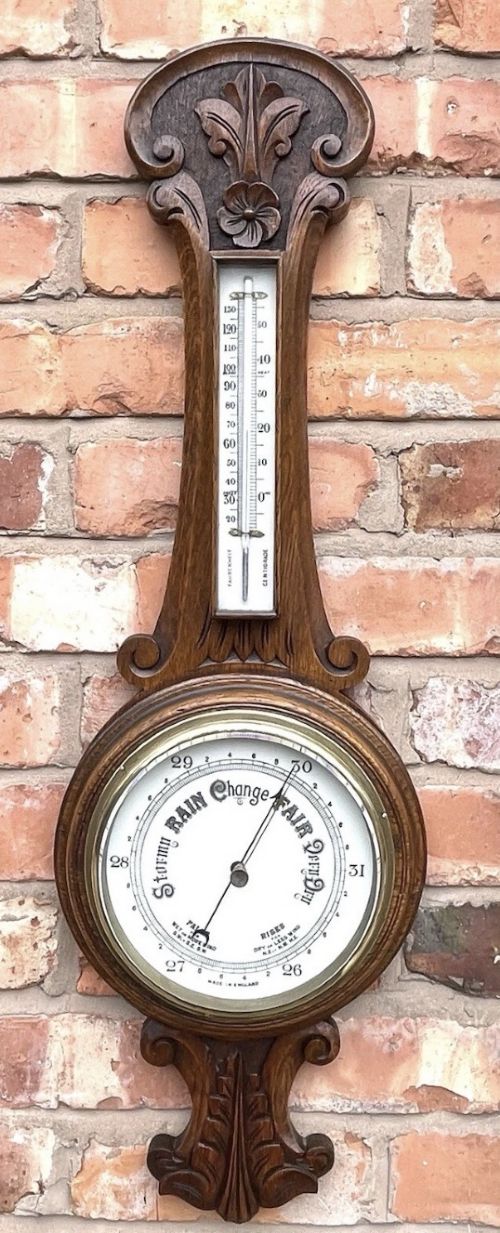
The evidence shows these items taking various forms, from banjo wall barometers with integrated thermometers and clock dials to desk compendiums and architectural desk clocks. Oak, walnut and mahogany form the predominant wooden housings, alongside brass, glass, enamel and onyx.
You meet both wall-hung instruments and heavy desk sets originating from English, Dutch and American workshops. The Victorian and Edwardian examples lean towards carved wood cases, whilst later pieces embrace the cleaner geometry of the Art Deco style.
How they were made
Woodworkers carved robust housings from oak, walnut and mahogany, often shaping them into traditional banjo profiles or architectural desk stands. These wooden frames provided stable enclosures for delicate internal mechanical movements and glass-faced dials.
Metalworkers contributed brass bezels, silvered bronze mounts and silver gilt detailing to frame the clock faces and thermometer scales. Enamel dials and glass covers protected the paper or metal indicator cards from dust and damage.
Makers integrated three distinct instruments - a clock movement, a barometer mechanism and a thermometer tube - into a single coherent case. This required precise calibration of the aneroid barometer and the surrounding temperature scale to ensure reliable domestic readings.
Makers crammed three separate scientific instruments into a single carved oak banjo so nobody had to walk into another room to complain about the weather.
What varies in quality
The depth and crispness of the carving on wooden cases distinguish standard production from superior examples. Finely carved oak and walnut banjo frames show clean lines and well-defined foliage or geometric motifs.
The quality of the combined dials and the materials used for bezels and mountings create a clear hierarchy. Silvered bronze, silver gilt and heavy brass surrounds demonstrate a higher standard of manufacture than plain or pressed metal fittings.
The integration of multiple instruments requires careful proportion, ensuring that the clock, barometer and thermometer balance visually within the architectural or banjo layout. Cohesive design across all three dials separates standard utility items from distinguished decorative pieces.
Hyde & Sons Sleaford
The Vintage Thermometer Barometer Clock Glossary
- Aneroid barometer
- A barometer that measures atmospheric pressure without using liquid mercury, relying instead on a flexible metal box. This mechanism allowed barometers to be built into compact wall banjo shapes and desk compendiums.
- Banjo barometer
- A wall barometer housed in a vertical wooden case shaped somewhat like a banjo, typically featuring a dial at the base and a thermometer along the long neck. This form is common in Victorian and Edwardian oak and walnut pieces.
- Desk compendium
- A multi-instrument desk set combining a clock, barometer, and thermometer in one heavy housing. These pieces often incorporate materials like onyx, brass or carved wood.
- Silver gilt
- Silver covered with a thin layer of gold, providing a rich metallic finish. This treatment appears on high-end Victorian thermometer, barometer and clock stations.
- Architectural desk clock
- A timepiece and weather instrument set designed with pillars, pediments or gables mimicking building facades. These wooden cases reflect late nineteenth-century design tastes.
Vintage Thermometer Barometer Clock: Frequently Asked Questions
What is a vintage thermometer barometer clock?
A vintage thermometer barometer clock is a combined instrument housing a timekeeping clock, a barometer for measuring air pressure, and a thermometer. These versatile pieces were designed for desks or walls to provide daily domestic data in one object.
They appear in various styles from the nineteenth and early twentieth centuries, utilising materials such as carved oak, walnut, brass, glass, and onyx.
Where were these combination instruments placed?
Many examples are wall-hung banjo barometers featuring a long neck displaying the thermometer and a lower dial for the clock and barometer. Others take the form of heavy desk compendiums and architectural wooden desk clocks.
Their placement depended on the specific form, with wall instruments hung in hallways or reception rooms and desk sets placed upon studies or libraries.
How do you date a wooden banjo barometer?
Dating relies on the style of the wood carving, the materials used for the bezels and dials, and the overall aesthetic. Victorian and Edwardian pieces often feature carved oak or walnut with aneroid movements.
Later items from the nineteen-thirties adopt Art Deco geometries and materials like onyx, whilst earlier nineteenth-century versions show Georgian or Victorian revival influences.
Are the clock and barometer movements difficult to maintain?
Maintenance depends on the complexity of the internal mechanical movements for the clock and the aneroid barometer mechanism. Because these units combine multiple instruments in one case, professional servicing is sometimes required to keep all three functions working accurately.
Checking the glass covers, brass bezels, and the stability of the wooden housing helps preserve the piece over time.