





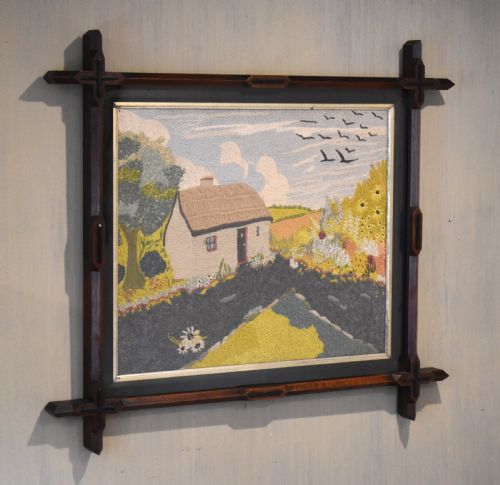


Vintage Textile Decor
These vintage textile decor pieces bring woven warmth and rich pattern into a room through framed needlework, tribal hangings, and historic wall art.
Vintage Textile Decor
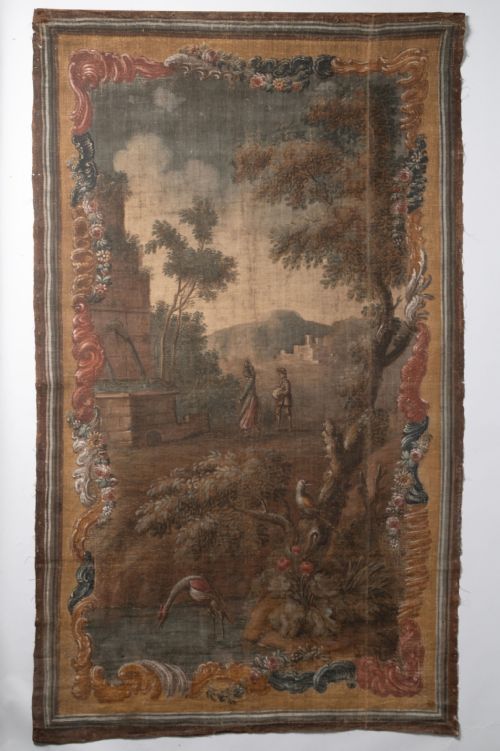
Vintage textile decor encompasses a diverse range of fabric arts, needlework, and wall hangings gathered from various periods and traditions. When searching for vintage textile decor, buyers encounter everything from English needlework pictures to Central Asian tribal trappings and French tapestries.
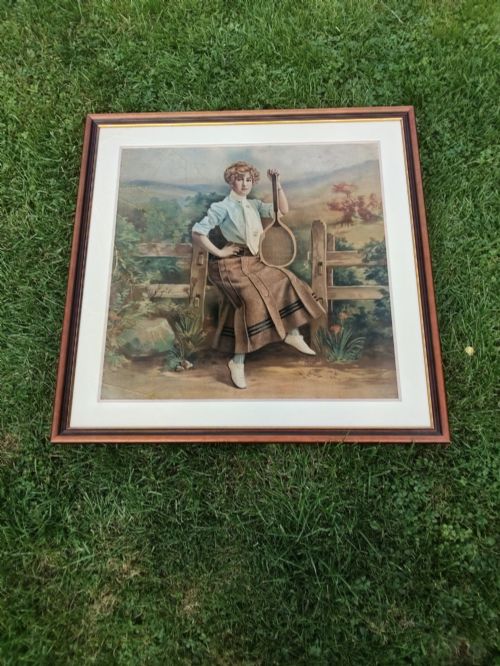
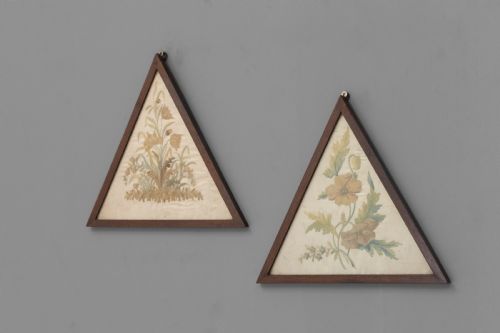
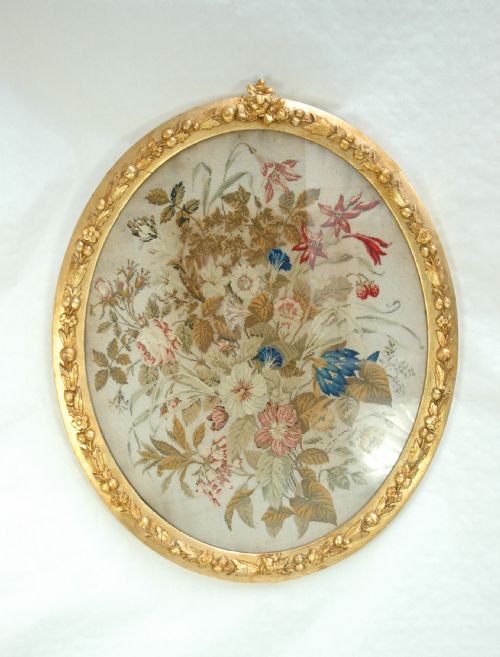
The selections on this page lean heavily towards framed wall art, embroidered panels, and woven pieces originating from the Victorian and Edwardian eras, alongside Central Asian nomadic works. These items bridge the gap between textile craft and interior decoration, serving as focal points within traditional or eclectic interiors.
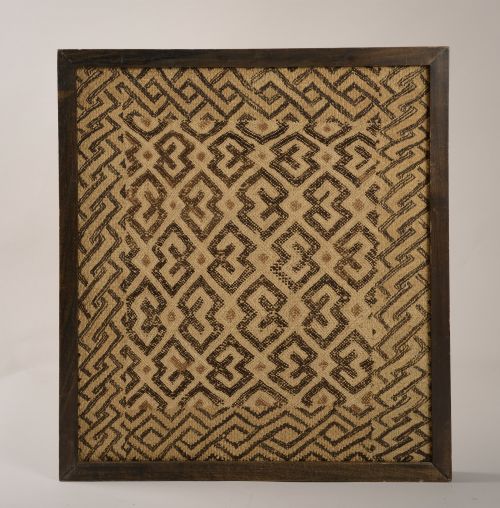
Originating across Europe, Asia, and Africa, these objects reflect distinct cultural techniques, from English cross-stitch to Uzbek silk embroidery and African raffia cloth. Each piece carries the aesthetic priorities of its maker and period, offering texture and narrative depth to modern walls.
Materials and construction methods
Construction relies upon organic fibres such as wool, silk, cotton, and raffia, often worked onto a supportive backing or ground cloth. Artisans employed needlework, embroidery, and weaving techniques to build complex pictorial and geometric compositions.
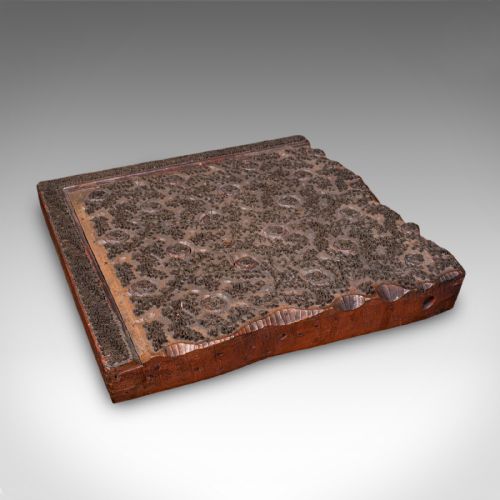
Many of these decorative pieces incorporate wooden frames, glass glazing, or carved elements like brass-studded printing blocks to secure and display the fabric. Structural integrity depends on the quality of the original stitching and the preservation of the natural materials over time.
Vintage Textile Decor Retail Price Guide 2026
Typical asking prices for vintage textile decor among the pieces listed under this phrase on Sellingantiques today, from the lower quarter to the upper quarter. They describe what is for sale here now, not the wider market.
Listings feature textiles from the nineteenth and early twentieth centuries, including Victorian needlework, Edwardian tapestries, and Central Asian tribal works.
Markers of quality in textile decor
Quality reveals itself in the density of the stitch work, the complexity of the design, and the vibrancy of surviving natural or synthetic dyes. Superior examples demonstrate meticulous hand execution and a harmonious balance of colour and pattern.
The condition of the textile fabric and the stability of its mounting dictate the overall calibre of a piece. Finer works maintain structural soundness in the fibres and thoughtful framing that protects the delicate materials from environmental degradation.
The Vintage Textile Decor Glossary
- Suzani
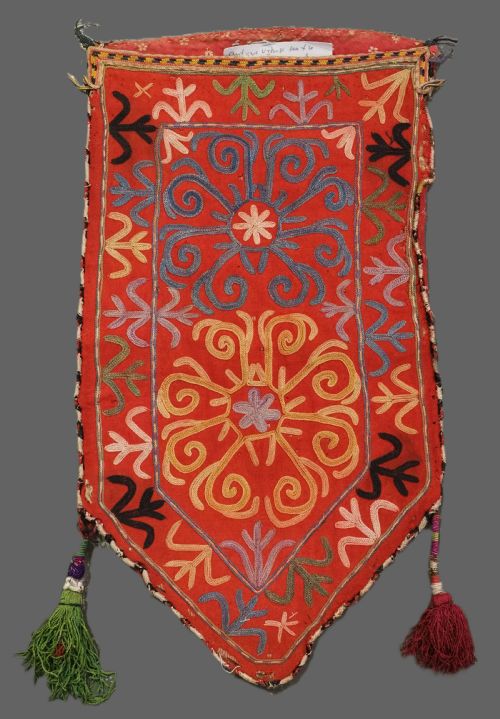
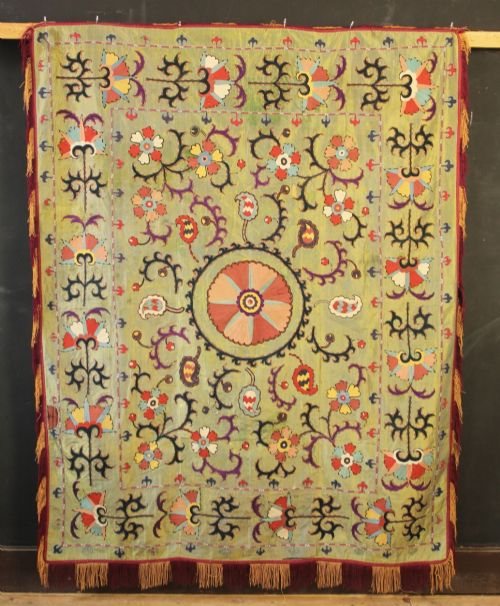
- An embroidered tribal hanging originating from Central Asia, typically worked in silk on a cotton or wool ground. These decorative panels feature bold floral and geometric motifs.
- Tapestry
- A form of textile art woven on a vertical loom or executed as needlepoint embroidery depicting pictorial scenes. Historical examples often illustrate literary, historical, or pastoral subjects.
- Needlework
- Stitched decoration created using a needle and thread upon a woven canvas or fabric ground. This encompasses various embroidery and cross-stitch techniques found in framed Victorian pictures.
- Tent band
- A long, woven strip produced by nomadic tribes for structural and decorative use within a yurt or tent. These bands display intricate geometric patterns characteristic of specific tribal groups.
- Toile de Jouy
- A type of eighteenth-century French cotton fabric printed with repeating pastoral or historical vignettes in a single colour. Fragments are frequently preserved behind glass as framed wall art.
Vintage Textile Decor: Frequently Asked Questions
How do I hang antique textiles?
Display textiles away from direct sunlight to prevent the fading of wool, silk, and cotton fibres. Mounting pieces behind glass or using specialised fabric sleeves helps support the weight and protects the weave from dust.
Ensure the hanging wall is free from excessive moisture and temperature fluctuations. Secure frames firmly to wall studs or use appropriate hardware designed for heavier decorative objects.
What is a suzani?
A suzani is a decorative embroidered cloth from Central Asia, traditionally made by brides as part of their dowry. They feature vibrant silk stitching on a wool or cotton ground in distinctive floral and medallion patterns.
These pieces were used to wrap household goods or adorn walls within nomadic and village dwellings. Today, collectors frame or hang them as prominent decorative art.
How do I clean historic textiles?
Historic textiles require delicate handling and should generally be surface-cleaned only by gently removing dust with a soft brush. Professional textile conservators should handle any deep cleaning or restoration to prevent fibre degradation.
Avoid washing antique silk, wool, or cotton pieces in water or using standard household detergents. Chemical treatments can permanently damage natural dyes and weaken aged threads.