



Vintage Teaspoons
Vintage teaspoons are compact silver tableware pieces that bring period character to the table.
Vintage Teaspoons
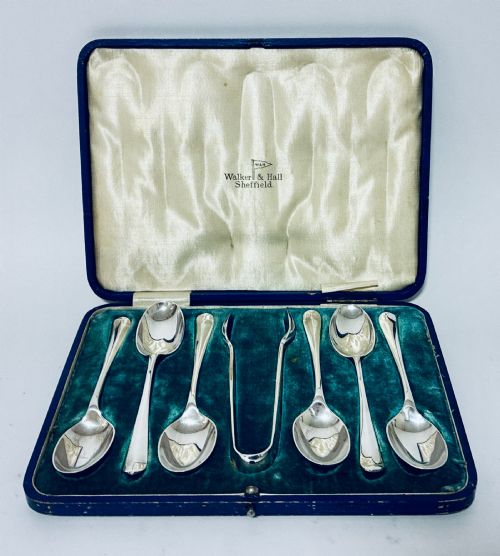
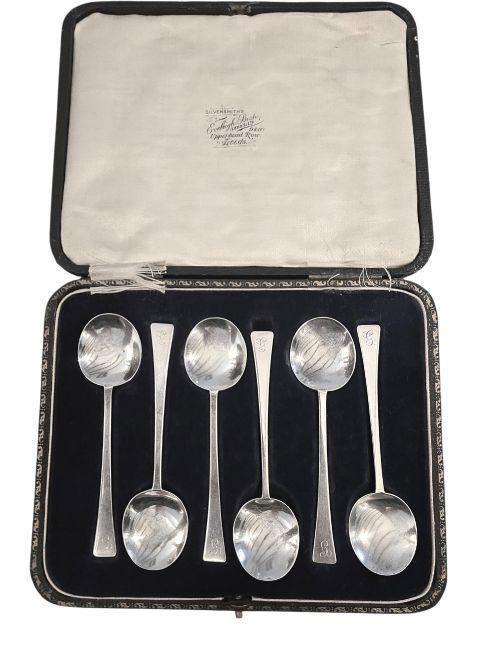
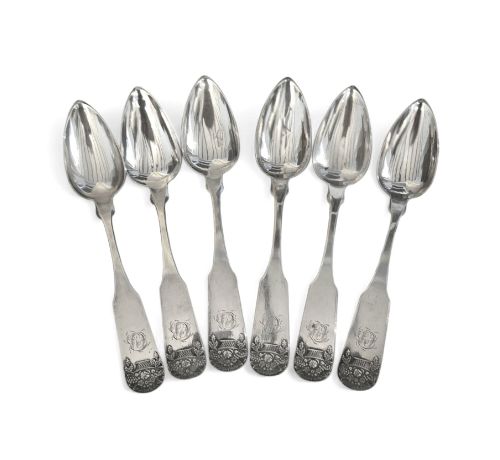
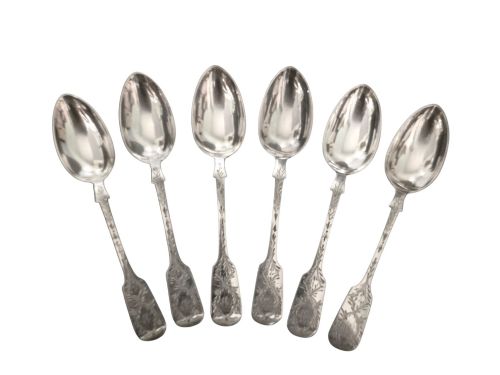
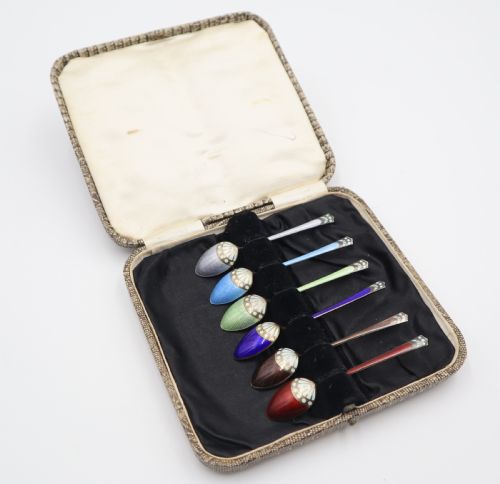
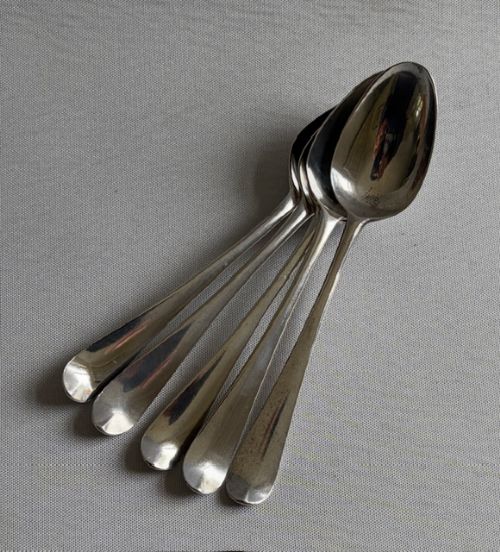
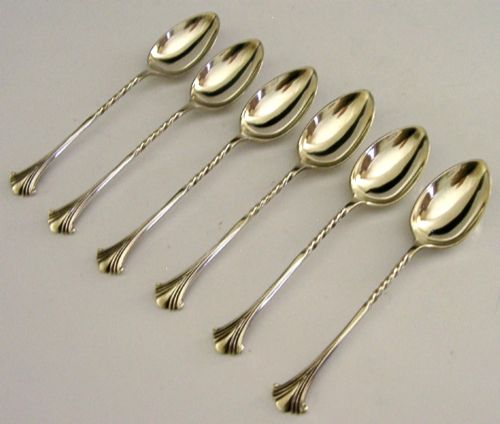
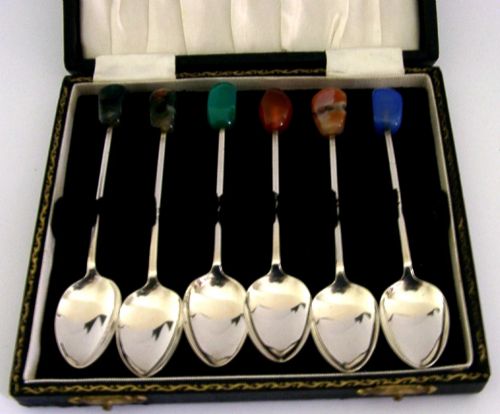
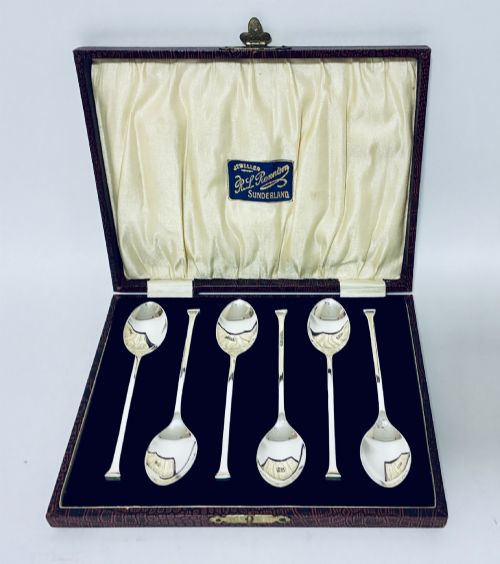
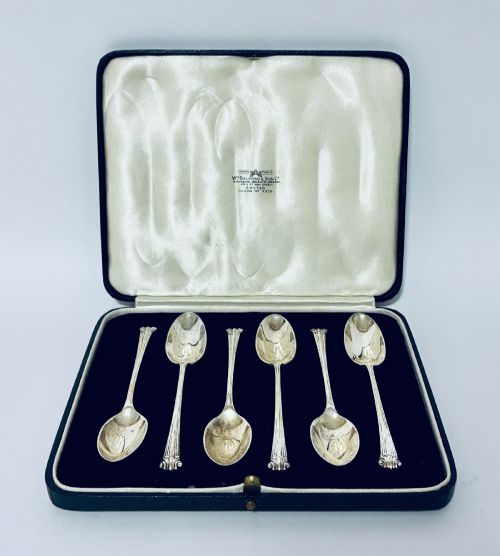
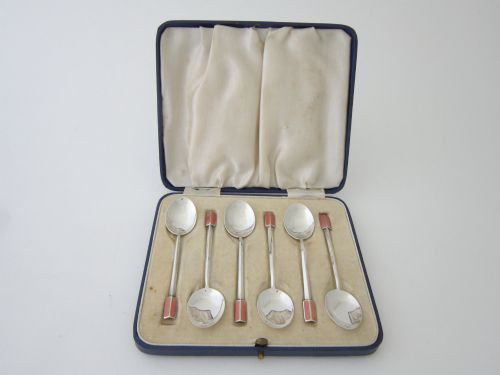
When you search for vintage teaspoons, you meet small flatware pieces spanning the Victorian era through the mid-twentieth century. The selection includes individual spoons as well as matched sets, often housed in fitted boxes lined with velvet, silk, or satin.
Sets frequently appear alongside matching sugar tongs or butter knives. Forms range from plain sterling silver bowls to colourful enamel designs and specialised coffee spoons.
Origins stretch across British makers and continental European workshops, taking in styles from Art Nouveau and Art Deco to Mid-Century Modern.
Materials and construction
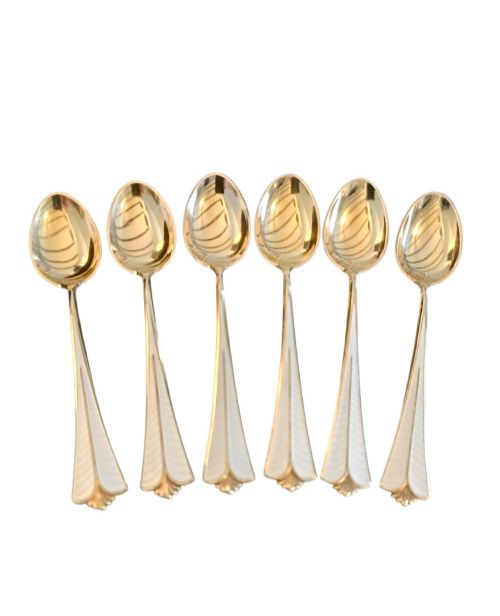
The primary material is sterling silver or silver-gilt, shaped into bowls and stems and frequently marked with hallmarks denoting the assay office and year. Many examples incorporate vitreous enamel decoration in geometric or pictorial motifs across the handles.
Fitted presentation boxes utilise materials such as leatherette on the exterior with soft satin or velvet linings inside to protect the metal and enamel work.
Vintage Teaspoons Retail Price Guide 2026
Typical asking prices for vintage teaspoons among the pieces listed under this phrase on Sellingantiques today, from the lower quarter to the upper quarter. They describe what is for sale here now, not the wider market.
Card suits carved into silver spoons turn afternoon tea into a quiet game of bridge.
Assessing quality
Quality rests on the crispness of the hallmark stamps, the weight of the silver, and the condition of any applied enamel. Intact coloured enamel without chips distinguishes finer decorative sets.
The presence of an original fitted presentation case lined in silk or velvet adds to the integrity of a set.
David Andersen Norway·Georg Jensen·Evald Nielsen·Walker and Hall·Liberty and Co·Robert Stebbings·Cooper Brothers and Sons
The Vintage Teaspoons Glossary
- Sterling silver
- A standard alloy consisting of ninety-two point five percent silver by mass, with the remainder being other metals such as copper. This standard is indicated by specific hallmarks on the metal.
- Silver-gilt
- Silver objects that have been coated with a thin layer of gold over the surface. This technique provides the appearance of solid gold while utilising a silver base.
- Enamel
- Vitreous material fused to the surface of the silver through high-temperature firing. It provides smooth, coloured decoration on handles and bowls.
- Hallmark
- A series of official marks stamped onto silver items to guarantee the purity of the metal, the maker, and the year of production. These stamps are usually found on the back of the stem.
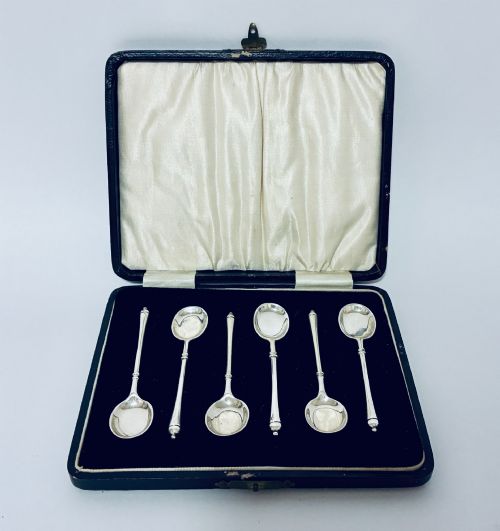
- Seal top spoon
- A traditional spoon style featuring a flat, round terminal shaped like a seal stamp at the end of the handle.
Vintage Teaspoons: Frequently Asked Questions
What are vintage teaspoons used for?
These small spoons were primarily designed for stirring sugar into tea or coffee. Many smaller coffee spoons also serve demitasse cups.
Beyond functional use, cased sets often function as display pieces or formal gifts for special occasions.
How do I care for silver spoons?
Silver requires gentle cleaning with a soft cloth to maintain its shine without wearing down delicate hallmarks or engravings. Storing them in their original fitted cases protects the metal from tarnishing in the air.
Enamelled pieces need particular care to avoid impact damage that could chip the glass surface.
How are periods told apart?
Victorian and Edwardian pieces often feature ornate scrollwork, traditional seal tops, or intricate engraving. Art Deco and Mid-Century Modern designs favour geometric lines and bright enamel.
Hallmarks stamped on the metal provide the exact year of assay and the maker's mark.
Why do some sets include tongs?
Sugar tongs were produced to match teaspoons for formal tea service, allowing lumps of sugar to be placed cleanly into cups. They share the same silver hallmarks and decorative style as the accompanying spoons.
Complete cased sets featuring both spoons and tongs reflect formal dining customs of the early twentieth century.