
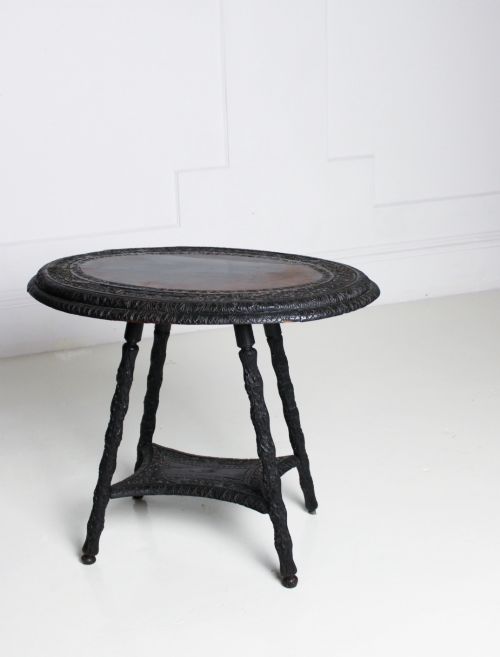
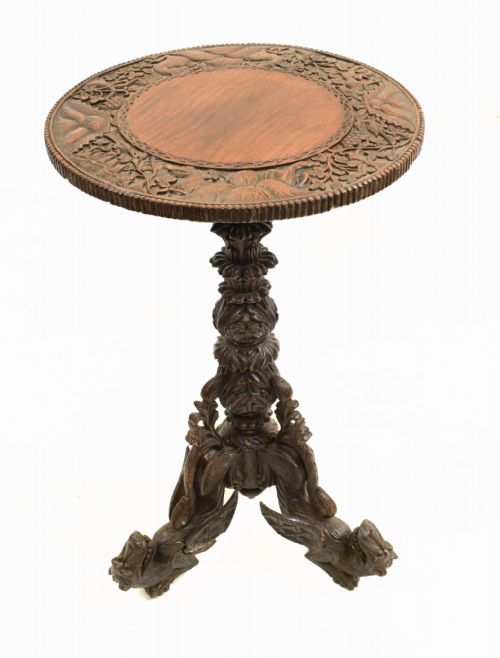


Vintage Teak Tea Table
A vintage teak tea table brings dense tropical timber and intricate regional carving into a modern room.
Vintage Teak Tea Table
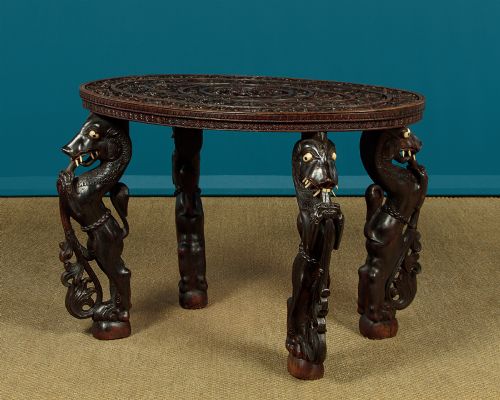
A vintage teak tea table encompasses low occasional pieces, folding tray stands and carved centres originating primarily from British colonial workshops across India and Burma. You will frequently encounter octagonal Hoshiarpur tables, elephant supports and folding campaign designs spanning the nineteenth and early twentieth centuries.
The selection ranges from small lamp stands and nested sets to broad centre tables intended for domestic use. Makers utilised dense regional hardwoods to construct surfaces suited to both permanent placement and portable utility.
How they were made
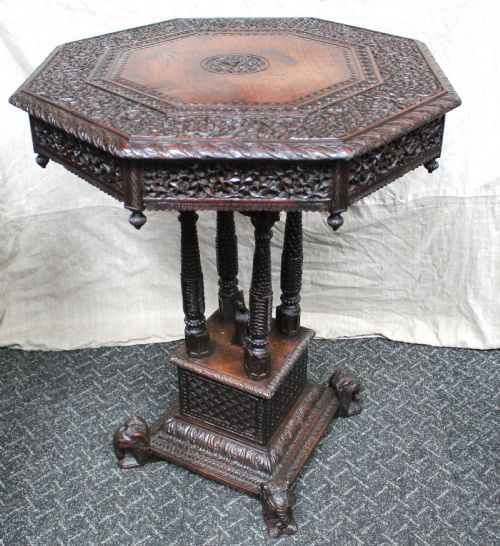
Craftsmen built these pieces from solid teak and hardwood, often incorporating collapsible frames and folding mechanisms for transport. Surfaces display deep relief carving executed by hand.
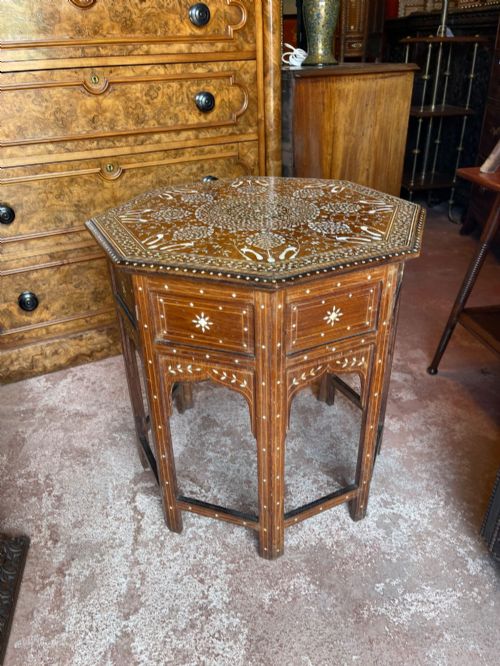
Many examples integrate contrasting materials, setting engraved brass sheet or delicate bone inlay directly into the wooden framework to form geometric and floral patterns.
The inventory records side tables, coffee tables, nesting sets and folding campaign stands.
What varies in quality
The distinction lies in the depth and precision of the hand carving, alongside the complexity of the brass or bone inlay work. Finer examples maintain crisp edges on foliate motifs and stable joinery across folding legs.
Proportion and wood selection also separate standard production from superior pieces, with denser grain and heavier timber indicating careful material selection by the workshop.
The Vintage Teak Tea Table Glossary
- Hoshiarpur
- A style of woodwork originating from Punjab, defined by dense carving and intricate wire-pinned bone or brass inlay. This technique covers the entire visible surface of tables and occasional stands.
- Campaign table
- A portable item designed to fold or dismantle easily for travel during the colonial era. These pieces utilise clever hinges and removable legs.
- Octagonal table
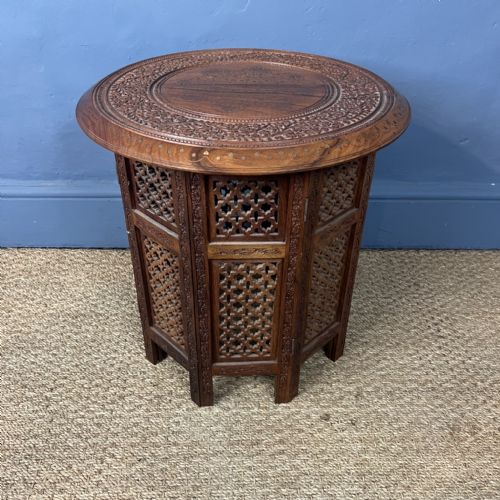
- A multi-sided surface supported by folding fretwork panels that interlock to form a stable base. This specific geometry is common in Anglo-Indian design.
- Elephant table
- An occasional stand featuring carved elephant figures supporting the main surface. The trunks and tusks often form structural elements of the base.
- Tray top
- A removable surface with a raised rim, designed to sit upon a separate folding stand. This format allowed for easy service and storage.
Vintage Teak Tea Table: Frequently Asked Questions
How do I care for a teak table?
Apply natural beeswax occasionally to nourish the dense hardwood and maintain the lustre of the timber. Avoid placing the surface near direct heat sources to prevent shrinkage.
Dust the intricate carved recesses gently with a soft brush to keep the grain clean without catching delicate edges.
Are these tables sturdy enough for daily use?
Most pieces are constructed from heavy teak and hardwood designed for functional placement as side or lamp stands. Folding variants rely on tight interlocking joints that remain secure when properly assembled.
Distribution of weight matters on folding or inlaid surfaces, so avoid placing extremely heavy items on smaller occasional variants.
What is the difference between Anglo-Indian and Burmese pieces?
Anglo-Indian items frequently display intricate bone and brass inlay alongside dense foliate carving associated with specific regional workshops. Burmese versions often emphasise deep, sculptural wood carving without metal or bone elements.
Both styles utilise teak foundations but distinct regional ornamentations identify their specific geographic origin.
Can I fold these tables flat?
Many examples feature collapsible fretwork bases or removable tray tops designed specifically for compact storage and transport. The wooden panels hinge together without requiring modern tools.
Care should be taken with older hinges and pinned joints during the folding process to preserve the original woodwork.