




Vintage Tea Samovar
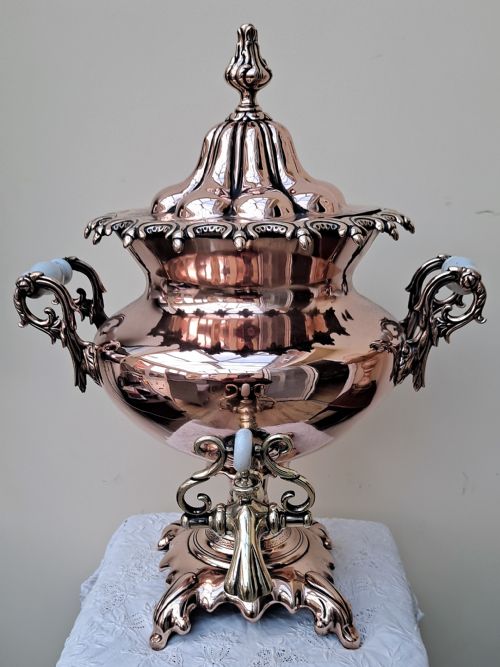
These vintage tea samovar pieces bring genuine warmth and ceremony to a room, functioning as striking centrepieces built for heating water with style.
Vintage Tea Samovar
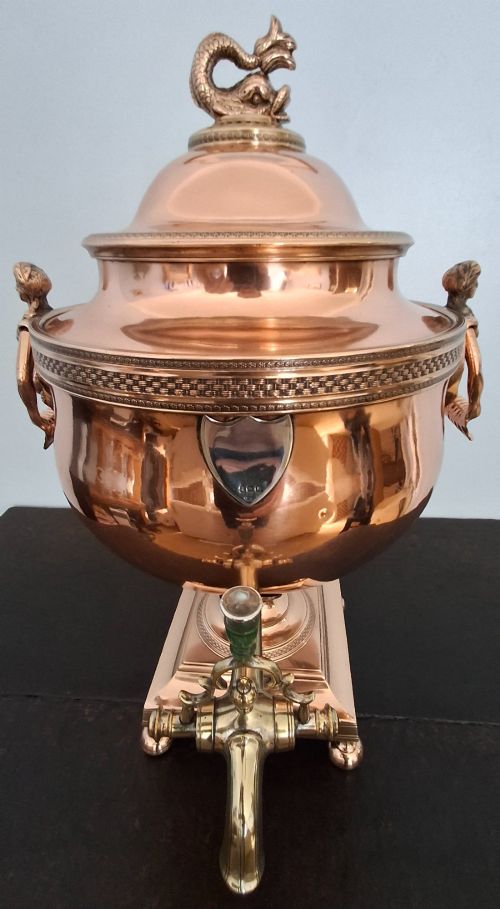
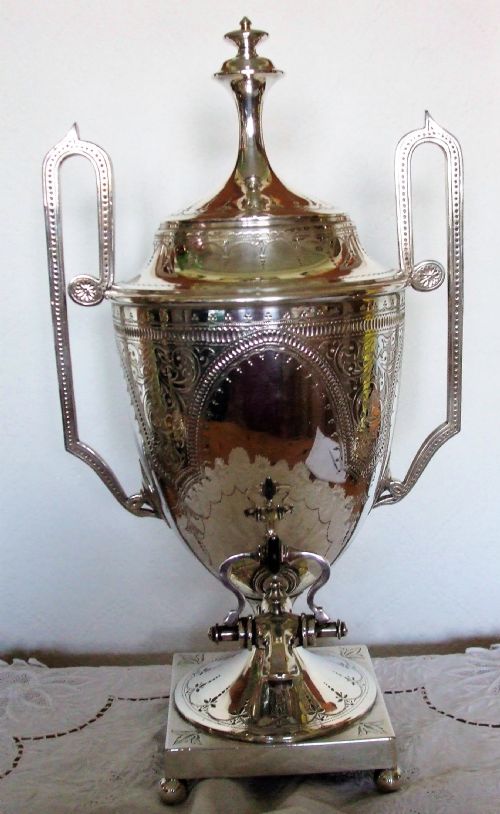
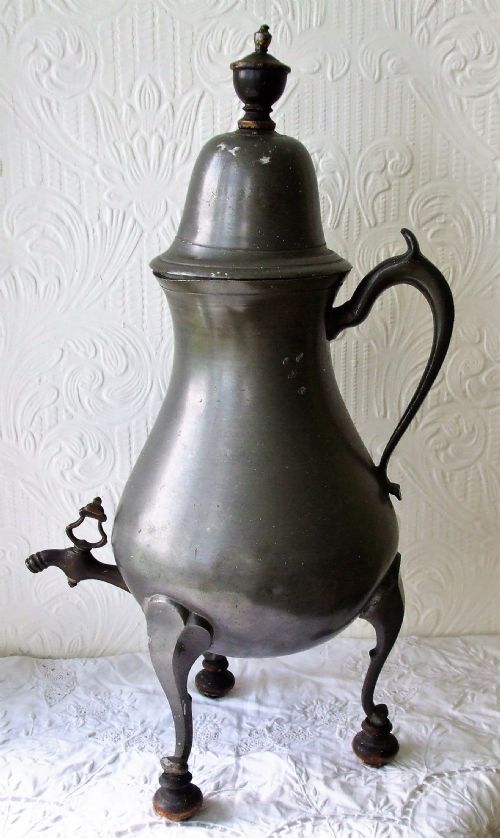
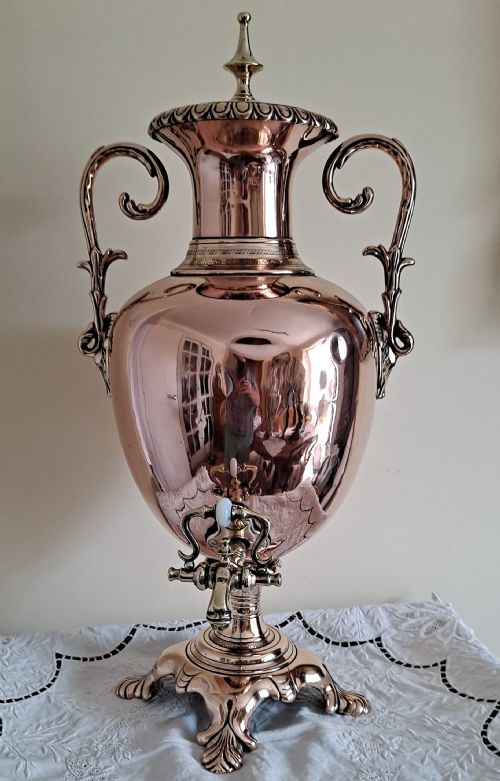
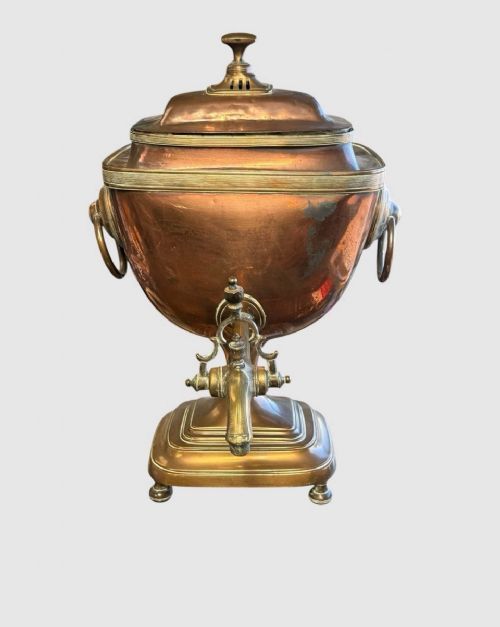
When you search for a vintage tea samovar, you encounter vessels designed for heating and dispensing water, often taking the form of tea urns, coffee urns, and spirit kettles. The selection relies heavily on nineteenth-century examples, with Victorian and Regency pieces appearing alongside earlier Georgian designs and Edwardian iterations.
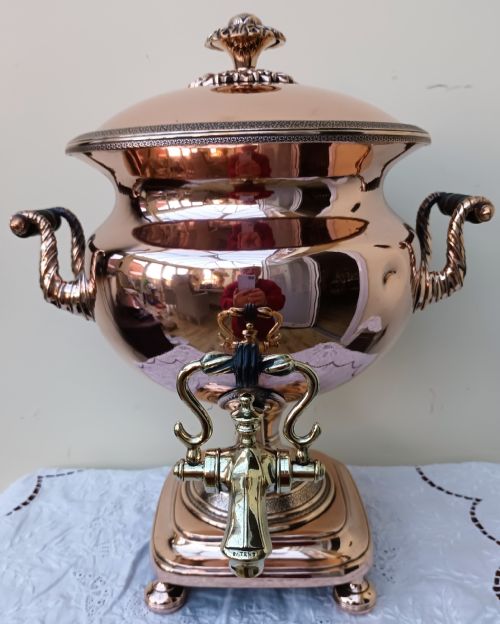
Most items you meet here are fabricated in copper, frequently accented with brass or paired with silver plate. These forms range from large Victorian copper samovars complete with taps to smaller Regency bronzed copper vessels and kettle-on-stand arrangements.
Makers and origins span English and Dutch workshops, encompassing styles from Georgian Neoclassical to Arts and Crafts. Collectors select these objects for their commanding presence on a sideboard or dresser, where metal surfaces catch the light.
How they were made
Artisans built these vessels primarily using sheet copper, brass, and pewter, shaping the metal bodies through hand-beaming and joining techniques. Many examples incorporate wooden or ebonised wood handles and bone insulators on the spigots to manage heat transfer during use.
Surface treatments vary from polished silver plating over a base metal to bronzed copper finishes and plain beaten metal. Components such as taps, spouts, and spirit burners involve cast brass elements fitted carefully to the main body.
Vintage Tea Samovar Retail Price Guide 2026
Typical asking prices for vintage tea samovar among the pieces listed under this phrase on Sellingantiques today, from the lower quarter to the upper quarter. They describe what is for sale here now, not the wider market.
Listings span the eighteenth, nineteenth, and early twentieth centuries, uniting Georgian, Victorian, and Edwardian design traditions.
What varies in quality
Distinction across these pieces rests on the weight of the metal and the crispness of decorative casting on handles and spigots. Finer examples retain integrated internal heating tubes and matching spirit burners rather than relying on replacement parts.
Proportion and decorative restraint separate standard production from superior items. Pieces displaying harmonious Regency lines or finely chased George III ornamentation demonstrate higher workshop standards than plain utilitarian vessels.
Walker and Hall
The Vintage Tea Samovar Glossary
- Samovar
- A heated metal container traditionally used to boil and heat water for tea. Most examples feature an internal vertical tube containing burning charcoal or a metal heater.
- Spirit Kettle
- A portable water kettle mounted on a metal stand above a small spirit burner. This setup kept water hot at the tea table.
- Georgian Neoclassical
- A decorative style spanning the eighteenth century characterised by symmetry, classical restraint, and urn motifs. It influences the clean proportions seen in many period water vessels.
- Ebonised Wood
- Timber treated with a dark finish to resemble ebony. Makers used this material for handles and knobs to provide a strong contrast against polished copper and brass.
Vintage Tea Samovar: Frequently Asked Questions
How do samovars work?
Traditional samovars utilise an internal metal pipe running through the centre of the water chamber to heat the liquid. Users placed burning fuel or heated blocks inside this tube to bring the surrounding water to a boil.
Later versions adopted spirit burners positioned beneath the vessel or relied on pre-heated water kept warm for service at the table.
Where were samovars placed?
These vessels typically occupied a prominent position on a sideboard, serving table, or dedicated tea table during social gatherings. Their height and polished metallic surfaces made them natural focal points in a dining room or parlour.
In modern interiors, they function well atop sideboards or large cabinets as decorative objects that reflect ambient light.
How do I date a samovar?
Dating relies on examining the manufacturing techniques, stylistic details, and metal composition of the vessel. Georgian and Regency pieces often exhibit classical urn proportions and fine hand-beaten construction, while Victorian examples tend to be heavier with more ornate cast brass fittings.
Maker marks, where present, help pinpoint specific silversmiths or manufacturing firms active during periods such as the Edwardian era.
Can I use an antique samovar?
Most antique samovars serve primarily as decorative display items rather than functioning kitchen appliances. Wear to internal linings and the presence of older metallic solders mean they are best appreciated for their craftsmanship and historical design.
Displaying them dry on a stable surface preserves the integrity of the copper, brass, and silver-plated finishes.