
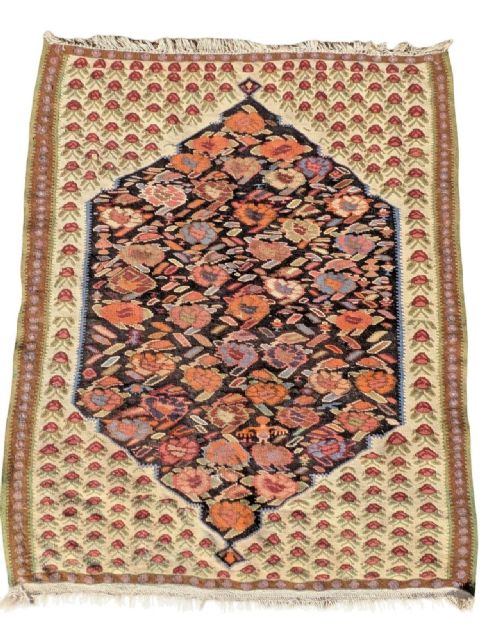
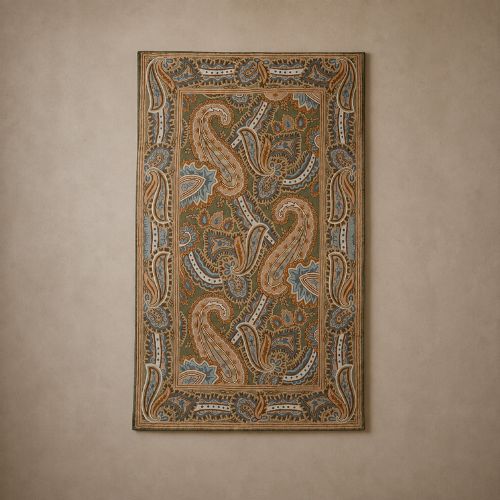
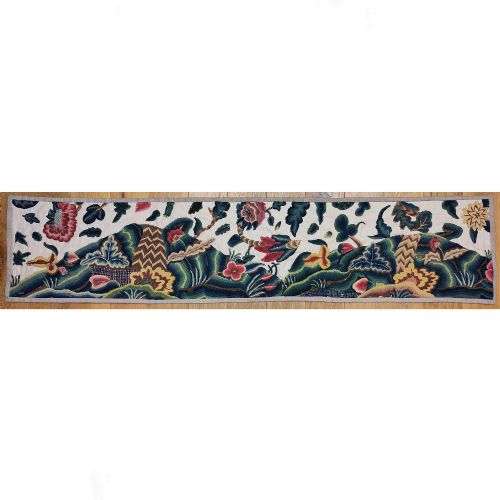


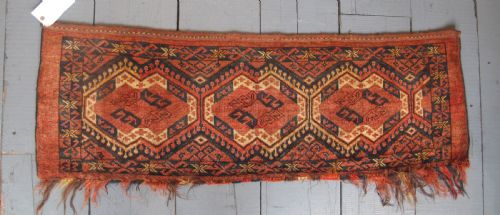
Vintage Tapestry Runner
A vintage tapestry runner offers linear textile interest for hallways or tables, bringing patterned wool and linen into domestic spaces.
Vintage Tapestry Runner
A vintage tapestry runner encompasses elongated woven textiles, flatweaves, and embroidered panels designed for narrow placements. When searching for a vintage tapestry runner, buyers encounter flatwoven kilims, embroidered hangings, and narrow carpet formats spanning periods from the eighteenth century through to the mid-twentieth century.
Makers and weavers utilised traditional wool, cotton, linen, and metallic threads, producing items that function as floor coverings or wall-mounted runners. The inventory spans simple geometric village weaves to complex floral Bessarabian compositions.
How they were made
Weavers constructed these runners using wool, hand-spun wool, cotton, and linen foundations, frequently incorporating metallic thread for highlighted details. Flatweaving techniques predominated in kilims, whilst embroidery utilised wool or silk yarns stitched onto linen, cotton, or velvet backings.
Dyers employed natural or early synthetic colourants to achieve soft reds, blues, and earth tones seen across Central Asian, Persian, and European examples. Panels were occasionally constructed in multiple strips, such as Uzbek suzanis woven in several sections before being joined together.
Listings incorporate nineteenth-century formats alongside twentieth-century regional flatweaves, spanning wool, cotton, linen, and metallic thread.
What varies in quality
Quality differentiates through the fineness of the weave, the complexity of the design, and the integrity of the materials. Tightly packed wool foundations and crisp execution of motifs distinguish superior tribal and European panels from simpler utility pieces.
The sophistication of the colour palette and the preservation of original dimensions also influence the standing of a textile. Expert handling of traditional dyeing and precise alignment in multi-strip constructions mark the higher tier of these runners.
The Vintage Tapestry Runner Glossary
- Kilim
- An un-cut flatwoven carpet or rug produced in regions including Anatolia, the Caucasus, and Central Asia. These textiles lack a pile, relying on interlocking weft threads to create geometric patterns.
- Crewelwork
- A type of embroidery executed with wool yarn on a linen or cotton ground. Historic examples often display scrolling floral and paisley motifs across panels.
- Bessarabian
- Pertaining to flatwoven carpets and textiles from the historical Bessarabia region in Eastern Europe. They typically feature dark grounds paired with naturalistic floral patterns.
- Suzani
- A large embroidered textile originating from Uzbekistan and surrounding Central Asian regions. They are traditionally stitched in silk or wool on cotton foundations, often created in multiple strips.
- Bagface
- The decorated front portion of a nomadic storage sack, removed and preserved as a smaller textile panel. These items display tribal iconography characteristic of Turkmen or Caucasian weavers.
Vintage Tapestry Runner: Frequently Asked Questions
Where should I place a vintage tapestry runner?
These elongated textiles suit narrow hallways, corridors, or long tabletops where linear patterns add visual structure. They also function as wall hangings when structural floor placement is impractical.
Heavier wool and flatweave constructions handle moderate foot traffic, whilst delicate embroidered panels benefit from wall mounting to protect fragile threads.
How do I care for antique wool textiles?
Maintenance requires gentle vacuuming without a rotating brush attachment to prevent pulling loose fibres or threads. Regular rotation distributes wear evenly across high-traffic areas.
Professional textile cleaning is recommended for deep maintenance. Direct sunlight should be avoided to prevent the fading of natural and early synthetic dyes.
How are different regional kilims identified?
Regional identification relies on specific design motifs, colour palettes, and structural weaving techniques. Caucasian and Anatolian pieces often favour geometric medallions, whilst Bessarabian examples display floral sprays.
Materials also provide clues, such as hand-spun wool and specific strip construction methods found in Central Asian and Afghan workshops.
What is the difference between a flatweave and an embroidered panel?
Flatweaves like kilims are constructed during the primary weaving process by interlocking coloured weft threads through the warp. The pattern forms part of the structural fabric itself.
Embroidered panels are created by stitching yarns onto a pre-existing woven foundation fabric, such as linen, cotton, or velvet, after the base textile is complete.