







Vintage Tapestry Desk Chairs
These vintage tapestry desk chairs combine structural timber frames with woven textile upholstery, offering functional seating with period character for a study.
Vintage Tapestry Desk Chairs
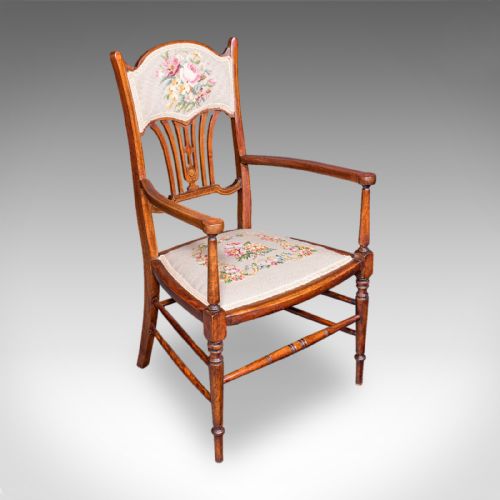
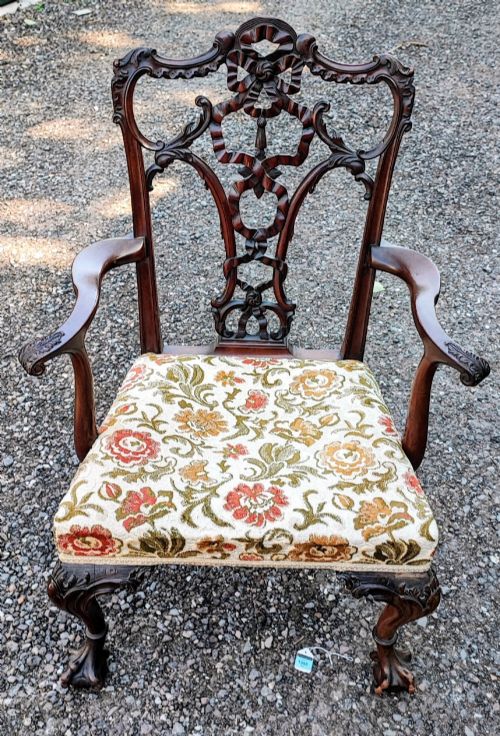
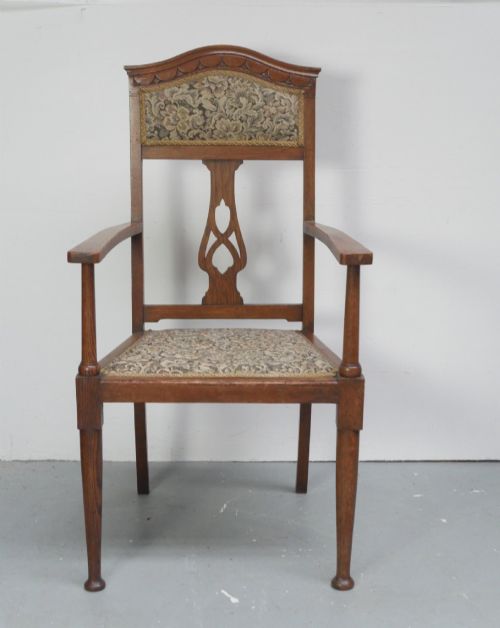
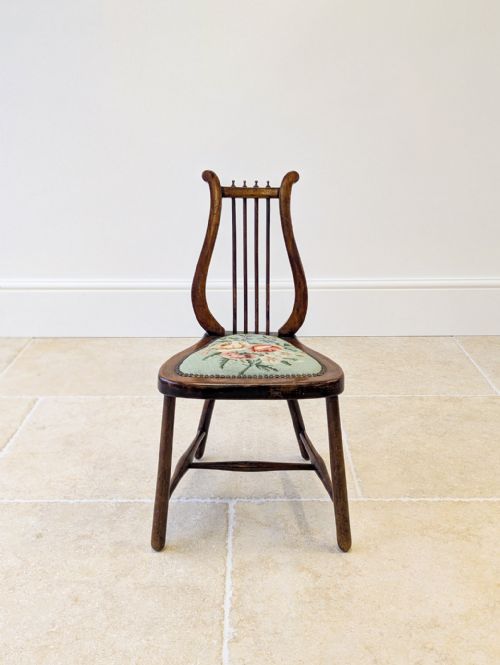
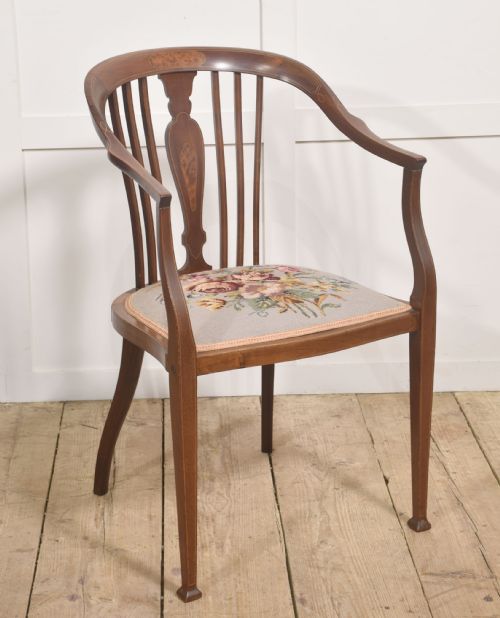
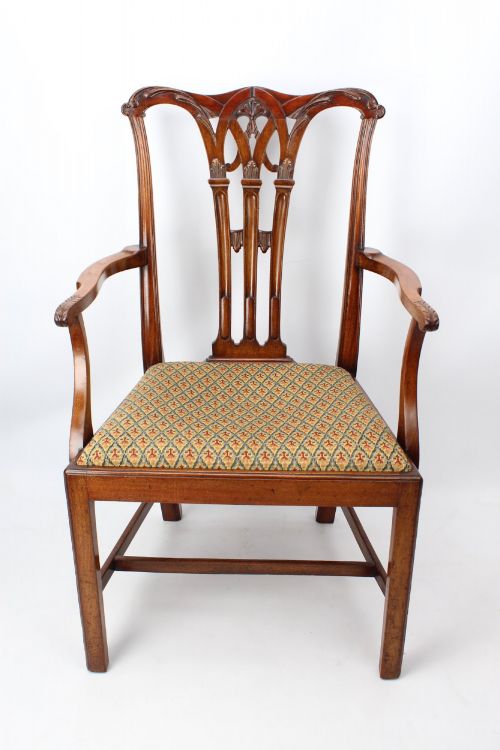
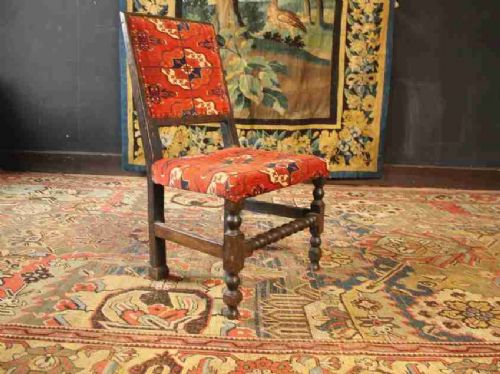
When searching for vintage tapestry desk chairs, buyers encounter timber frames upholstered in needlepoint, textile, or tapestry fabric. The selection on this page spans periods from the eighteenth century through the Edwardian era, incorporating styles such as Chippendale, Regency, and Victorian.
The physical forms include armchairs, elbow chairs, side chairs, and corner chairs originally designed for libraries, morning rooms, and desks. Mahogany and walnut provide the primary wooden framework across most examples, while beech and oak appear in specific regional or period pieces.
Materials and construction
Makers utilised solid hardwoods like mahogany and walnut for the structural frames, often shaping the timber through carving or turning. Satinwood inlay occasionally appears on surfaces to add visual contrast.
Upholstery involves woven tapestry, needlepoint, and textile fabrics applied over traditional stuffing. Brass elements sometimes feature in the hardware and castors associated with these seats.
Vintage Tapestry Desk Chairs Retail Price Guide 2026
Typical asking prices for vintage tapestry desk chairs among the pieces listed under this phrase on Sellingantiques today, from the lower quarter to the upper quarter. They describe what is for sale here now, not the wider market.
Needlepoint seats preserve centuries-old hand-stitched floral patterns made by makers sitting by hearths.
Factors of quality
The refinement of the timber carving and the precision of the joinery distinguish higher-grade frames from simpler utility seating. Sustained structural integrity in the arms and legs indicates superior initial construction.
The execution and condition of the tapestry or needlepoint upholstery significantly influence the character of the piece. Hand-stitched textile work demonstrates greater craftsmanship than standard machine-woven alternatives.
The Vintage Tapestry Desk Chairs Glossary
- Elbow chair
- An armchair with a low back and short arms, often utilised as a desk or writing seat. These provide compact support without the bulk of a full library armchair.
- Needlepoint
- A type of canvas work embroidery utilised for seat covers and upholstery. This technique employs wool or silk threads stitched by hand to form pictorial or geometric patterns.
- Corner chair
- A seating form designed to fit into the corner of a room, featuring a diagonal seat plan and a continuous curved backrest. They frequently appear in eighteenth-century and Victorian contexts.
- Carver chair
- An open armchair, typically constructed in mahogany or oak, featuring structural arm supports. The term often describes dining or desk armchairs from the eighteenth and nineteenth centuries.
- Sabre leg
- A concave-curving furniture leg that tapers towards the foot, characteristic of Regency design. This form borrows from classical Greek and Roman furniture archetypes.
Vintage Tapestry Desk Chairs: Frequently Asked Questions
What is a vintage tapestry desk chair?
These items are period timber seats upholstered in woven textile, needlepoint, or tapestry fabrics. They serve as functional desk chairs or occasional seating.
The inventory includes examples from the Georgian, Victorian, and Edwardian eras constructed primarily from mahogany and walnut.
How do I date a wooden armchair?
Dating relies on identifying the prevailing style, timber choices, and construction methods. Characteristics such as Chippendale carving or Regency sabre legs point to specific design periods.
Secondary woods and joinery techniques also help determine whether a piece originates from the eighteenth, nineteenth, or early twentieth century.
Are tapestry seats durable for daily use?
Needlepoint and tapestry upholstery provide robust surfaces when the underlying textile remains strong. Regular, careful use helps preserve the integrity of the woven threads.
Evaluating the thickness of the fabric and the stability of the timber frame ensures the chair can handle everyday workspace demands.
What woods are common in these chairs?
Mahogany and walnut dominate the frames across the available pieces. These dense hardwoods offered stability and allowed for intricate carving.
Oak, beech, and satinwood also appear in specific regional designs and inlaid decorative accents.