
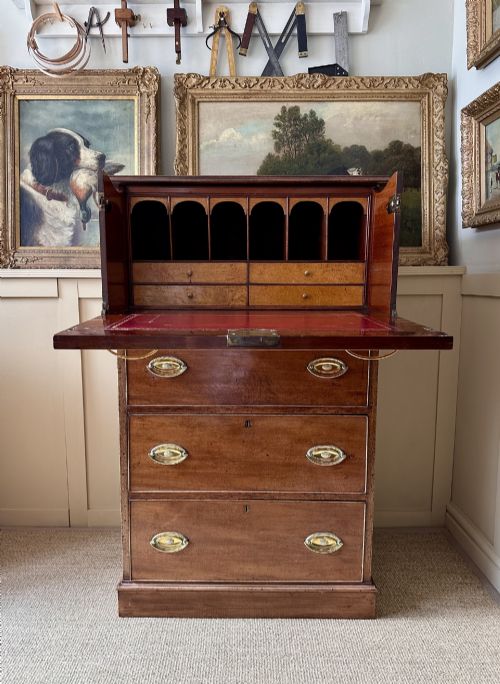
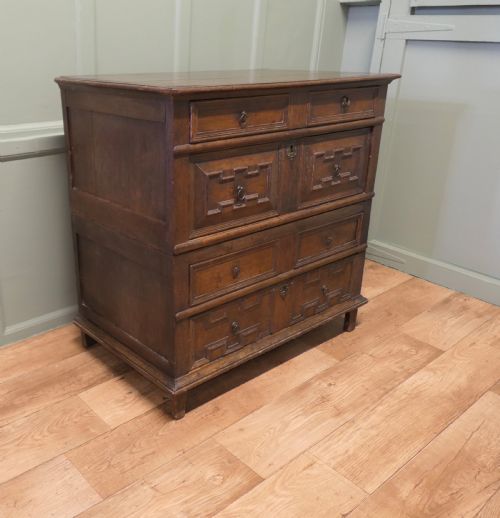
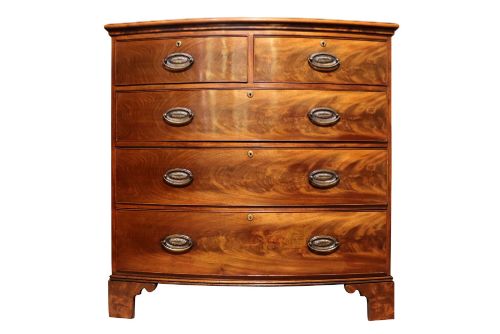
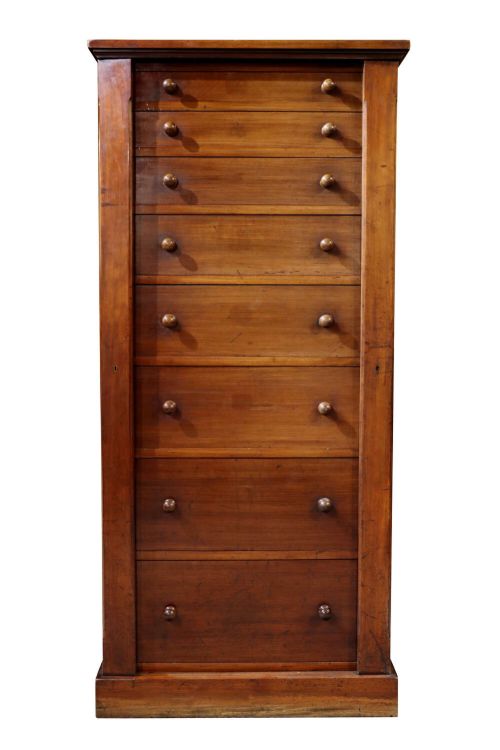
Vintage Tallboy
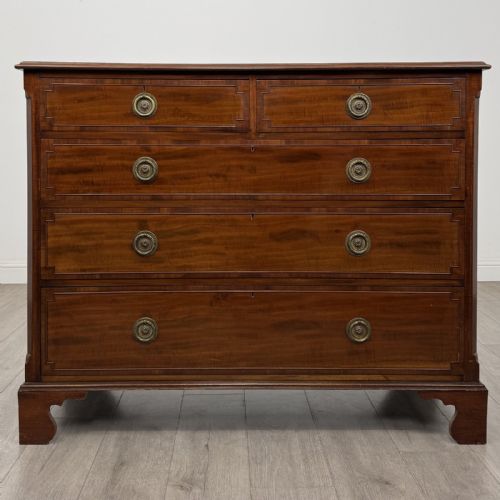
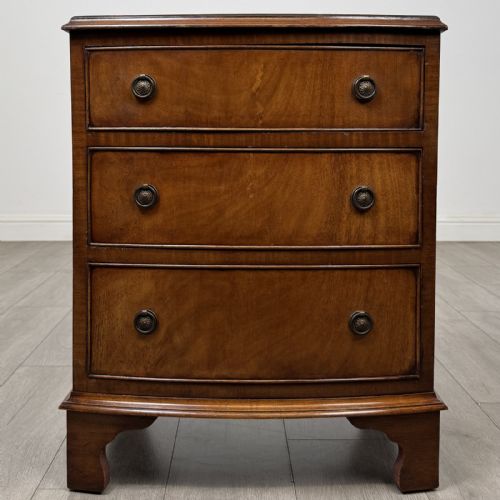
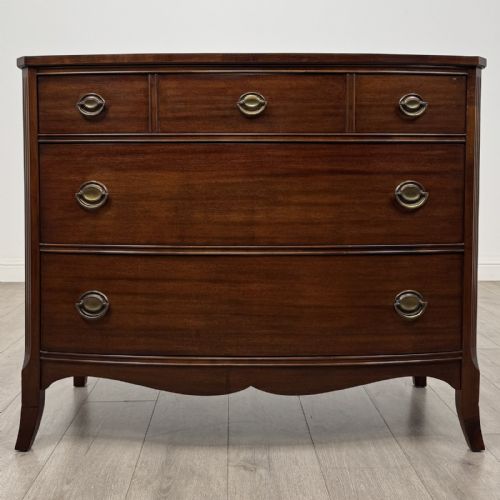
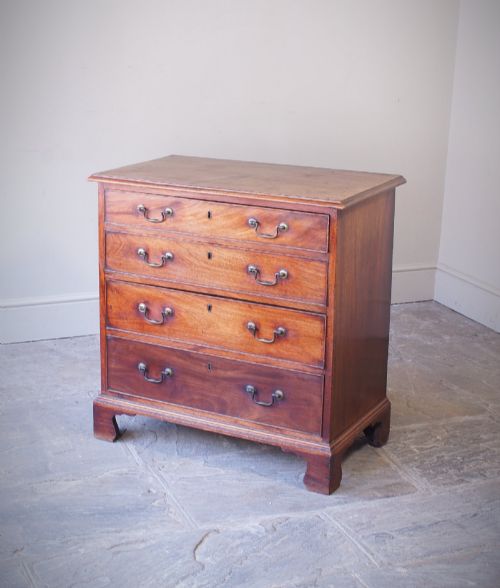
A vintage tallboy brings vertical presence and deep storage to a room, offering classic multi-drawer storage built from rich timbers.
Vintage Tallboy
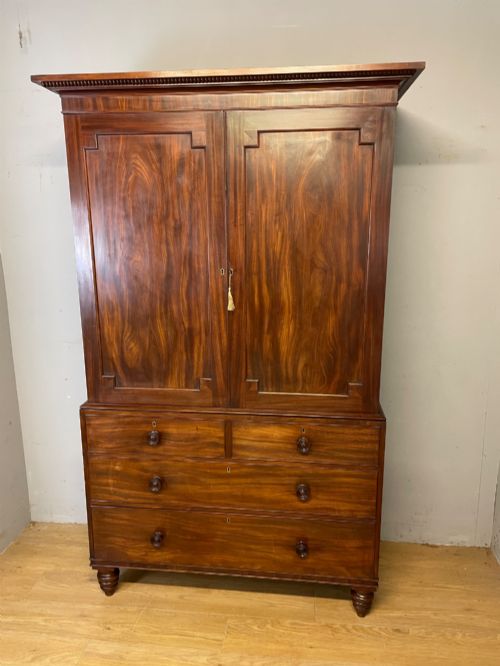
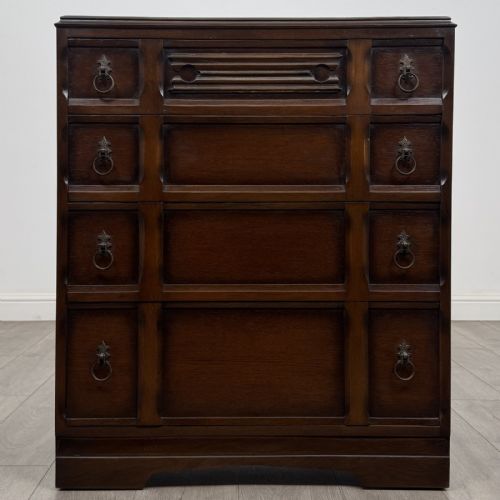
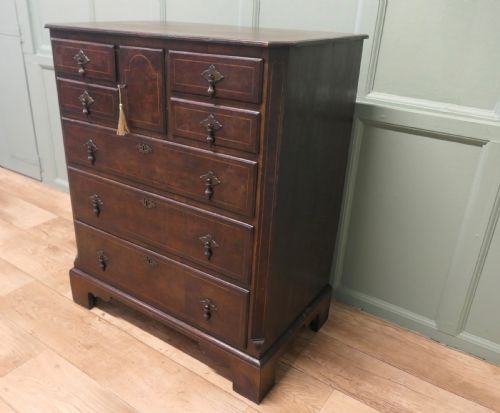
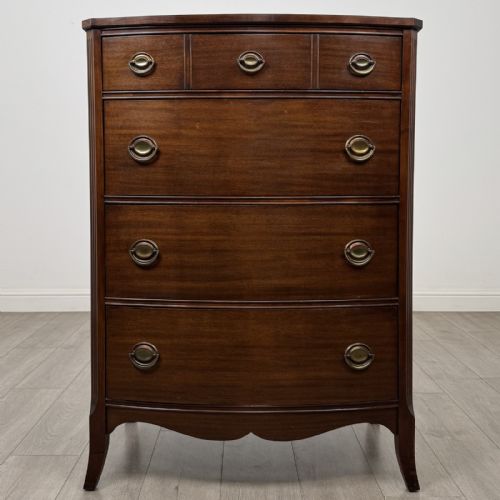
A vintage tallboy encompasses tall storage forms such as chest on chest structures, tall chests of drawers, and linen presses. These vertical pieces provide substantial drawer capacity whilst occupying a smaller floor footprint than traditional wide chests.
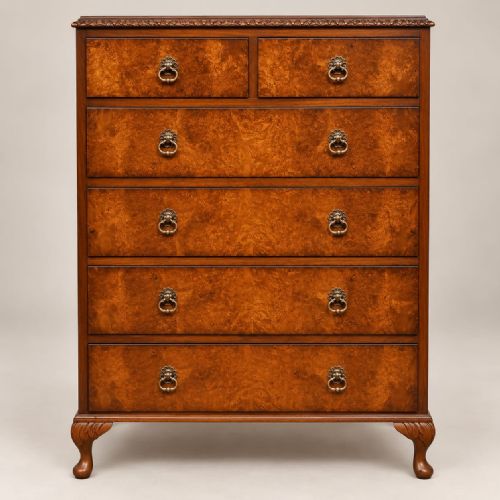
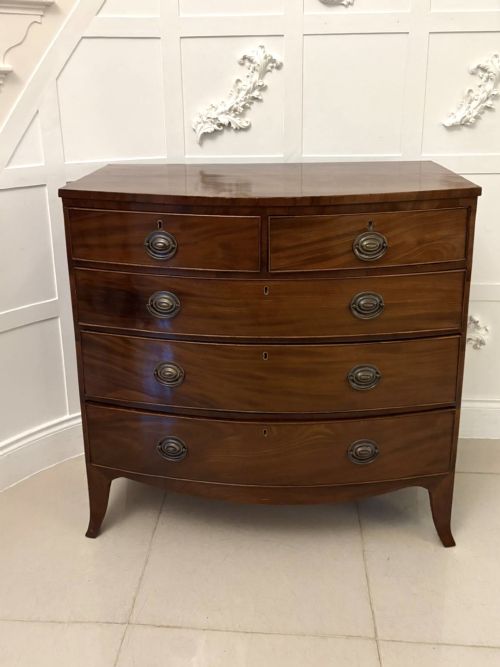
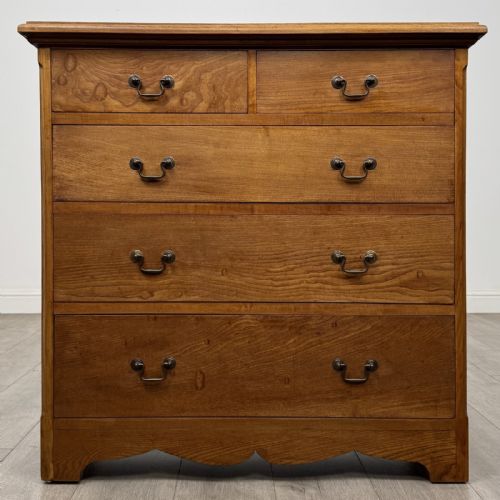
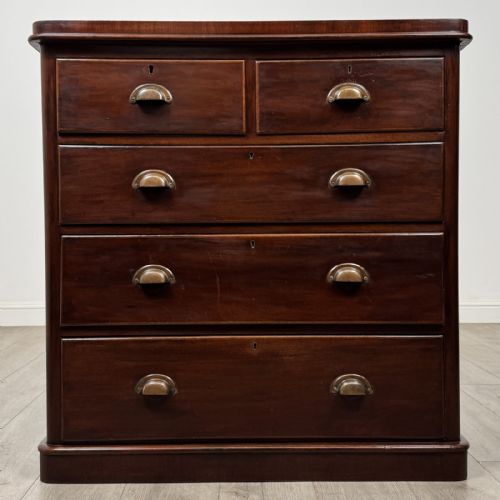
The selections span multiple historical periods including the 18th century, Georgian era, Victorian period, Edwardian years, and the 1920s and 1930s. Buyers frequently encounter mahogany and burr walnut tall chests of drawers alongside oak variations.
Alongside standard drawer configurations, related forms like secretaire desks, wardrobes, and banks of drawers appear within these vertical storage formats. Each type serves the fundamental domestic requirement of organised clothing storage.
How they were made
Cabinet makers constructed these pieces primarily using solid timbers and decorative veneers such as mahogany, walnut, burr walnut, oak, satinwood, and pine. Grain selection played a vital role, with figured veneers applied to drawer fronts for visual depth.
Joining techniques involved traditional drawer construction housed within solid carcases, often supported by bracket feet, bun feet, or raised galleries. Hardware typically included brass handles and cup handles complementing the dark and golden wood tones.
Materials recorded across these items include mahogany, oak, walnut, burr walnut, pine, ash, satinwood, brass, and iron.
What varies in quality
The standard of craftsmanship shows in the selection of timber figure, such as the richness of flame mahogany or burr walnut veneers. Superior examples display careful book-matching and symmetrical grain patterns across multiple drawer fronts.
Proportion and structural harmony dictate the upper tiers of quality, seen in well-balanced heights, crisp mouldings, and original brass hardware. The integration of specialised internal fittings like secretaire drawers or sliding trays also elevates the execution.
The Vintage Tallboy Glossary
- Tallboy
- A tall chest of drawers, often constructed as a chest on chest where one cabinet sits atop another.
- Chest on chest
- A form comprising two distinct sections of drawers stacked vertically, creating a tall storage unit.
- Linen press
- A tall cabinet featuring upper doors enclosing sliding trays or shelves above lower storage drawers.
- Secretaire
- A desk configuration featuring a drop-front writing flap that conceals small drawers and pigeonholes inside.
- Bracket foot
- A structural support foot shaped like a bracket, commonly found on Georgian and later case furniture.
Vintage Tallboy: Frequently Asked Questions
What is the difference between a tallboy and a standard chest of drawers?
A tallboy is built vertically, typically stacking one cabinet section upon another or extending upwards to maximise storage capacity while minimising floor space.
Standard chests of drawers remain lower and wider, designed to sit comfortably below average window heights or to support a mirror on top.
How do I identify a Georgian tallboy?
Georgian pieces generally exhibit dense timbers such as mahogany or oak, clean proportions, and traditional joinery like hand-cut dovetails. They frequently rest on bracket feet and utilise brass batwing or pull handles.
Later revival pieces or 20th-century interpretations often copy these stylistic cues but display different secondary woods and internal construction methods.
Where should I place a tallboy in my home?
Because of their vertical rise, these pieces suit bedrooms, dressing rooms, or hallways where floor space is at a premium. They provide deep storage without crowding the room.
Ensure adequate clearance for opening drawers and doors, particularly if the piece incorporates a pull-out secretaire flap or upper cupboard doors.
What woods are most common in these pieces?
Mahogany and oak appear frequently across multiple periods, offering durability and deep natural grain patterns. Walnut and burr walnut are also common, prized for their complex, figured surfaces.
Alternative materials like pine, ash, and satinwood occasionally appear, reflecting regional preferences and changing design tastes through the nineteenth and twentieth centuries.