
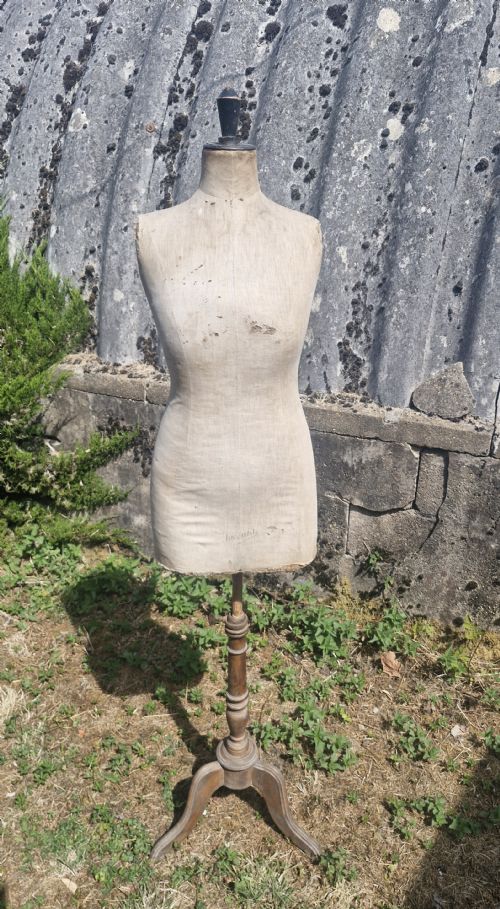


Vintage Tailors Mannequin
A vintage tailors mannequin brings industrial character and structural form into a room, offering a sculptural display piece for interiors.
Vintage Tailors Mannequin
A vintage tailors mannequin encompasses dressmakers dummies, shop mannequins, and bust forms originating from periods such as the Victorian era, the Edwardian years, and the 1920s and 1930s. These pieces include both adult figures and child shop mannequins, alongside specific mannequin heads.
Buyers examining a vintage tailors mannequin will encounter French designs, including examples marked by Paris makers, alongside British pieces. The forms range from simple bust displays mounted on stands to full-length male and female cloth-covered figures.
Construction and materials
Makers constructed these pieces using wood, metal, and heavy canvas or linen, often utilising papier-mache and composition materials to shape the torso. Some specialised examples incorporate terracotta or leather, combining structural rigidity with tactile fabric surfaces.
Stands and bases were fashioned from turned wood or cast metal, providing steady support for the weighty torsos above. Surface finishes on the bodies typically involve stretched cloth, sometimes stamped with maker details or serial numbers.
One listed child mannequin comes paired with an antique costume coat.
Assessing the build
Quality in a vintage tailors mannequin lies in the integrity of the core materials and the durability of the adjusting mechanisms. Torsos formed from robust papier-mache or composition under tight linen show superior longevity compared to lighter alternatives.
The sophistication of the wooden or metal base and the clarity of any maker stamps or branding contribute significantly to the standing of an individual piece. Original proportions and unaltered surface patination on the fabric distinguish finer examples.
Stockman of Paris·Pierre Iman·Kennet & Lindself
The Vintage Tailors Mannequin Glossary
- Stockman
- A prominent maker name frequently associated with French workshop production. These pieces often carry specific model numbers and Paris stamps.
- Papier-mache
- A composite material formed from paper pulp and binder, used to create sturdy lightweight internal shells for the torso.
- Dressmakers dummy
- A functional torso form used historically for fitting and altering garments, often mounted on a single wooden pillar.
- Composition
- A moulded material made from mixtures of pulp, resin, and hardening agents, utilised for detailed heads and body sections.
Vintage Tailors Mannequin: Frequently Asked Questions
How do I date a mannequin?
Dating relies on materials, construction methods, and any stamped maker marks found on the torso or base. Earlier pieces from the nineteenth century often feature hand-stitched linen and turned wooden stands.
Later examples from the nineteen twenties and thirties introduce distinct art deco proportions or specific manufacturer stamps from Paris workshops. Comparing the base hardware and the weave of the fabric helps narrow the production decade.
Can I hang clothes on them?
These pieces were built to support textiles, making them suitable for displaying coats, dresses, and vintage garments. The sturdy interior construction bears the weight of most historical and modern clothing.
Care should be taken with fragile antique fabrics to ensure the outer linen or canvas surface of the dummy does not snag the garment.
What is the difference between a dummy and a bust?
A bust focuses solely on the upper torso, often designed to sit on a table or attach to a simpler desktop mount. These are compact and suited for displaying necklaces, collars, or hats.
A full mannequin includes the torso and is usually mounted on a floor-standing pillar with a heavy base, allowing for the display of full garments and outfits.
How do I clean the fabric?
Cleaning should be approached gently to preserve the original patina and any faded maker stamps on the linen or canvas. Light surface dust can be removed using a soft brush or a low-suction vacuum attachment.
Water and chemical solvents should be avoided, as moisture can damage the internal papier-mache or composition core and cause staining on aged textiles.