
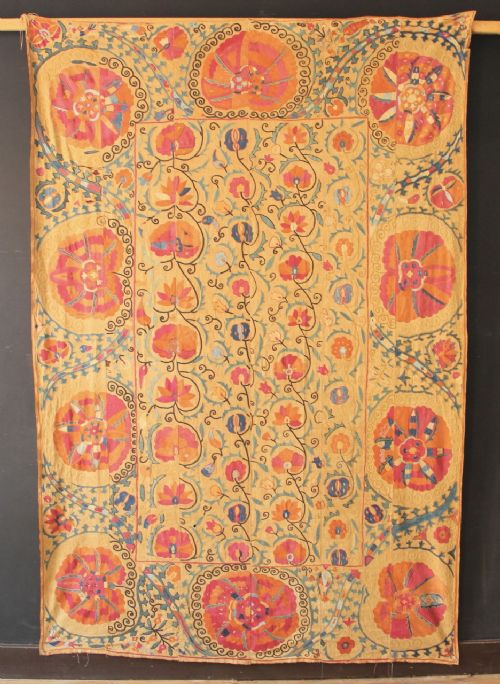


Vintage Suzani Textile
When you search for a vintage suzani textile, you enter the rich world of Central Asian needlework, where tribal heritage meets domestic artistry.
Vintage Suzani Textile
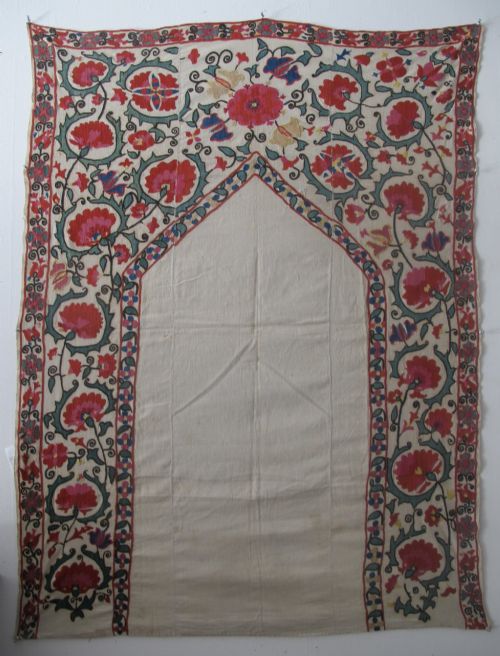
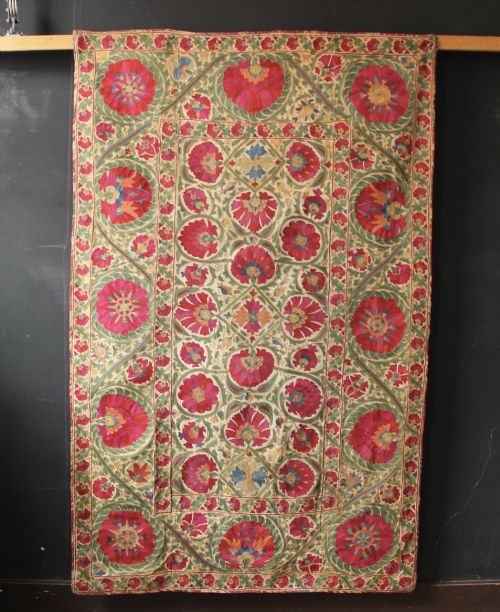
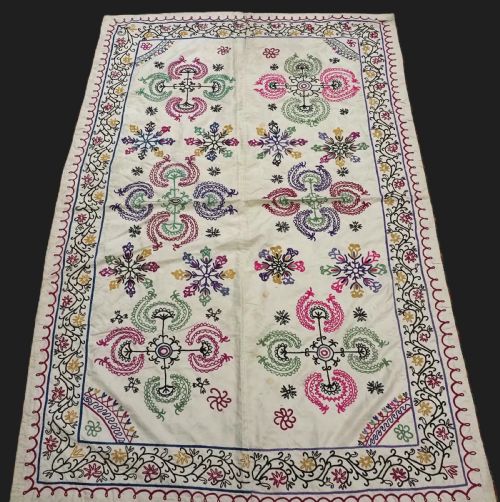
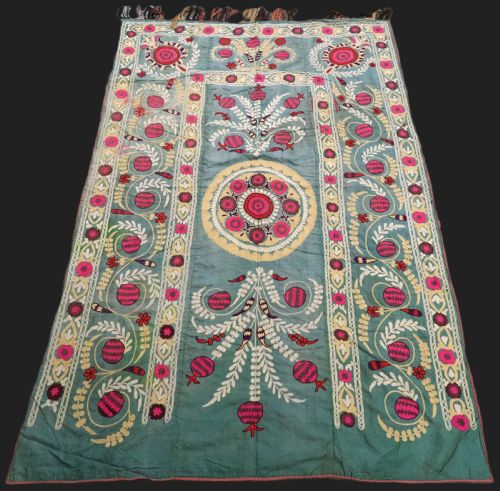
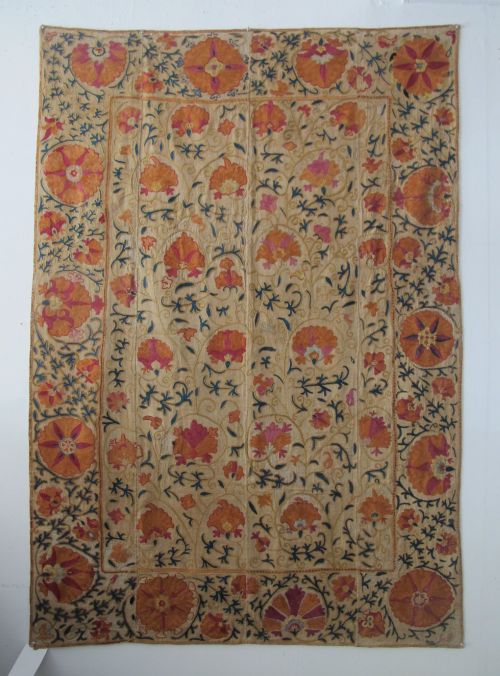
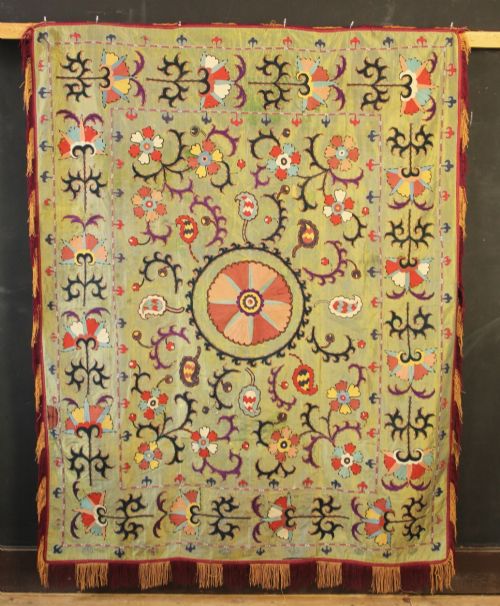
The selections available range from large medallion variants and architectural Bokhara designs to smaller nim suzanis and yurt wall hangings. Most examples date from the nineteenth and early twentieth centuries, reflecting the folk art and tribal traditions of the region.
Buyers will encounter formats including prayer suzanis, kilim-woven hybrids, and specific domestic items like the ru-i-jo bed cover or the ilgich dowry panel. Each piece carries distinct motifs rooted in nomadic life and domestic celebration.
Materials and Construction
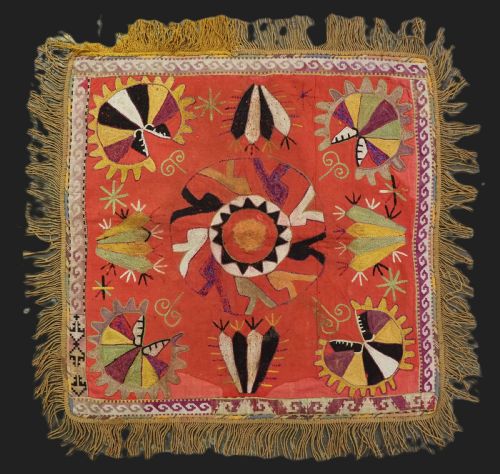
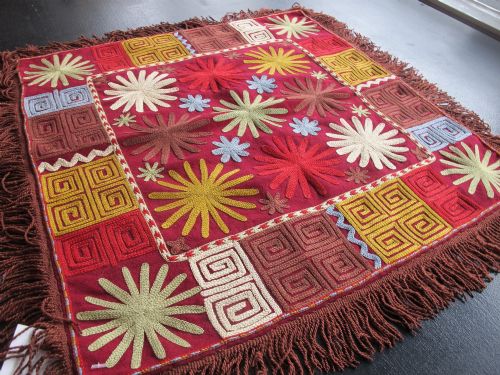
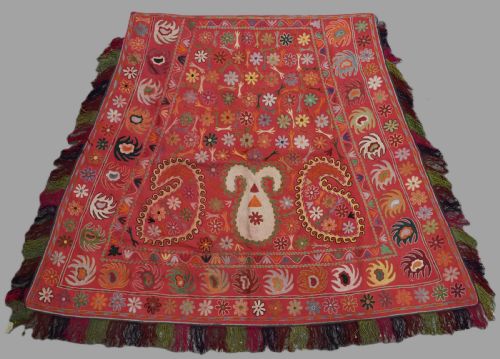
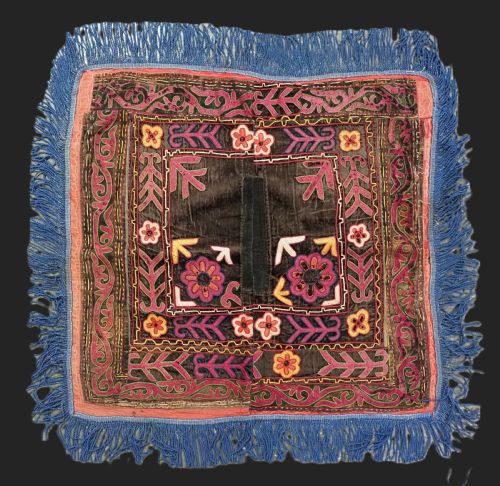
Makers utilised natural foundations for these embroideries, frequently employing cotton, wool, velvet, or adras, which is a traditional silk and cotton blend. Grounds appear in various tones, including striking red wool, yellow cotton, and black cotton.
Fine silk thread forms the primary embroidery medium, worked intricately across the fabric ground to build dense, colourful geometric and floral motifs. Certain examples incorporate kilim weaving techniques alongside traditional needlework.
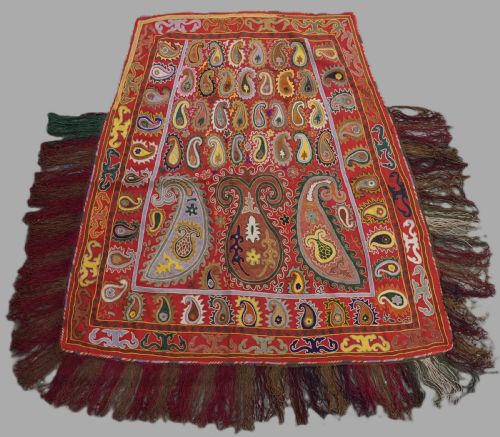
The inventory includes specialised forms such as prayer suzanis, bed covers, and ceremonial horse covers from Central Asian makers.
Evaluating the Craft
Quality rests in the precision of the silk threadwork and the complexity of the design layout, such as architectural elements or large medallion variants. The choice of foundation material, from standard cotton to rich adras and red wool, influences the structural depth of the embroidery.
The harmony of natural dyes and the preservation of intricate tribal motifs distinguish finer works from simpler village pieces. Regional execution, particularly the distinct needlework associated with Lakai or Shahrisabz artisans, dictates the character of the textile.
The Vintage Suzani Textile Glossary
- Suzani
- A traditional embroidered textile from Central Asia, typically created in panels and joined together. The name derives from the Persian word for needle.
- Nim Suzani
- A smaller or half-sized version of the standard suzani wall hanging or bed cover. These compact pieces were often utilised in smaller domestic spaces.
- Adras
- A traditional woven fabric composed of a silk warp and a cotton welt. It provides a sturdy yet lustrous ground for silk embroidery.
- Ilgich
- A specific type of Central Asian embroidery used for dowry furnishings and wall decoration. They frequently originate from tribal groups like the Lakai.
- Ru-i-jo
- A traditional Uzbek bed cover suzani designed for domestic use. These textiles combine large-scale decorative impact with practical warmth.
Vintage Suzani Textile: Frequently Asked Questions
What is a suzani textile used for?
These embroideries served primarily practical and ceremonial purposes within Central Asian households, functioning as wall hangings, bed covers, and dowry pieces. Communities also utilised specific textiles as ceremonial horse covers and yurt wall decorations.
Today, collectors typically mount these panels on walls as decorative art or use them as soft furnishings in traditional and modern interiors alike.
How do I identify a Lakai suzani?
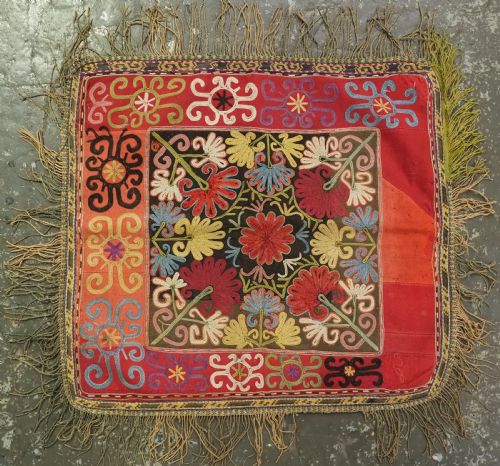
Lakai tribal pieces often feature dynamic, geometric embroidery styles that differ from the flowing floral patterns of urban workshops. They frequently appear on specific grounds like Mogul red wool or dark cotton.
Look for distinctive small formats like the ilgich or horse cover, which display spirited tribal motifs executed in vibrant silk thread.
What materials make up these textiles?
The structural foundation typically consists of hand-woven cotton, wool, velvet, or adras silk-cotton blend fabric. Artisans then applied fine silk thread to create the dense surface embroidery.
Ground colours vary significantly across regions, with striking red, yellow, and black backgrounds providing high contrast to the stitching.
How are different regional styles distinguished?
Regional attribution relies on design geometry, colour palette, and embroidery density associated with centres such as Bokhara or Shahrisabz. Urban workshops favoured balanced floral layouts, while tribal groups employed bolder, abstracted forms.
Examining the backing material and the specific stitch structure helps place the piece within its historical Uzbek or Tajik origin.