


Vintage Style Ruby Ring
A vintage style ruby ring brings together rich red gems and precious metals, offering a striking piece of finger ornamentation for everyday wear.
Vintage Style Ruby Ring
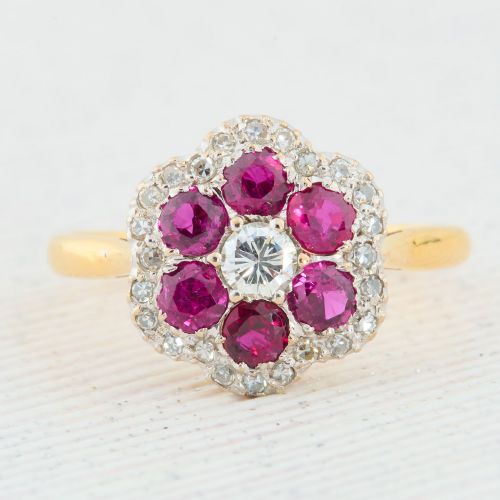
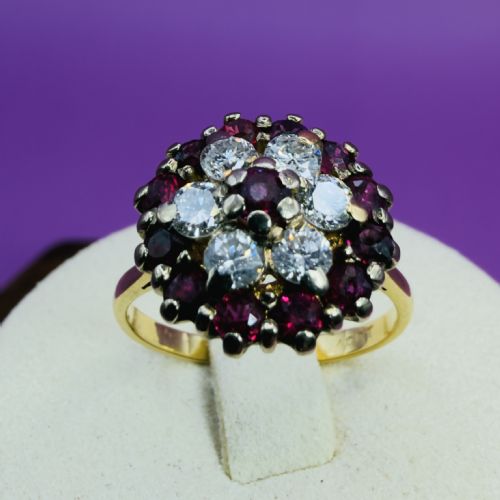
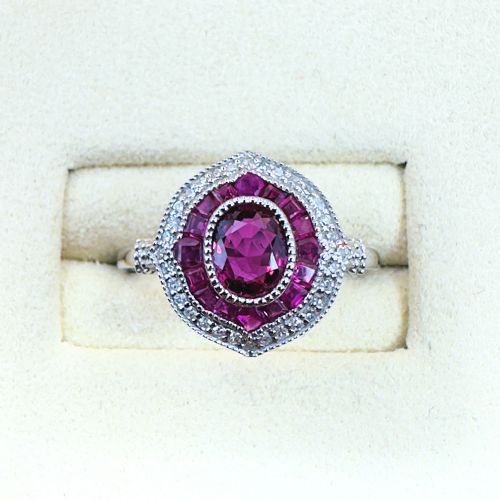
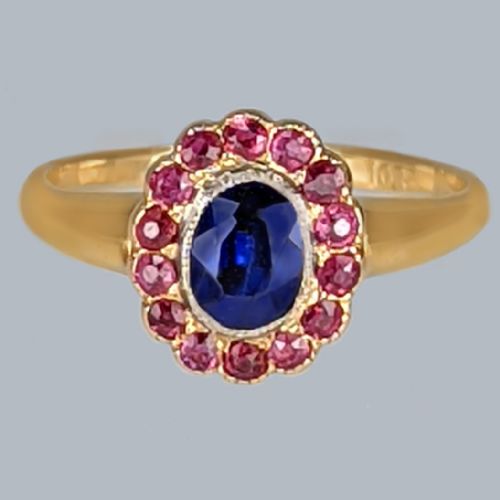
A vintage style ruby ring represents a jewel combining deep red stones with supportive diamonds or pearls, frequently set within cluster arrangements. These pieces draw upon designs from the Edwardian period, the Art Deco era, and the mid-century decades.
The options here span multiple distinct eras, including pieces originating around 1880, 1920, 1940, 1950, and 1960. Mid-century examples and Edwardian style creations appear most frequently among the current selection.
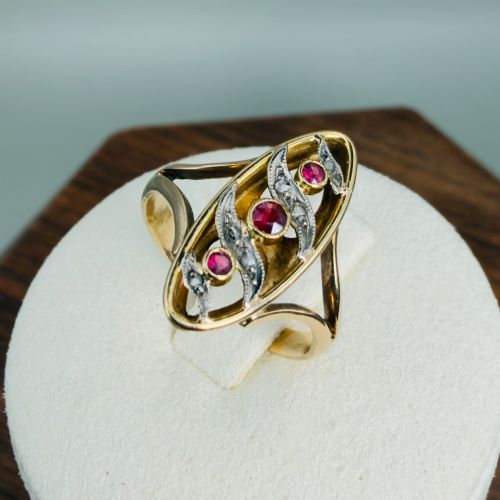
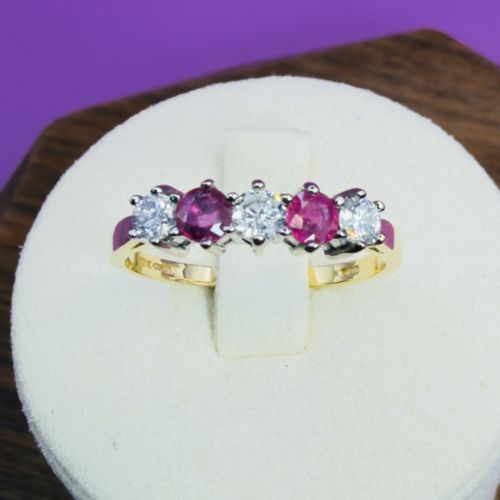
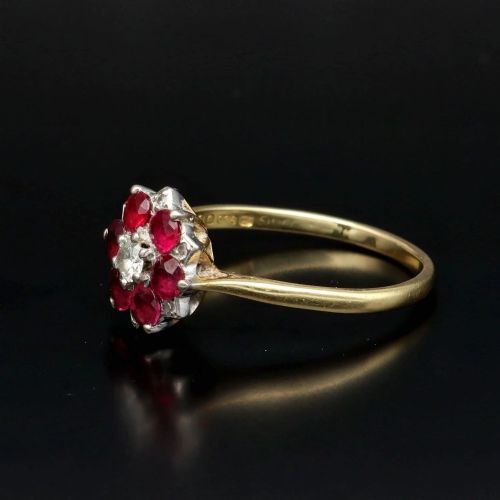
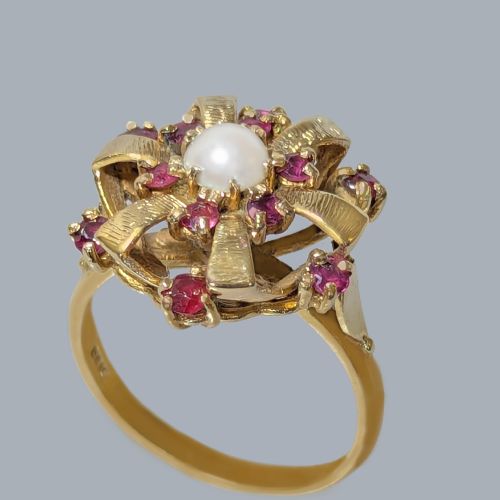
Ring mounts take various forms such as navette shapes, floral clusters, spiral clusters, and simple bands. Many items rely on 18ct gold, while others utilise platinum, 9ct rose gold, or 22ct gold.
Materials and construction methods
Goldsmiths constructed these rings primarily using 18ct yellow gold, 18ct white gold, platinum, and 9ct gold bands. Stones like rubies, diamonds, pearls, and emerald paste are secured into metal settings by hand.
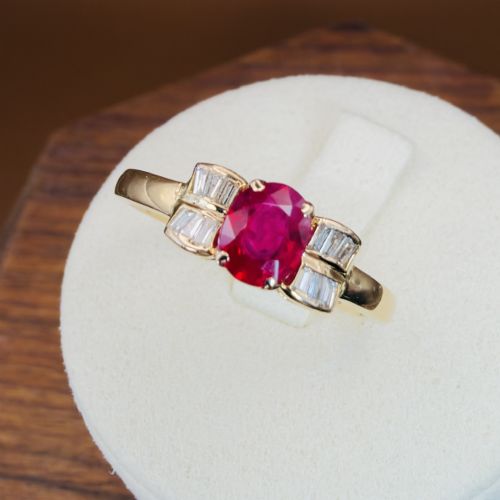
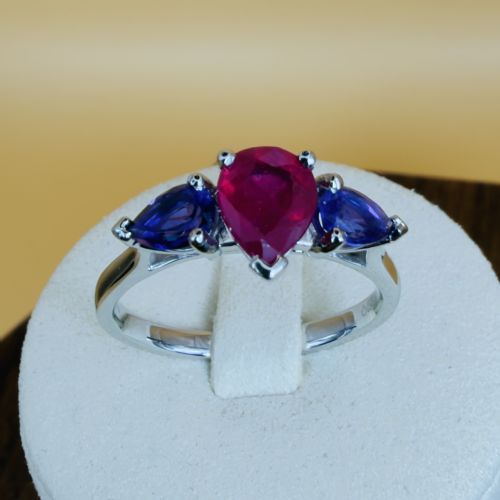
Master jewellers employed techniques suited to each period, from intricate Edwardian wirework and navette framing to mid-century cluster settings that maximise the visual impact of oval, cushion, baguette, and pear cut gems.
Listings feature items incorporating rubies, diamonds, pearls, and platinum across the 1950, 1960, and Edwardian periods.
Distinguishing quality across the range
Quality differences depend upon the selection of the central ruby and the accompanying diamonds, alongside the precision of the metalwork. Pieces featuring substantial gemstone carat weights and certified stones sit apart from lighter band variations.
The durability and finesse of the mounting technique influence the overall calibre of the jewellery. Solid precious metal construction, such as heavy 18ct gold or platinum mountings, demonstrates superior craftsmanship compared to simpler iterations.
The Vintage Style Ruby Ring Glossary
- Cluster ring
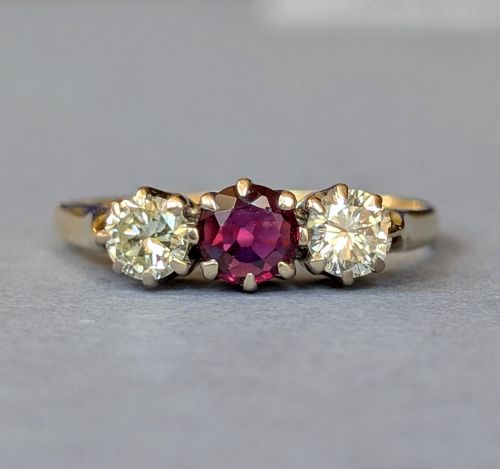
- A ring featuring a central gemstone surrounded by a group of smaller stones, typically diamonds framing a ruby. This layout increases the perceived sparkle and presence on the hand.
- Navette
- A boat-shaped setting that tapers to points at either end, creating an elongated silhouette on the finger. This shape is common in Edwardian and period-inspired designs.
- Baggins
- An alternative term not used here, whereas baguette refers to a narrow, rectangular cut of diamond often used to accent larger centre stones. These linear stones provide geometric contrast in vintage settings.
- Platinum
- A dense, strong, and naturally white precious metal used to securely hold gemstones without imparting colour to diamonds. Its durability allows for delicate claw and basket settings.
Vintage Style Ruby Ring: Frequently Asked Questions
What periods do these rings come from?
The pieces span various decades and aesthetic movements, including Edwardian designs, the 1920s, 1940s, 1950s, and 1960s. Some items reflect earlier Victorian influences from around 1880 alongside mid-century creations.
Each era brings distinct mounting styles and metal choices, ranging from rose gold and platinum to standard yellow gold.
How do I care for a ruby ring?
Rubies are hard gemstones, but surrounding diamonds, pearls, or delicate gold settings require gentle cleaning with warm soapy water and a soft brush. Avoid harsh chemical dips, particularly if pearls or softer stones are part of the cluster.
Store the ring in a separate fabric compartment to prevent scratching softer metals or adjacent jewellery pieces.
Are the diamonds and rubies natural?
Most listings specify natural rubies and diamonds, though individual pieces may incorporate synthetic stones or alternative elements like emerald paste and pearls. Checking the specific description or gem reports provides clarity on stone origin.
Cluster rings frequently combine multiple diamond cuts with a central ruby of varying carat weight.
What metals are typically used?
Makers utilised 18ct yellow gold, 18ct white gold, 9ct rose gold, 9ct yellow gold, 22ct gold, and platinum. Platinum offers high strength for secure stone settings, while yellow and rose gold provide traditional warmth.
Some rings combine different metal purities, such as an 18ct gold head with a 9ct gold band.