


Ruby Target Ring
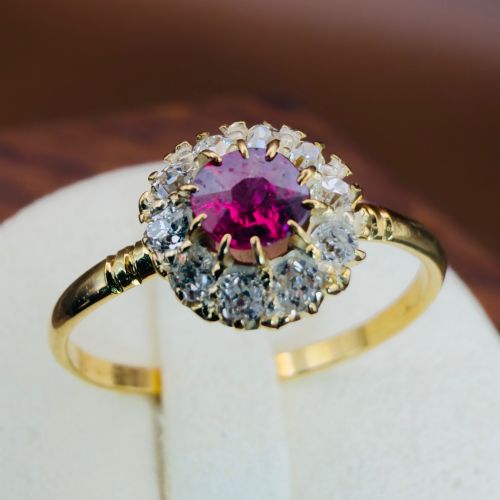
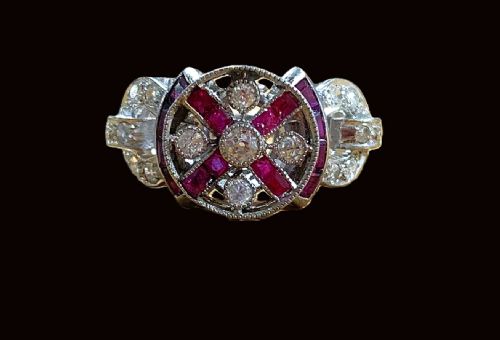
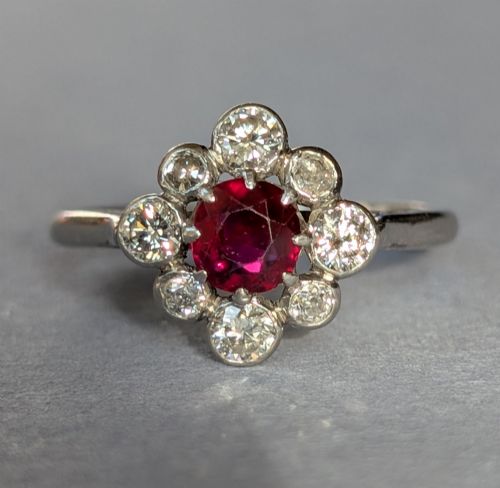
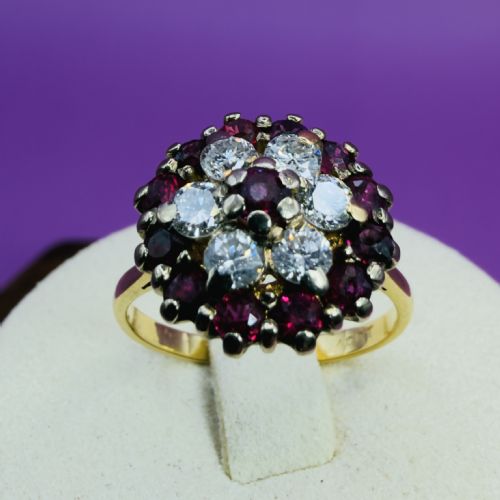
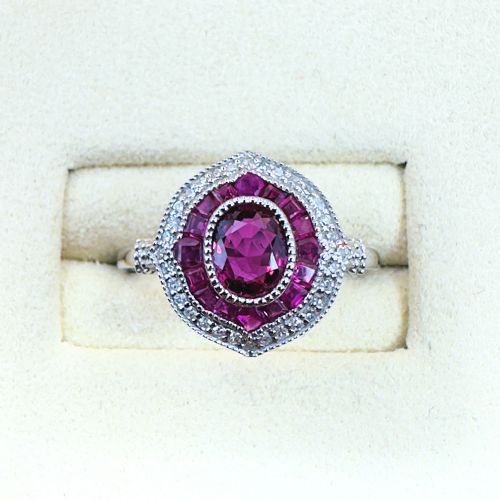
A ruby target ring centres a vivid red stone within concentric geometric tiers of diamonds, offering the concentrated punch of Art Deco design.
Ruby Target Ring
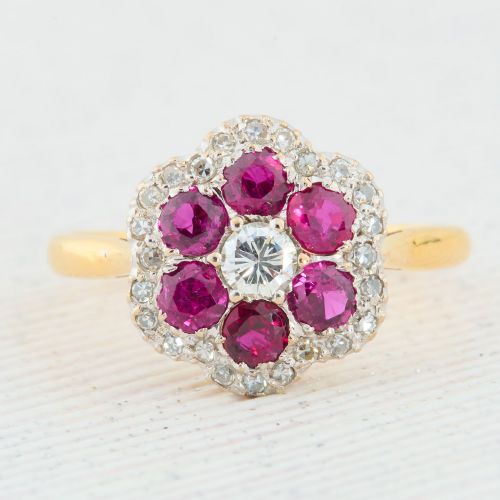
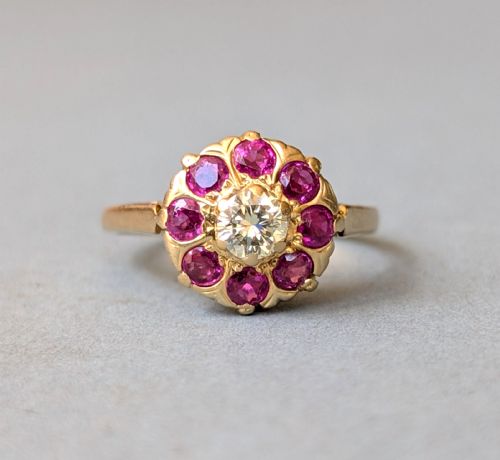
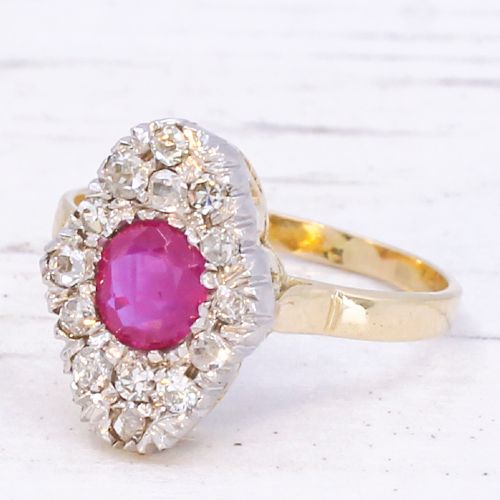
A ruby target ring is a specific form of cluster ring defined by its concentric circular layers, typically setting a central ruby inside one or more rings of diamonds. The majority of pieces on this page originate from the Art Deco period, alongside Victorian, Edwardian, and mid-century examples.
The form relies on geometric precision, often utilising platinum or white gold to heighten the contrast between the deep red ruby and the brilliant white diamonds. Beyond strict target layouts, the selection includes floral clusters and transitional ring types that share the same layered perimeter.
Originating primarily as fine dress rings, these pieces draw the eye through their concentrated symmetry and balanced proportions. Buyers search for this phrase to secure a ring that places high-impact visual geometry directly on the finger.
How they were made
Makers constructed these rings using durable metals such as platinum, 18ct yellow gold, 18ct white gold, and occasional higher carat thresholds like 22ct gold, providing a secure structural chassis for multiple small stones. Platinum became especially favoured during the Art Deco era for its tensile strength, allowing incredibly fine claw and millegrain settings that hold diamonds in tight concentric bands around the ruby.
The central rubies are framed by meticulously cut diamonds, featuring old-cut, rose-cut, and calibré-cut stones tailored precisely to fit curved channel or bezel tracks. Coloured gems such as natural Burmese and Mogok rubies sit alongside pearls, emeralds, and sapphires in specific multi-stone variations, anchored securely by hand-beaten precious metal.
Ruby Target Ring Retail Price Guide 2026
Typical asking prices for ruby target ring among the pieces listed under this phrase on Sellingantiques today, from the lower quarter to the upper quarter. They describe what is for sale here now, not the wider market.
Several pieces tuck secret seed pearls and unexpected sapphires into their concentric layers just to delight an observant eye.
What varies in quality
The overall quality of a ruby target ring rests on the saturation and origin of the central ruby, with stones from regions like Mogok or Burma commanding greater regard for their intense natural fluorescence and depth of colour. Alongside the centre stone, the uniformity and cut of the surrounding diamonds dictate the crispness of the concentric visual tiers.
Constructional finesse separates ordinary workshops from master jewellers, evident in the delicacy of the millegrain work, the symmetry of the concentric rings, and the seamless flush of the metalwork against every facet. A superior piece maintains balanced proportions where no single tier overwhelms the central red focal point.
The Ruby Target Ring Glossary
- Target ring
- A ring design featuring concentric circles of stones radiating outward from a central gem, creating a bullseye visual effect. This layout was exceptionally popular during the Art Deco era.
- Calibré cut
- Gemstones specifically shaped, often square or rectangular, to fit tightly together in a continuous geometric line or border. This technique requires expert lapidary skill.
- Millegrain
- A decorative edging consisting of a line of tiny raised metal beads along the setting borders. It provides a soft, textural finish typical of Edwardian and Art Deco fine jewellery.
- Old cut
- Diamond cutting styles pre-dating modern brilliant faceting, characterised by higher crowns and smaller tables that catch candlelight warmly. These cuts often display distinctive hand-polished facets.
- Cluster ring
- A ring featuring a central gemstone surrounded by a group of smaller stones. The arrangement maximises overall sparkle and presence on the hand.
Ruby Target Ring: Frequently Asked Questions
What defines a ruby target ring?
A ruby target ring is defined by its concentric geometric layout, where a central ruby is encircled by precise tiers of diamonds.
This specific arrangement creates a bold, planar visual effect that sits flat on the hand.
Are these rings suitable for daily wear?
These antique rings require mindful daily wear, particularly older platinum and gold settings with delicate millegrain edges.
Removing the ring during manual tasks helps protect the prongs and the softer ruby centre stone from impact.
How can I tell an Art Deco target ring apart?
Art Deco target rings are distinguished by their sharp geometric lines, platinum or white gold fabrication, and use of old-cut or calibré-cut stones.
They favour symmetrical, architectural patterns over the softer floral curves seen in earlier Victorian pieces.
What materials are typically used?
The primary materials are platinum, 18ct yellow gold, and 18ct white gold, set with natural rubies and diamonds.
Some variations incorporate additional accents like pearls, sapphires, or emeralds within the secondary tiers.