


Vintage Study Table Lamp
A vintage study table lamp provides targeted task illumination while anchoring a workspace in period character.
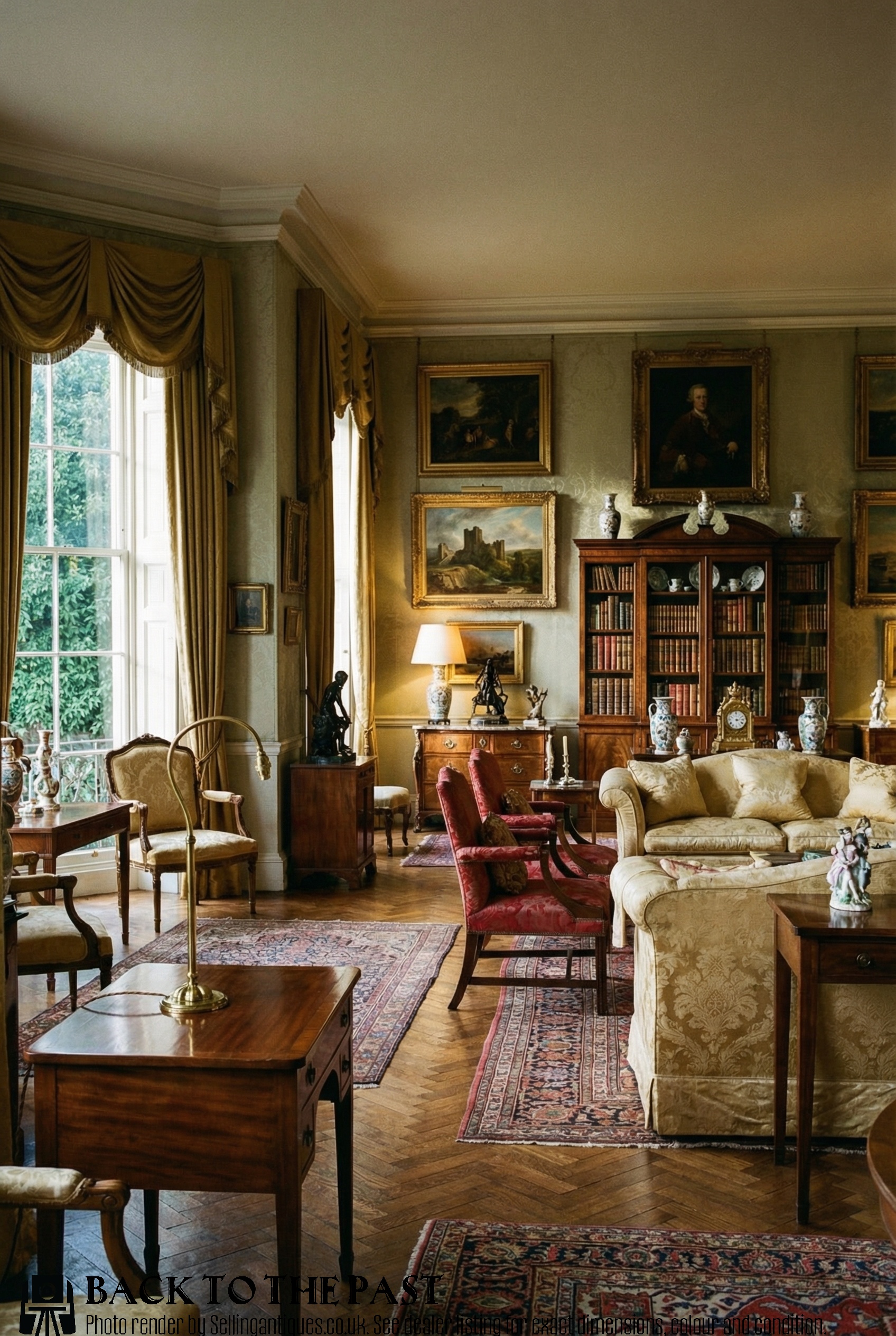
Vintage Study Table Lamp
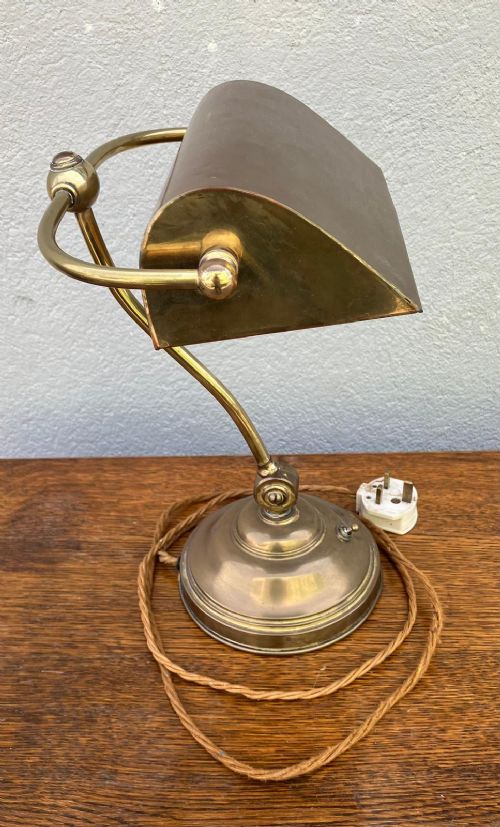
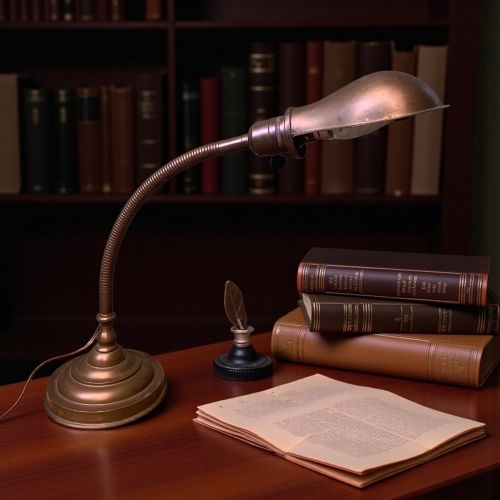
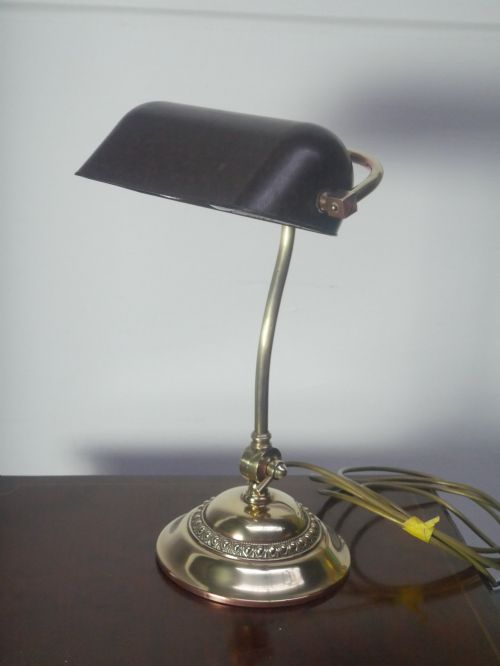
A vintage study table lamp encompasses adjustable brass reading lights, bankers lamps, and articulated metal task fixtures designed for focused illumination. These objects bridge the gap between utilitarian workspace equipment and decorative desk accessories from past decades.
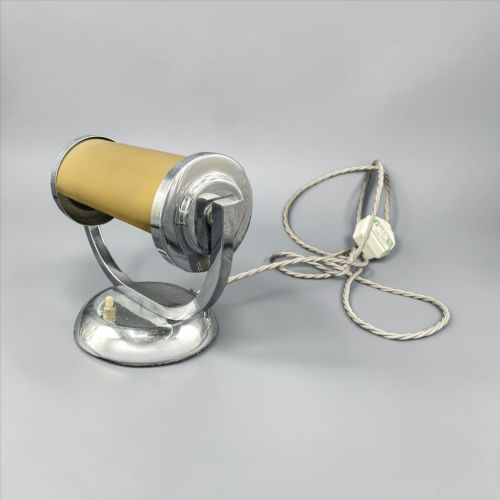
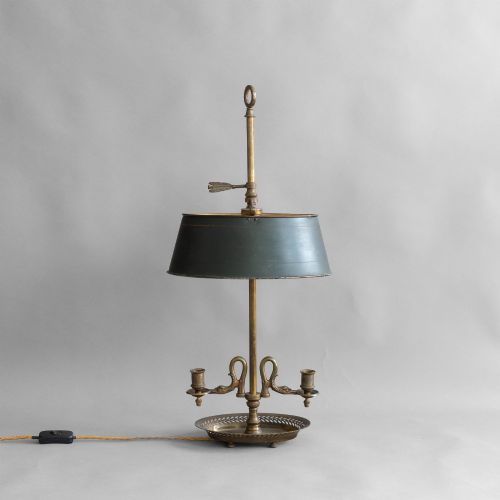
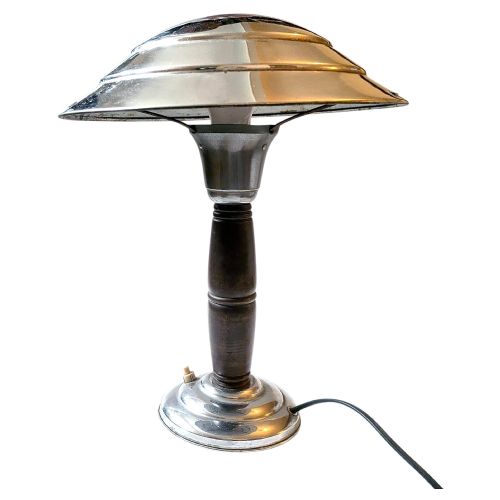
The selections span from the 19th Century through the Edwardian era and into the Art Deco and Machine Age of the 1930s. Brass and bronze desk lamps dominate the earlier periods, while chrome, bakelite, and toleware emerge strongly by the interwar years.
Practical utility dictates the forms found in this collection, featuring swan necks, flexible arms, and adjustable angles. Buyers encounter both functional single-bulb study lamps and complex articulated fixtures built for sustained desk work.
Materials and construction methods
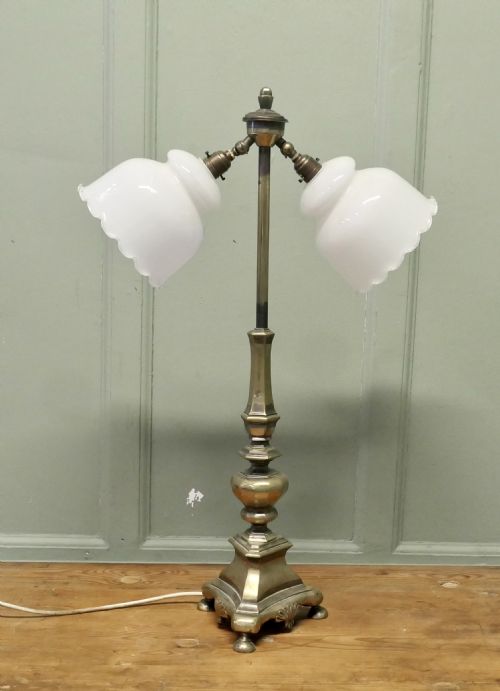
Solid brass and bronze form the backbone of these pieces, often paired with weighted cast bases to support extended adjustable arms. Manufacturers utilised metal spinning and casting techniques to shape shades and mounts, ensuring durability for daily desk use.
Bakelite and chrome arrive in later 1930s designs, reflecting the adoption of industrial synthetics and machine-age aesthetics. Fabric, glass, and toleware components introduce varied texture and colour to shade construction across Edwardian and Art Deco examples.
Ship's gimbal lights ensure your desk illumination remains level even if the building rocks in a storm.
Assessing quality and manufacture
Quality reveals itself in the weight of the metal and the precision of the mechanical joints. Superior examples feature robust brass linkages or smooth swivel mechanisms that hold their position securely without drooping.
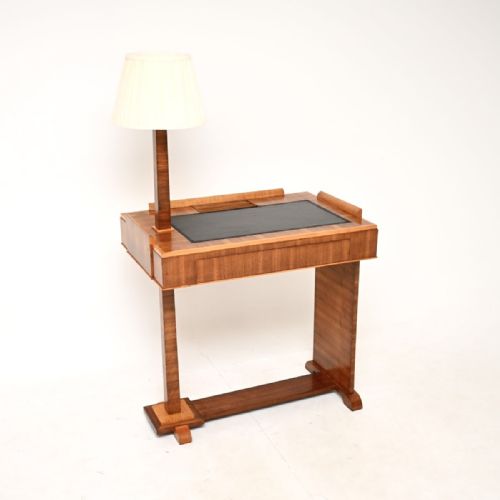
Material integration distinguishes finer pieces, such as those combining walnut, sycamore, or macassar woods with metalwork, or incorporating original glass shades and bakelite switches. The integrity of the original components determines the distinction between standard utilitarian items and masterworks of industrial design.
Wild and Wessel·Eileen Grey·E. Cole·Hawkins
The Vintage Study Table Lamp Glossary
- Articulated
- Fitted with joints or hinges that allow the lamp arm to move and direct light precisely. This mechanical complexity often indicates higher manufacturing quality.
- Toleware
- Painted or lacquered sheet metal used frequently for decorative lamp shades. It brings colourful finishes to desk lighting.
- Bakelite
- An early thermosetting plastic used widely in 1930s electrical fittings and lamp bases. Its dense, durable structure defined interwar manufacturing.
- Swan neck
- A curved metal upper stem resembling a swan's neck, common in Edwardian reading lamps. This shape allows the light source to project further over a desk surface.
- Gimbal
- A pivoted ring mounting that allows a lamp to remain level regardless of its base orientation. Originally designed for maritime use on ships.
Vintage Study Table Lamp: Frequently Asked Questions
How do I date a study lamp?
Dating relies on materials, manufacturing techniques, and stylistic markers visible in the construction. Brass and heavy bronze frames with simple switches typically point towards the Edwardian era or the nineteenth century.
Later pieces from the 1930s incorporate distinct modern materials like bakelite, chrome, and streamlined plastics. Examining the wiring methods and plug types also provides clues to the era of manufacture.
Are these lamps safe to use daily?
Many vintage lamps require rewiring or professional safety checks to meet modern electrical standards. Original wiring from the early twentieth century often degrades and needs replacement for safe daily operation.
Consulting a qualified electrician ensures the lamp functions correctly with modern bulbs while preserving the vintage exterior housing and switches.
How do I adjust an articulated lamp?
Articulated lamps use adjustable joints, counterweights, or swivel mechanisms to alter the height and angle of the light beam. Moving these components requires handling the metal arms gently to avoid straining historical joints.
Some models feature wing nuts or tension screws that can be loosened slightly before repositioning and tightened to secure the desired angle.
Where should I place a desk lamp?
A desk lamp belongs on a study table, bureau, or reading desk where focused task lighting is necessary. Adjustable swan neck and anglepoise models work well for direct reading and writing tasks.
Matching the scale of the lamp to the desk surface prevents the workspace from feeling overcrowded while providing balanced illumination.