

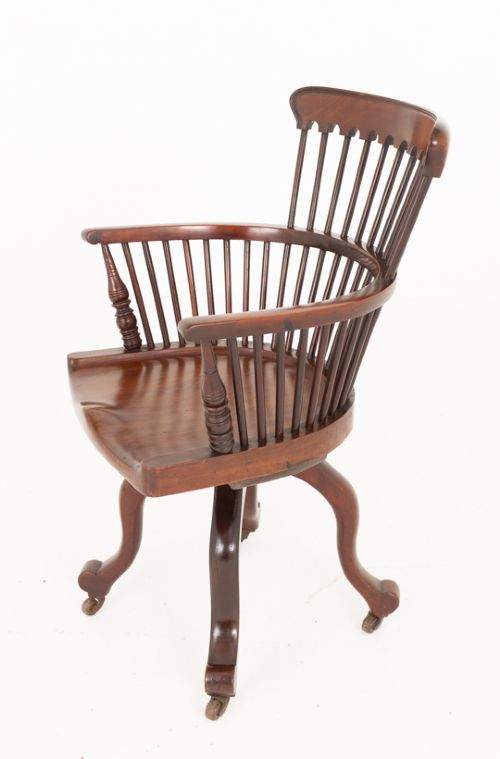


Vintage Study Desk Chair
A vintage study desk chair brings architectural weight to a room, offering practical seating shaped by centuries of office and library use.
Vintage Study Desk Chair
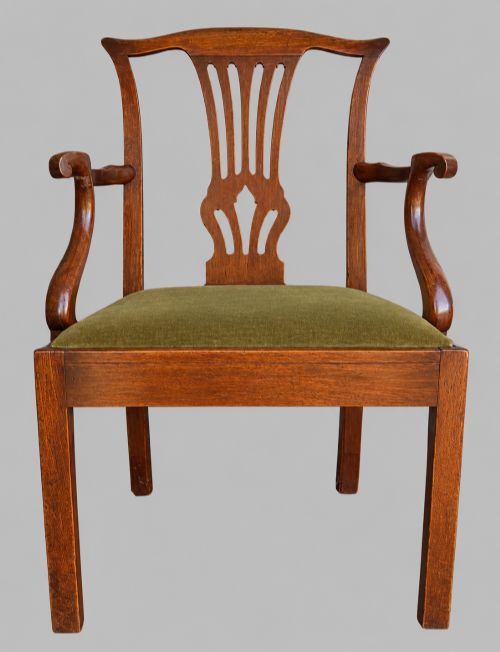
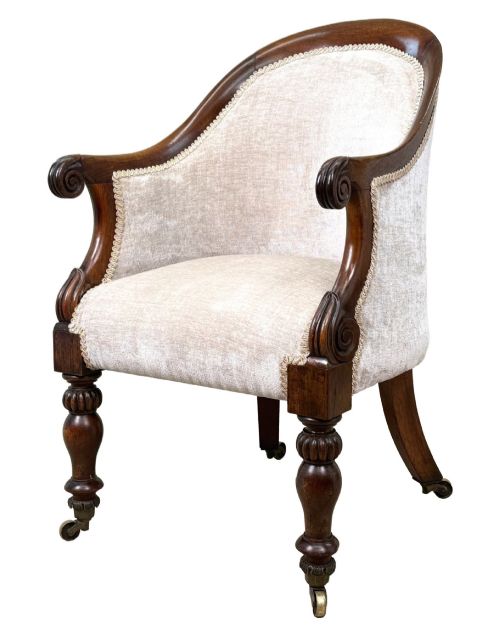
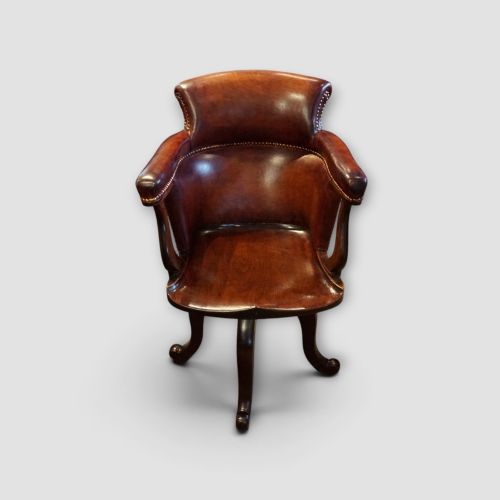
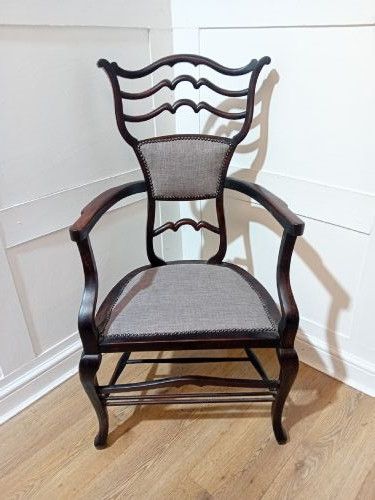
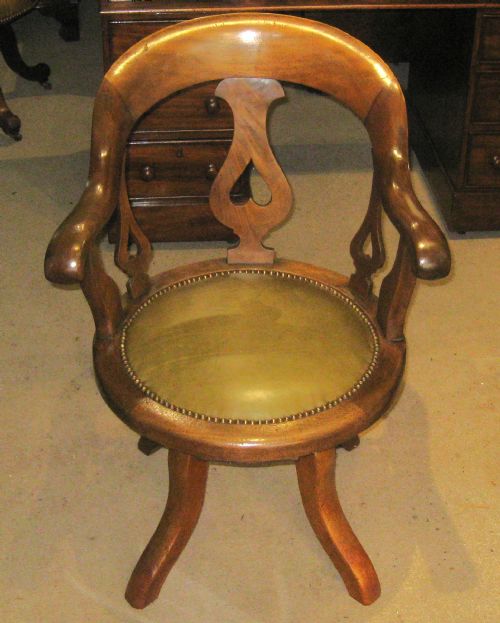
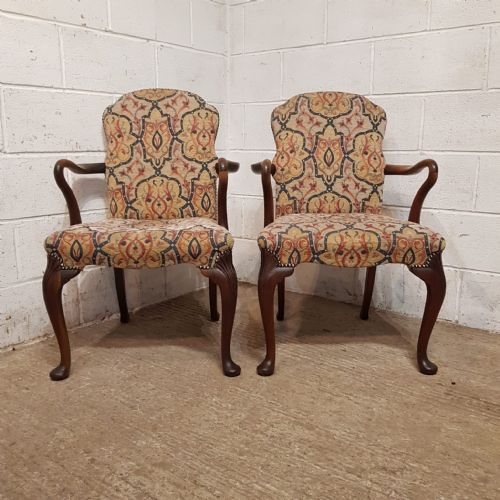
A vintage study desk chair serves as a functional seating piece designed for reading, writing, and administrative tasks at a table or partner's desk. These items encompass distinct forms such as revolving office chairs, stationary library armchairs, and swivelling captains chairs. You will frequently encounter Edwardian and Victorian examples alongside robust early twentieth-century oak and mahogany variations.
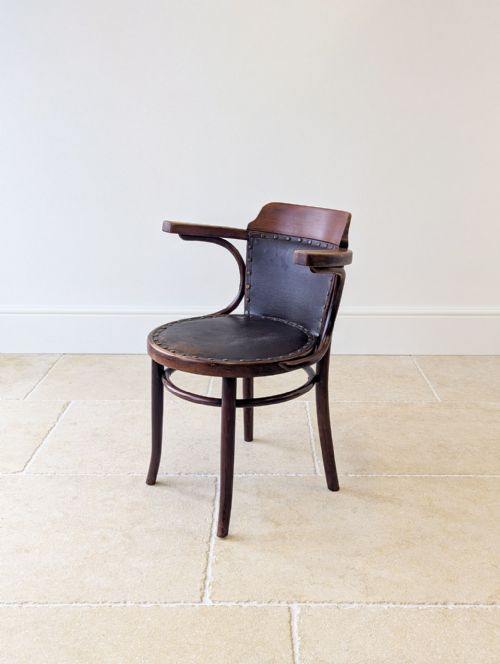
The selection ranges from simple bentwood designs to substantial upholstered armchairs featuring traditional leather pads. Makers across the nineteenth and early twentieth centuries adapted these forms to suit domestic studies and professional chambers alike. Choosing one means balancing the height of the seat against the clearance of your writing table.
The evidence shows that oak and mahogany predominate, often paired with brass castors and supple leather hides. Pieces span the Georgian revival, Regency, and Gothic styles, reflecting changing domestic tastes across multiple decades. Each configuration provides a specific posture suited to long hours of work or quiet contemplation.
Materials and construction methods
Cabinetmakers built these chairs using sturdy hardwoods such as mahogany, oak, walnut, and rosewood to withstand daily movement and weight. Selected timbers were carved, turned, or bent using steam technology to create supportive armrests and curved back rails. Joinery relied on mortise and tenon methods to ensure the frame remained rigid over years of use.
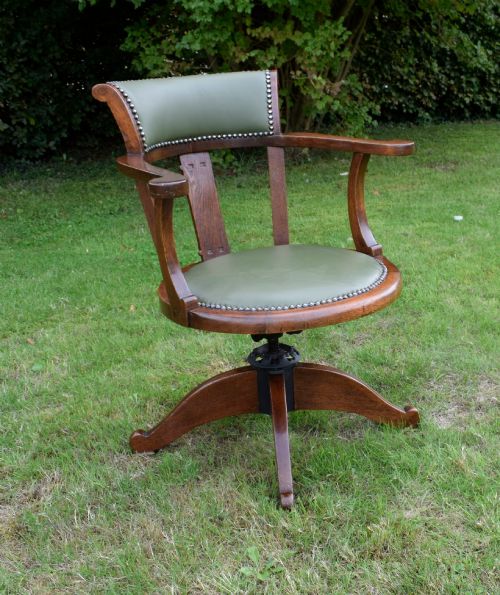
Upholstered versions integrate supple leather, velvet, or woven fabric secured with brass studs over hair stuffing or coil springs. Swivel mechanisms incorporate iron and brass components that allow smooth rotation and height adjustment in later models. Caned panels also appear on lighter Edwardian frames, providing a flexible and breathable seating surface.
Victorian clerks spun in circles too, proving that office fidgeting is a proud historical tradition.
Distinguishing quality across periods
The distinction between standard utility seating and superior examples lies in the depth of timber carving and the grade of the primary wood. Finely figured mahogany and dense quartersawn oak indicate a higher tier of production, whereas secondary woods or plain beech often signify simpler workshop origins. The crispness of carved details on splats and arm terminals reveals the hand of a skilled artisan.
Mechanism complexity also separates ordinary pieces from superior swivel desk chairs. Advanced iron and brass revolving assemblies offer smoother rotation and robust underframes that endure frequent shifts in weight. Furthermore, the selection of top-grade hide and careful hand-stitching elevates the finished presence of library armchairs.
The Vintage Study Desk Chair Glossary
- Gainsborough chair
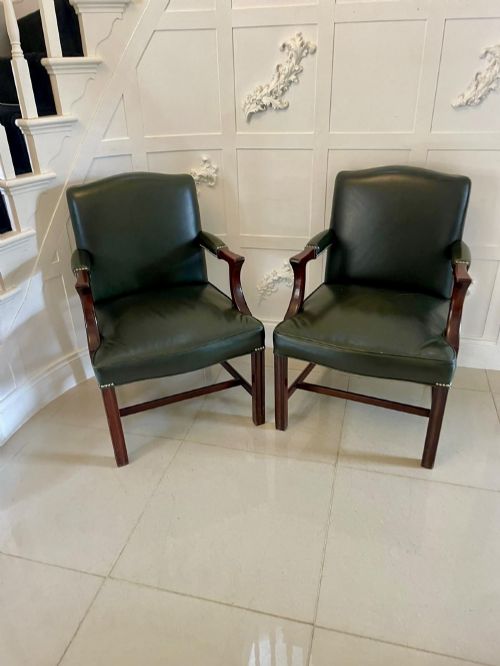
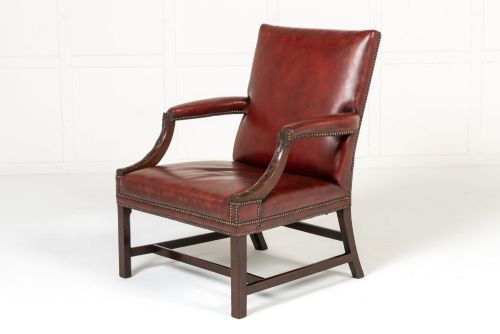
- A wide, upholstered armchair with an open frame and padded armrests, designed during the eighteenth century for reading desks. These pieces typically feature mahogany legs and leather upholstery.
- Captains chair
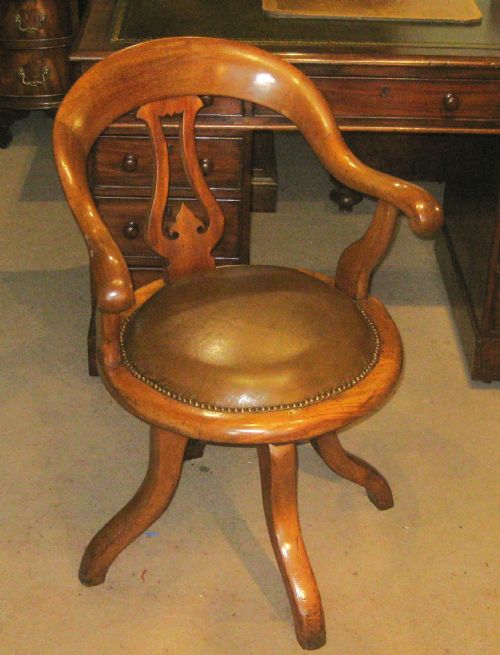
- A sturdy wooden armchair featuring a rounded spindle back that curves continuously to form the armrests. Many versions include a swivelling mechanism and a central column supported by legs on castors.
- Tub armchair
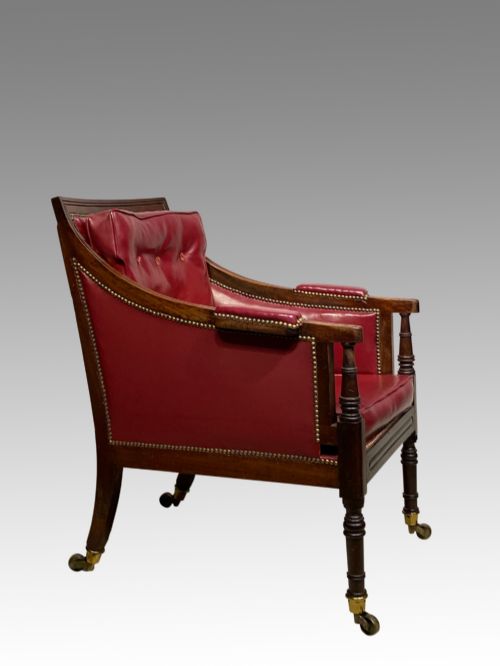
- A comfortable seat with a continuous curved back and sides that enclose the sitter in a semicircular shape. They appear frequently in nineteenth-century libraries upholstered in leather or velvet.
- Bentwood
- Wood that has been rendered pliable through steam application and then shaped into curved components. This technique produced lightweight yet resilient frames during the Edwardian era.
- Revolving mechanism
- An underframe assembly allowing the seat to rotate fully around a central vertical axis. Early twentieth-century examples often combine iron threads with wooden pillar supports.
Vintage Study Desk Chair: Frequently Asked Questions
How do I choose the right height?
Measure the clearance beneath your desk to ensure the armrests and seat slide comfortably underneath when not in use. Adjustable swivel mechanisms offer greater flexibility for matching different table heights.
Fixed-height library armchairs require careful attention to seat dimensions to maintain a comfortable posture while writing or reading.
Are swivel chairs comfortable for daily work?
Many Edwardian and Victorian swivel models provide ergonomic support through contoured wooden backs and padded leather seats. Their robust construction handles regular movement throughout the working day.
Consider pairing an open-frame elbow chair with a supportive cushion if you prefer a stationary seat for prolonged tasks.
How do I identify a Victorian desk chair?
Victorian examples often display darker mahogany or oak frames with robust proportions and traditional carved details. Many incorporate revolving mechanisms or upholstered leather panels suited for nineteenth-century offices.
Look for period construction markers such as hand-cut screws and traditional joinery beneath the seat platform.