
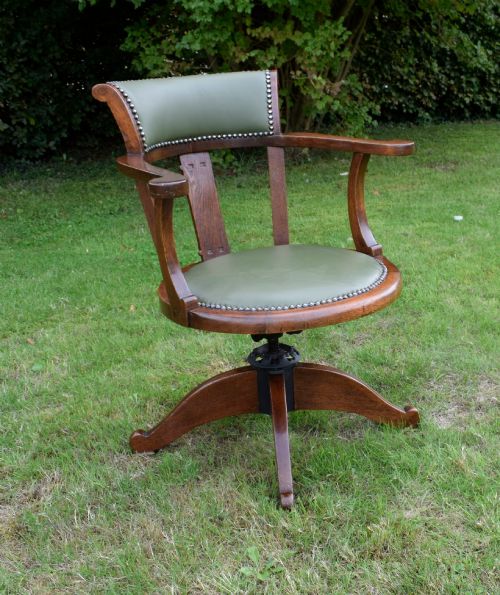
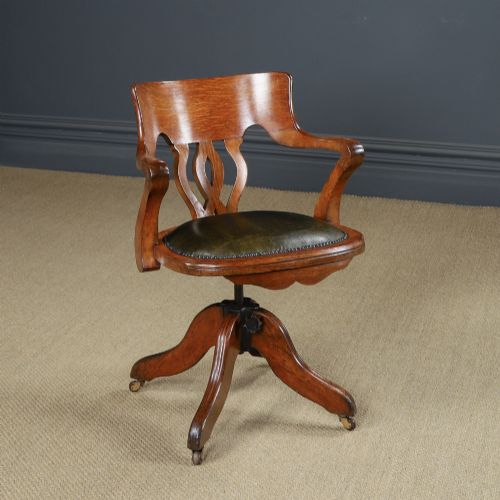
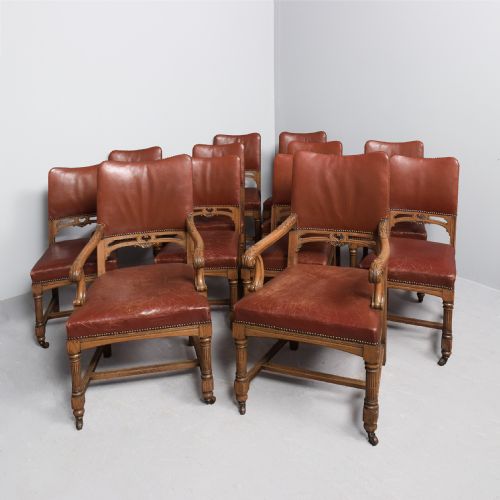
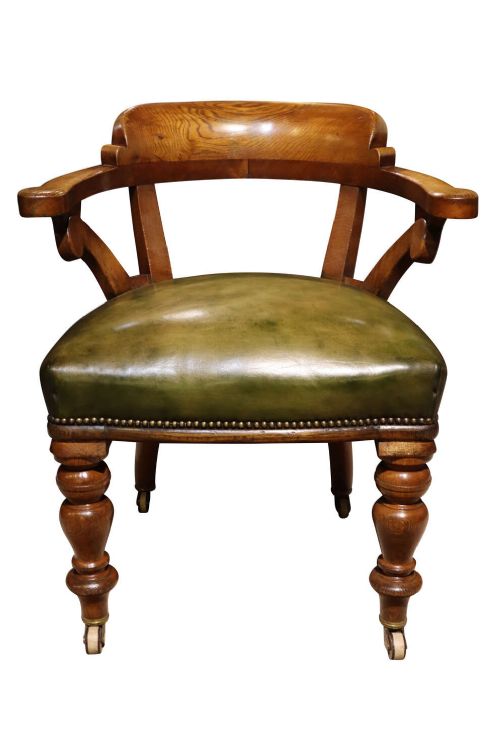
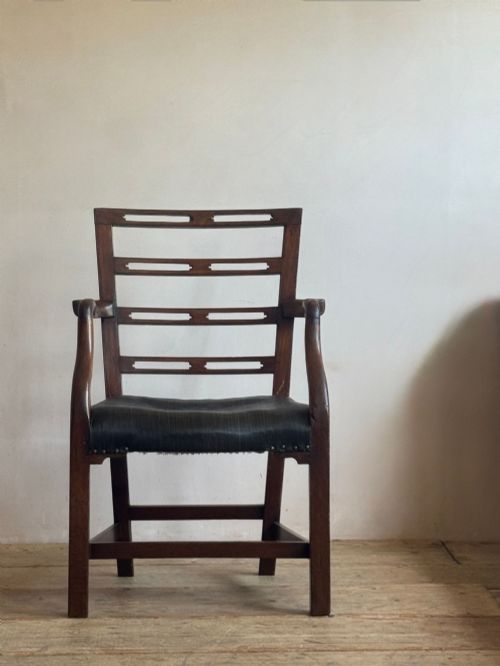
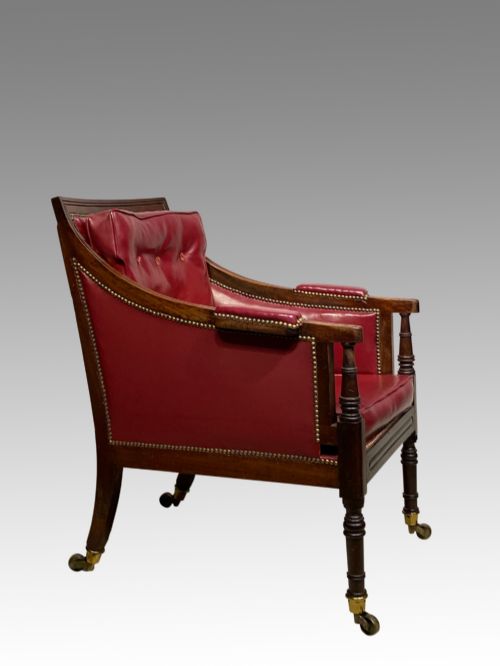
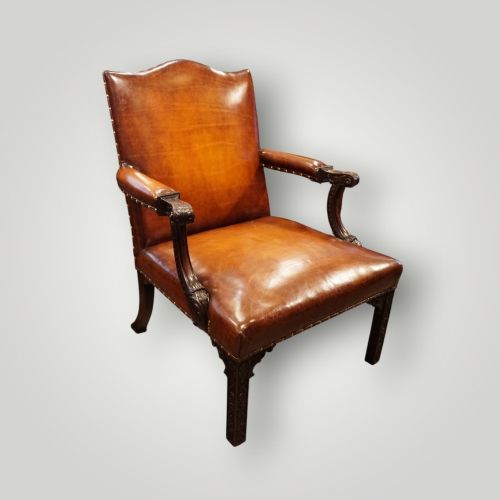
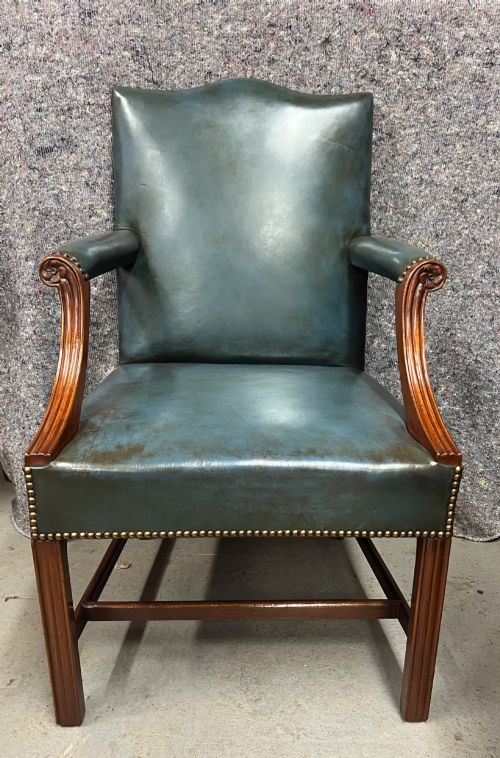
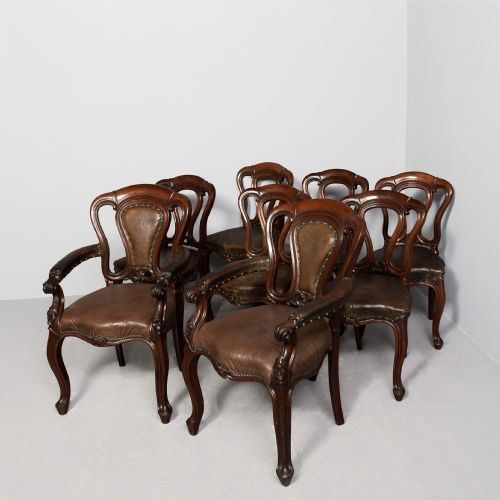
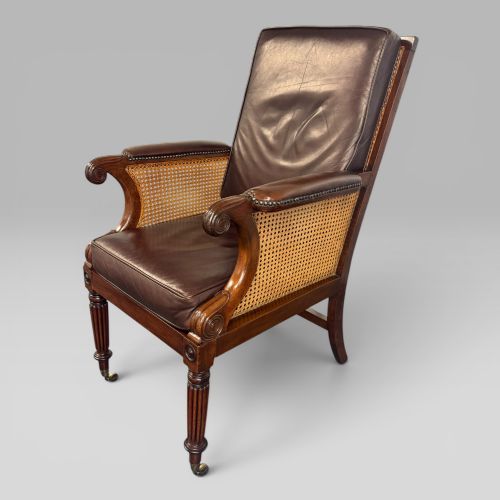
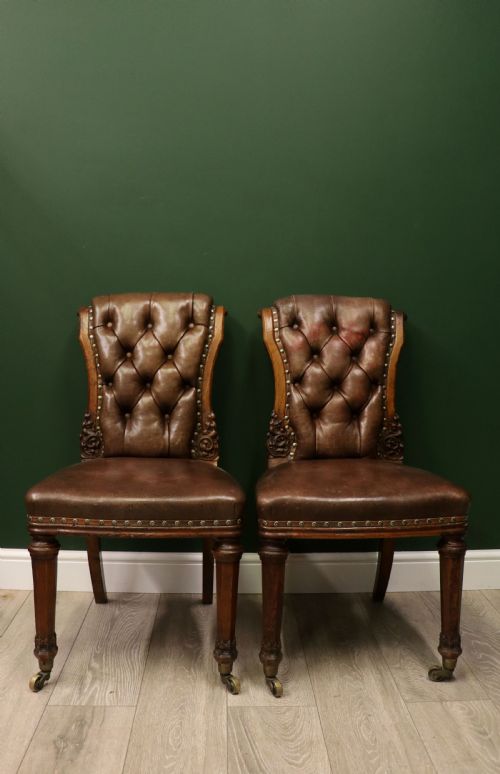
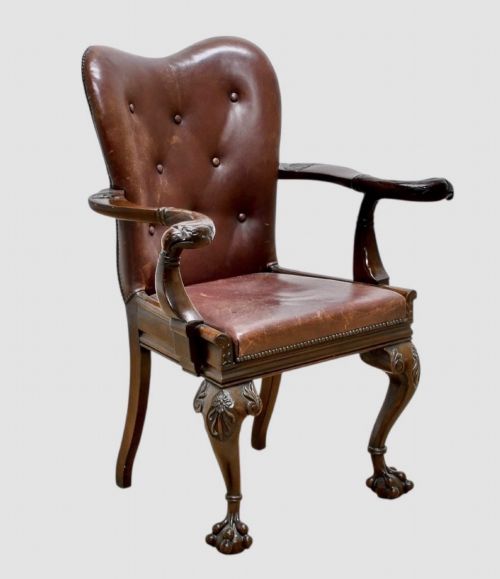


Traditional Leather Desk Seat
A traditional leather desk seat brings substantial timber frames and supple hides together to anchor a study with enduring character.
Materials and construction methods
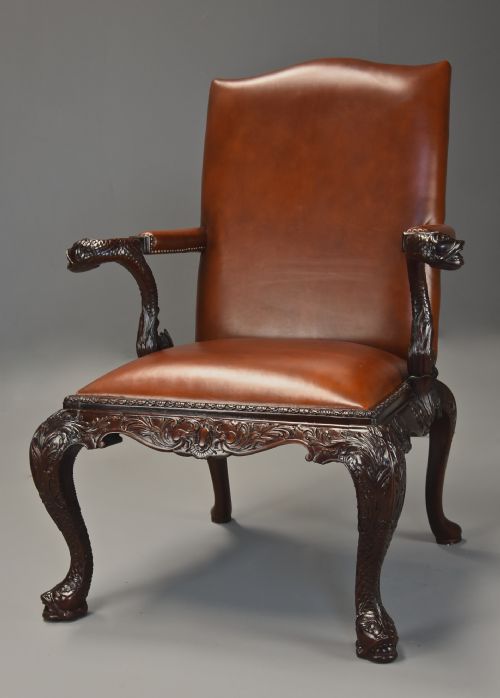
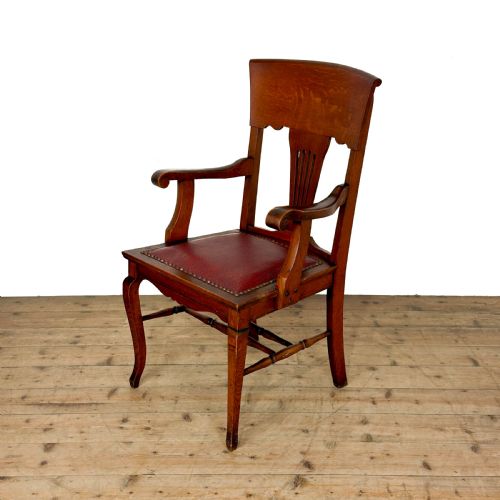
Craftsmen shaped these frames from dense hardwoods including mahogany, oak, and walnut, employing traditional joinery to support heavy daily use.
Upholstery relies on hand-dyed English hide or coloured leather secured with brass studs, paired occasionally with caning or cane panels.
Swivel and tilt desk chairs incorporate concealed metal and iron mechanisms within the wooden underframe to allow movement.
Judging the standard of a piece
Quality rests upon the selection of timber and the depth of carving, where crisply defined blind fretwork or moulded arms distinguish superior workshop output.
The character of the leather hide dictates visual success, with hand-dyed finishes and traditional studding holding more presence than uniform modern replacements.
Listings feature timber frames in mahogany, oak, and walnut, paired with leather, brass, cane, and iron.
The Traditional Leather Desk Seat Glossary
- Gainsborough armchair
- A wide-seated, open-armed easy chair originating in the eighteenth century, commonly upholstered in leather for library use.
- Bergère
- An enclosed armchair with cane or upholstered sides, frequently framed in mahogany or oak during the Regency and Edwardian eras.
- Smokers bow
- A low-backed wooden armchair with a turned spindle gallery, often adapted with a leather seat for office work.
- Blind carving
- Carved ornament applied directly to a flat wooden surface without piercing the timber, seen on Chippendale style library chairs.
Traditional Leather Desk Seat: Frequently Asked Questions
How do I date a wooden desk chair?
Dating relies on identifying the prevailing timber and stylistic vocabulary, such as heavy Victorian oak turning versus lighter Georgian mahogany proportions.
Construction marks and the integration of swivel mechanisms also point toward specific decades between the eighteenth and early twentieth centuries.
Were these seats used exclusively for writing?
While designated as desk or library chairs, many examples originated as dining armchairs or reading seats.
Their sturdy hardwood frames and supportive leather upholstery allowed them to serve multiple domestic and professional roles over generations.
What maintenance does antique leather require?
Antique leather benefits from regular dusting and occasional treatment with appropriate conservation balms to preserve suppleness.
Avoiding direct sunlight prevents the hide from drying and cracking across the buttoned or studded surfaces.
How do swivel desk chairs operate?
Period revolving chairs utilise a central wooden or iron spindle paired with metal underframe brackets.
This mechanism allows the upper seat portion to rotate and sometimes tilt, supported by four or five spreading wooden legs.