





Vintage Strike Wall Clock
A vintage strike wall clock marks the hours with a satisfying chime while anchoring a room with period character.
Vintage Strike Wall Clock
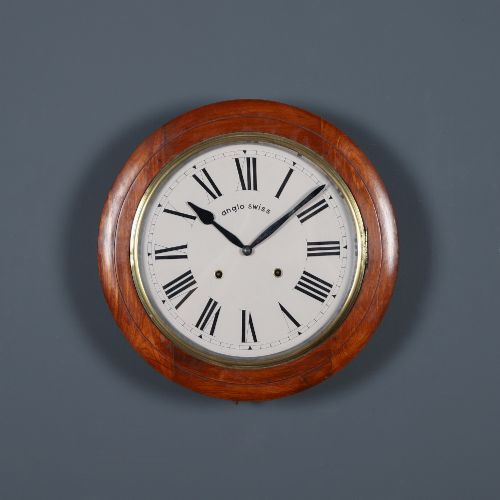
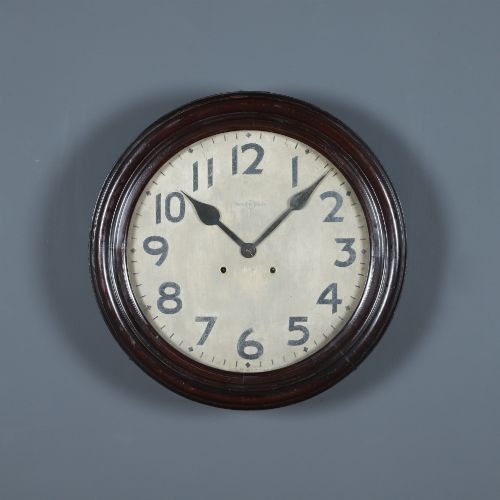
When you search for a vintage strike wall clock, you encounter timepieces engineered to sound the hours and sometimes quarters using bells, gongs, or chimes. These pieces span the Victorian era, the Art Deco period of the nineteen-twenties, and mid-century designs, originating from British, German, Austrian, Swiss, and Japanese makers.
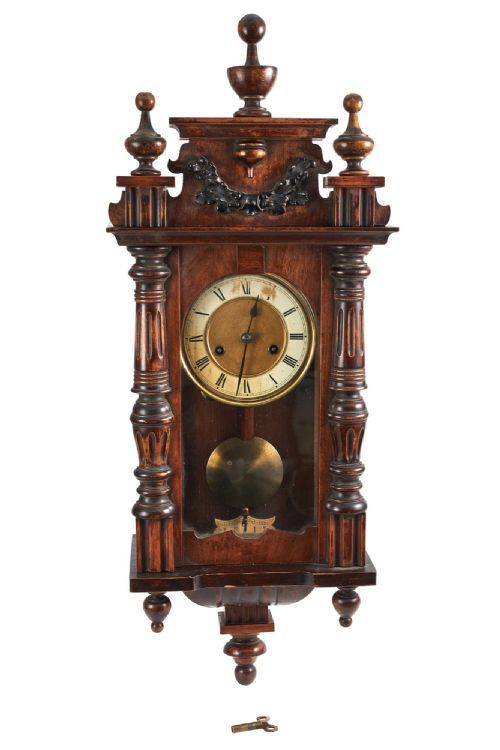
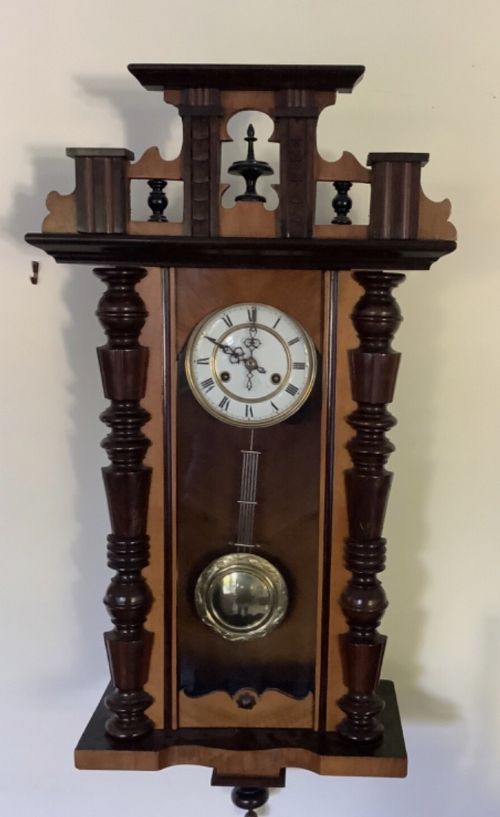
The forms vary widely across the selection, ranging from railway station and school round dial clocks to drop-dial wall clocks, bulkhead clocks, and grand Vienna regulators. Cabinets appear in walnut, mahogany, oak, rosewood, and iron, often fitted with glass inspection doors and enamel dials.
How they were made
Cabinetmakers constructed the housing using dense timbers like mahogany, walnut, and oak, frequently shaping drop-dial cases and rounded school clocks to house the hanging pendulums. Fine examples utilise rosewood veneers and brass bezels around glass-covered dials.
Horologists fitted mechanical movements driven by weights, such as twin-fusee systems or double weight setups, alongside spring-driven movements. Striking mechanisms incorporate bells or gongs to sound the passage of time.
Some railway station clocks bear the scars of heavy public service, having timed decades of delayed departures.
What varies in quality
Quality rests in the mechanical complexity of the movement, distinguishing standard spring-driven models from sophisticated twin-fusee or quarter-striking systems that maintain even power delivery to the gear train. The precision of the case joinery and the richness of the timber grain also set finer pieces apart.
The integrity of the dial and the originality of the components dictate the standing of a clock. Signed dials by known makers and well-preserved enamel or painted faces elevate the piece above standard utilitarian wall clocks.
Smiths·Odo·Johann Baptist Beha·C Coleman·Mark Bartley
The Vintage Strike Wall Clock Glossary
- Fusee
- A conical pulley used in mechanical clocks to maintain an even pull on the movement as the mainspring unwinds.
- Drop-dial
- A wall clock design featuring a circular dial at the top above an extended wooden case that houses the pendulum.
- Regulator
- A high-precision clock designed to keep exceptionally accurate time, often featuring a long case and a visible pendulum.
- Bulkhead clock
- A robust marine timepiece traditionally mounted on the bulkheads of ships, built to withstand damp and motion.
Vintage Strike Wall Clock: Frequently Asked Questions
How do I wind a strike wall clock?
Most mechanical wall clocks require a winding key inserted into holes on the dial to tension the springs or lift the weights.
Care should be taken not to over-wind the movement, stopping as soon as resistance is felt.
Where should I hang a wall clock?
Choose a sturdy interior wall away from direct sunlight, dampness, and heavy vibrations from doors.
The wall must be strong enough to support the weight of dense hardwood and brass movements.
Why does the clock stop striking?
The strike train may simply have run out of power and require winding via its specific arbor on the dial.
If the weights or springs are fully wound, the synchronisation between the hands and the rack mechanism might need adjustment.