






Vintage Stone Basin
A vintage stone basin brings solid weight and weathered character to a garden or kitchen.
Vintage Stone Basin
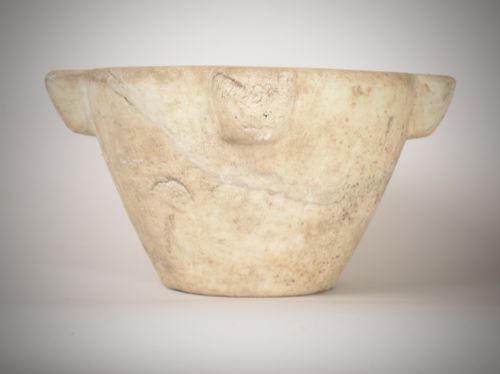
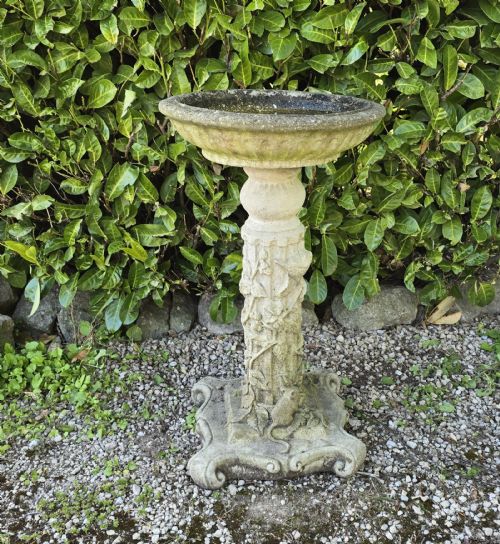
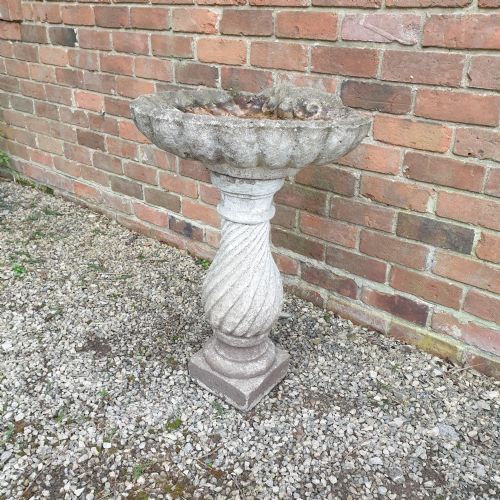
A vintage stone basin encompasses a range of heavy utilitarian vessels, from eighteenth-century marble mortars and nineteenth-century troughs to twentieth-century birdbaths and garden planters. These pieces carry marks of age such as natural moss, lichen, and surface weathering that accumulate over decades outdoors.
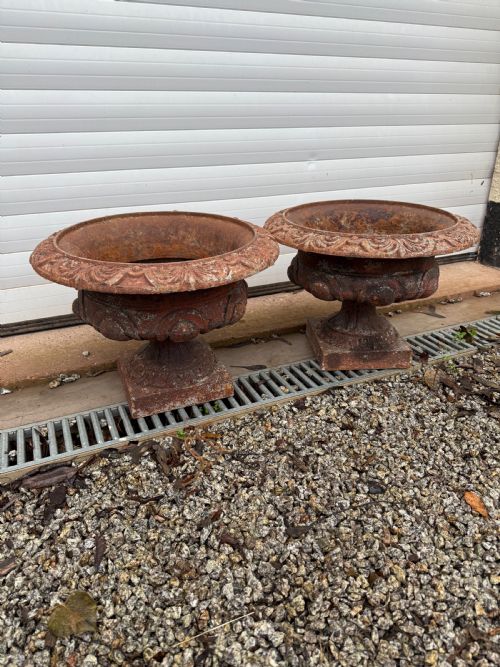
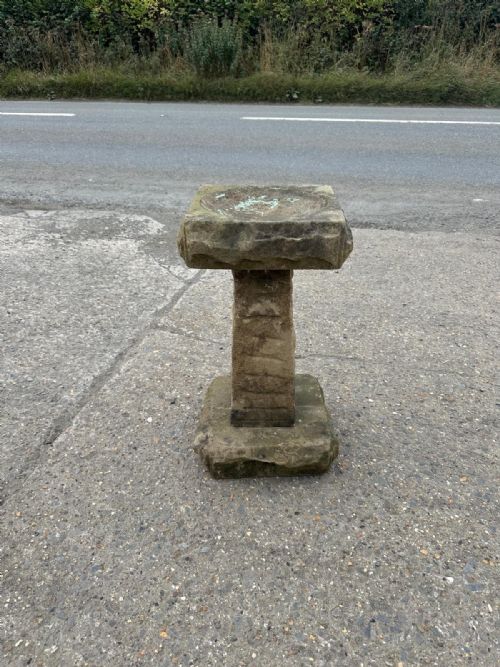
Buyers seeking a vintage stone basin will most frequently encounter sturdy natural stone, sandstone, or cast stone garden planters and birdbaths originating from the nineteenth and twentieth centuries. Kitchenware mortars carved from solid marble or hard stone also appear, offering deeper bowls designed originally for grinding and culinary use.
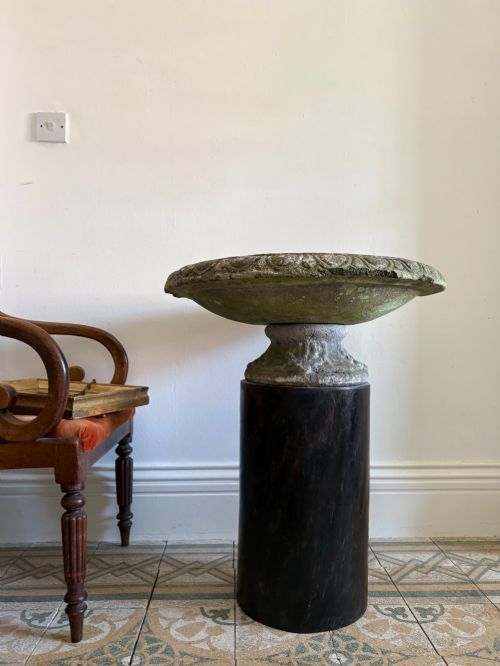
The styles span traditional garden vernacular and rustic farmhouse forms to more formal neoclassical and gothic revival designs. Whether square, shell-shaped, or circular, each vessel serves either a decorative planting role or retains its original water-holding function.
Materials and construction methods
Makers shaped these vessels from solid blocks of natural stone, sandstone, Purbeck stone, and white marble using hand chisels and stone-working tools. This traditional reduction method left crisp tool marks on earlier examples and created smooth, rounded interiors in mortars and troughs.
Twentieth-century pieces often utilise cast stone or reconstituted stone poured into moulds to replicate traditional carved textures and neoclassical details. Concrete also appears in twentieth-century utility and garden items, sometimes combined with iron elements.
Exposure to the elements over centuries results in surface weathering, moss accumulation, and patination that distinguish genuine aged material from fresh work.
One extraordinary planter incorporates reclaimed stone salvaged directly from the Houses of Parliament after bomb damage during the Blitz in World War Two.
Distinguishing quality in stone basins
Quality rests in the integrity of the material and the harmony of the carving rather than mere scale. Solid blocks of marble or early hand-carved sandstone display finer chisel work and more stable geological structures than later poured concrete or degraded soft stone.
The depth of patination and natural weathering contribute significantly to the character of a piece. Well-weathered surfaces with established moss growth and deep organic erosion indicate genuine age and decades spent exposed to the climate.
Proportion and form dictate the visual success of a vessel, with balanced square troughs, well-turned mortar rims, and intact bases holding higher regard among collectors than plain or poorly proportioned utility forms.
The Vintage Stone Basin Glossary
- Sandstone
- A sedimentary rock composed mainly of sand-sized minerals or rock grains. It offers durability and weathers with a distinctive granular texture.
- Cast stone
- A refined architectural concrete building product manufactured to simulate natural cut stone. It became popular in garden ornaments during the twentieth century.
- Mortar
- A heavy bowl used with a pestle for grinding and mixing ingredients. Antique versions are frequently carved from solid marble or hard stone.
- Trough
- A long, narrow open container traditionally used for feeding livestock or watering plants. Stone examples are prized for rustic garden schemes.
Vintage Stone Basin: Frequently Asked Questions
How do I clean moss off a stone basin?
Gentle brushing with water preserves the natural patination and prevents damage to fragile weathered surfaces.
Harsh chemical cleaners or pressure washers strip away the historic lichen and erode the soft outer layer of old stone.
Can antique stone basins stay outside in winter?
Most dense natural stone and heavy marble vessels withstand frost without sustaining structural damage.
Porous cast stone or basins holding stagnant water may crack when temperatures drop below freezing, so drainage holes are essential.
What is the difference between a trough and a planter?
Troughs are generally rectangular, utilitarian vessels originally made for agricultural or kitchen use.
Planters are specifically shaped for horticulture and often feature decorative pedestal bases, neoclassical details, or shell motifs.
How do I tell an 18th-century mortar from a later copy?
Early mortars display irregular hand-chiseled tool marks, dense heavy marble, and deep wear patterns from active use.
Later reproductions often show uniform machine finishing, lighter modern concrete construction, or manufactured artificial ageing.