


Vintage Stick and Umbrella Holder
A vintage stick and umbrella holder brings practical order to an entrance hall while grounding the space in period character.
Vintage Stick and Umbrella Holder
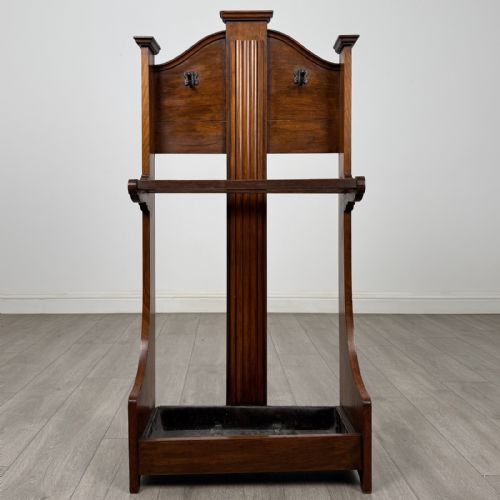
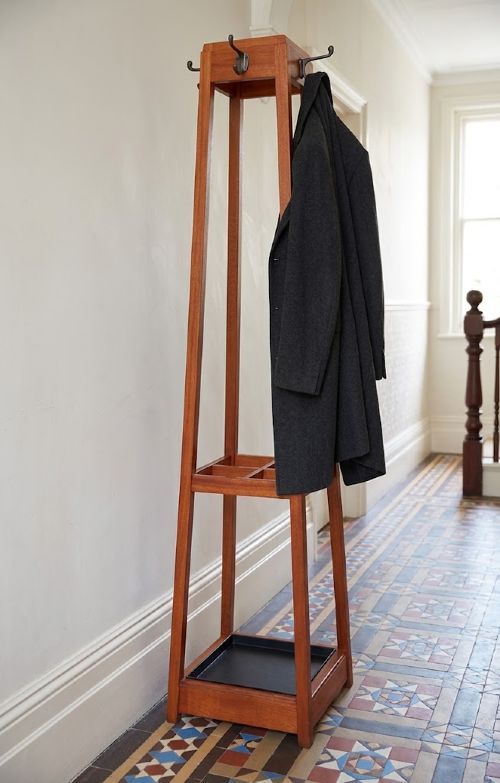
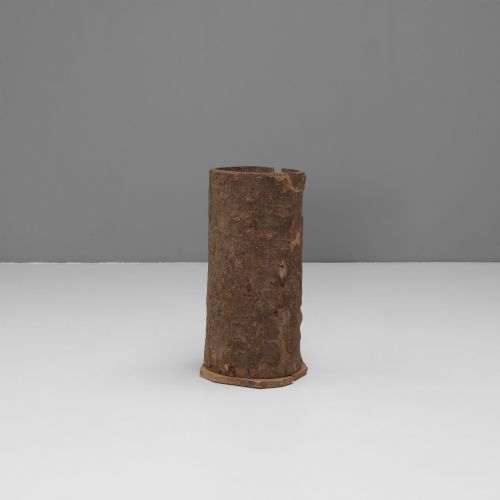
A vintage stick and umbrella holder serves as a designated vessel for walking canes, parasols, and wet rain gear in domestic hallways. Buyers searching for a vintage stick and umbrella holder typically encounter sturdy hall furniture and standalone receptacles designed to handle daily household traffic. These pieces range from compact brass vessels to substantial timber and iron frames intended for busy family doorways.
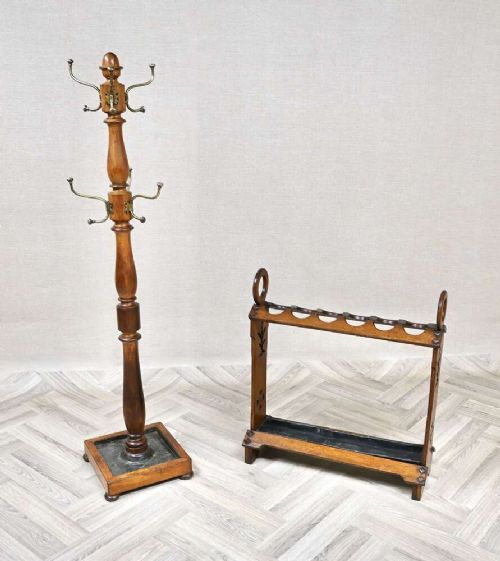
The selections available span the Victorian and Edwardian eras, moving into later Arts and Crafts and Art Deco designs. Many items combine stick compartments with coat hooks or integrated drip trays to catch rainwater from wet umbrellas. Oak, mahogany, and cast iron form the backbone of these hallway companions, offering both decorative presence and utilitarian purpose.
Materials and Construction Methods
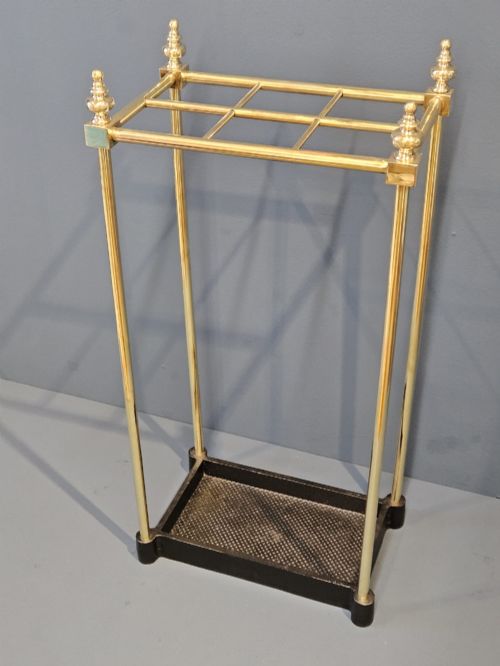
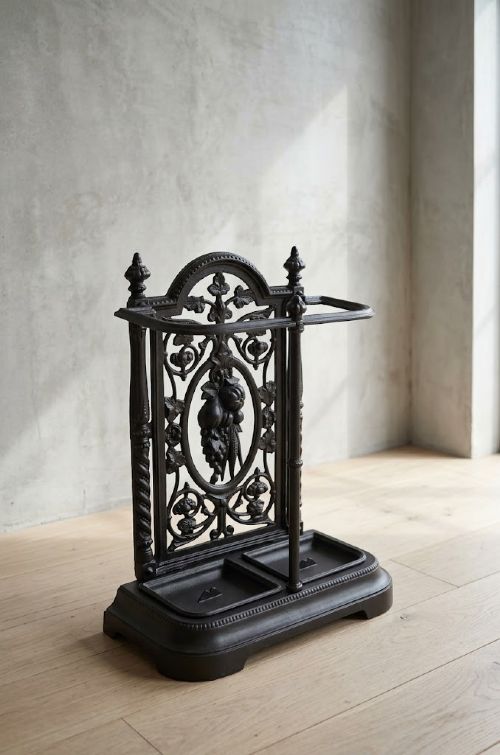
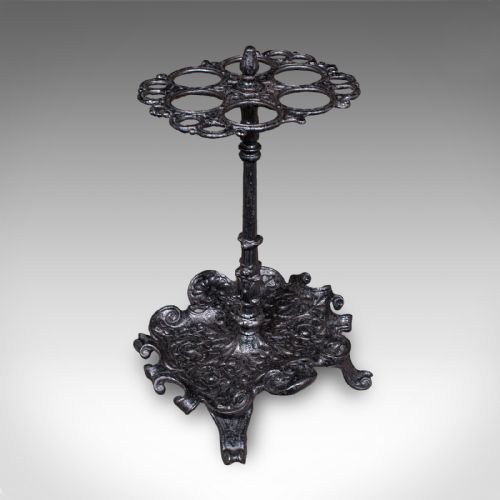
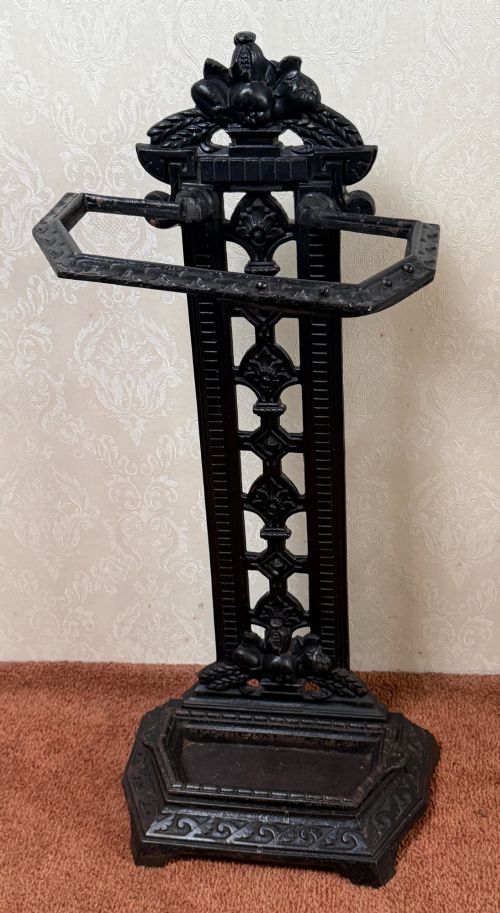
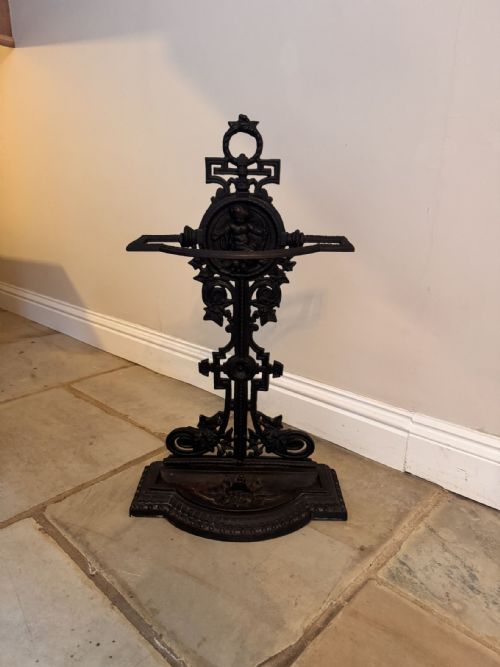
Makers utilised durable metals such as cast iron, brass, and nickel plating to form rigid frames and pierced grilles that withstand daily wear. Cast iron examples often feature openwork scroll patterns or stick loops produced in foundries, sometimes bearing maker marks or registration dates. Brass components appear as bound bands on wooden barrels, decorative ball finials, or semi-lune frames.
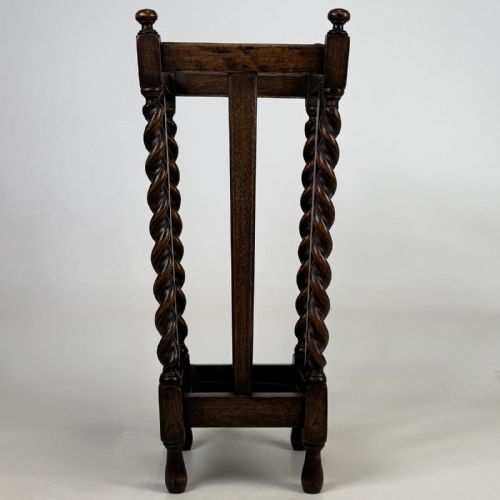
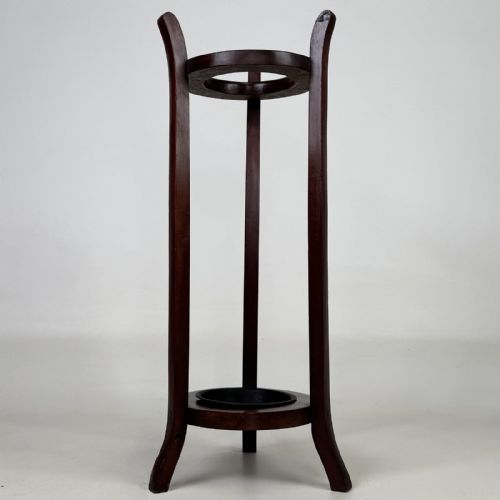
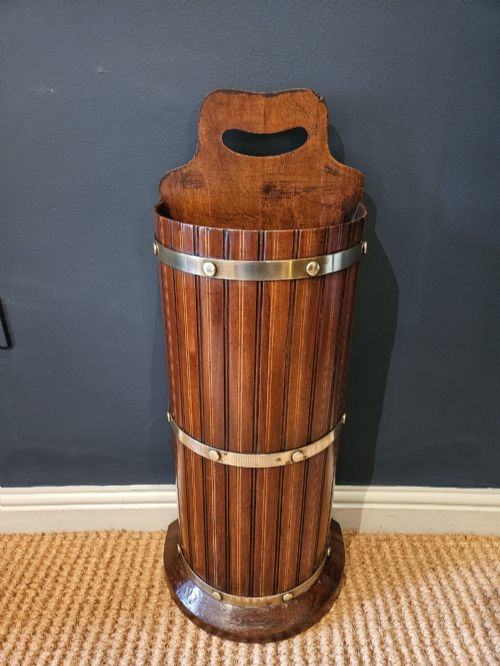
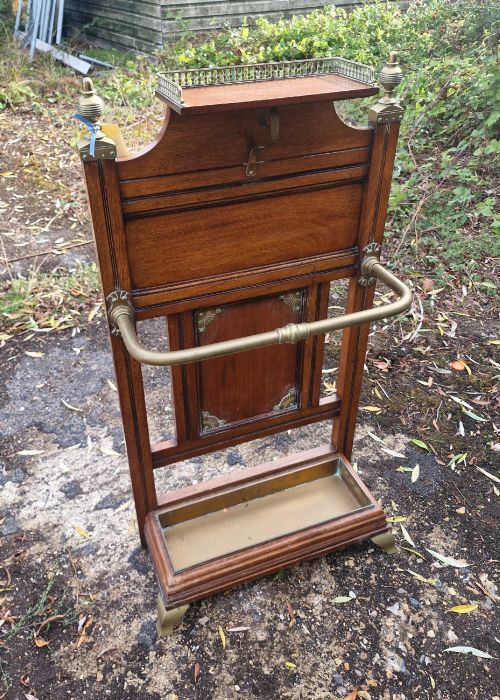
Woodworking traditions governed the production of oak and mahogany variants, incorporating coopered staves held together with metal bands or square-legged joinery with built-in trays. Arts and Crafts and Aesthetic Movement pieces display deliberate attention to grain and joinery, occasionally integrating pottery inserts or copper panels. Bentwood techniques also shape lighter hallway stands designed with curved elements.
Vintage Stick and Umbrella Holder Retail Price Guide 2026
Typical asking prices for vintage stick and umbrella holder among the pieces listed under this phrase on Sellingantiques today, from the lower quarter to the upper quarter. They describe what is for sale here now, not the wider market.
Listings for this phrase include items spanning the Victorian era, Edwardian period, and the Arts and Crafts movement, constructed from oak, cast iron, brass, and mahogany.
Factors Distinguishing Quality
The calibre of a piece rests upon the weight of its metalwork and the selection of timber used in its construction. Heavy cast iron examples with crisp, deep relief patterns and complete, original drip trays sit at the upper end of the scale compared to lighter, plain castings. Similarly, solid oak and mahogany bodies with tight coopered joints demonstrate superior craftsmanship over simpler nailed assemblies.
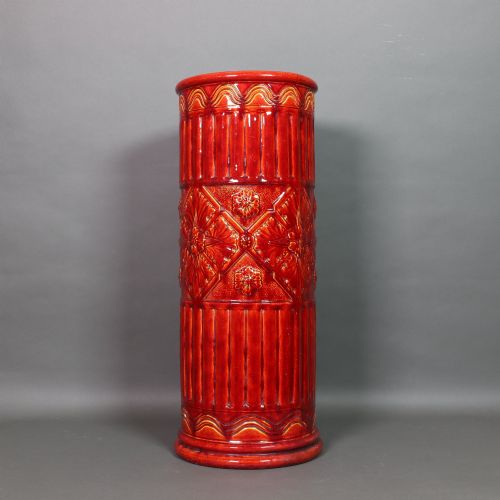
Design ambition further separates standard utility items from distinguished examples bearing specific artistic influences or factory attributions. Pieces that incorporate ceramic elements, specialised metal plating, or integrated hat and coat hooks show a higher level of design execution. The presence of matching, undamaged metal liners or removable drip pans also indicates a better-preserved original state.
Coalbrookdale·Burmantofts Faience·Liberty Design
The Vintage Stick and Umbrella Holder Glossary
- Drip tray
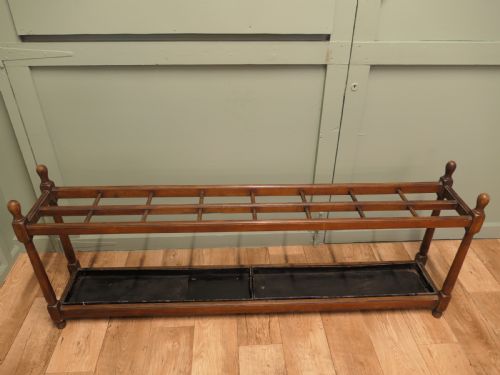
- A removable metal or ceramic basin positioned at the base of the holder to catch water running off wet umbrellas. This protects hallway flooring from moisture damage.
- Coopered
- A method of construction where tapered wooden staves are fitted together and bound with metal hoops, much like a barrel. This technique appears frequently in oak stick stands.
- Demi-lune
- A half-moon shape used to describe stands with a flat back designed to sit flush against a hallway wall. This profile saves floor space in narrow entryways.
- Stick loop
- A metal divider or upper framework that separates individual walking sticks and umbrellas to keep them upright. It prevents items from tangling together.
- Japanned
- A European imitation of East Asian lacquerwork, applied as a dark, glossy finish on metal or wood surfaces. It provides a decorative and protective coating.
Vintage Stick and Umbrella Holder: Frequently Asked Questions
What is a stick and umbrella holder?
A stick and umbrella holder is a dedicated piece of hallway furniture designed to store walking canes, parasols, and wet umbrellas upright. These vessels keep entryways tidy by containing damp items and preventing them from leaning against walls.
They range from compact metal rings and ceramic pots to large timber hall stands featuring integrated coat hooks and umbrella compartments.
How do I use one in a modern home?
Place the holder in your hallway, porch, or boot room where family members and guests remove wet outerwear upon entry. Ensure the internal drip tray is empty and dry periodically to protect the base of the stand.
Combine a cast iron or oak stand with nearby coat hooks to recreate a traditional entranceway layout that catches daily clutter.
How do I tell Victorian from Edwardian stands?
Victorian stands tend to feature heavier cast iron frames, darker dense timbers like mahogany, and ornate scrollwork reflecting Gothic or Aesthetic tastes. They often display robust proportions and elaborate decorative finials.
Edwardian examples frequently embrace lighter golden oak, simpler geometric lines from the Arts and Crafts movement, or Chinoiserie decoration, reflecting a shift towards brighter domestic interiors.
Why do some stands include metal liners?
Metal liners act as waterproof catch-basins designed to hold pooling rainwater safely away from the wooden or iron body of the stand. Without a removable liner, prolonged exposure to moisture would rot wooden bases or rust iron components.
These trays lift out easily to allow water disposal after heavy rain.