




Vintage Sterling Toast Holder
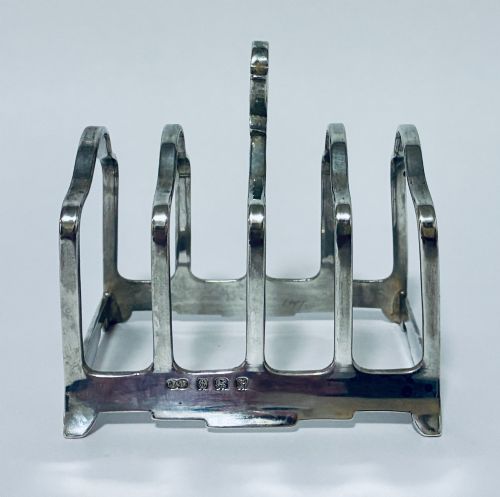
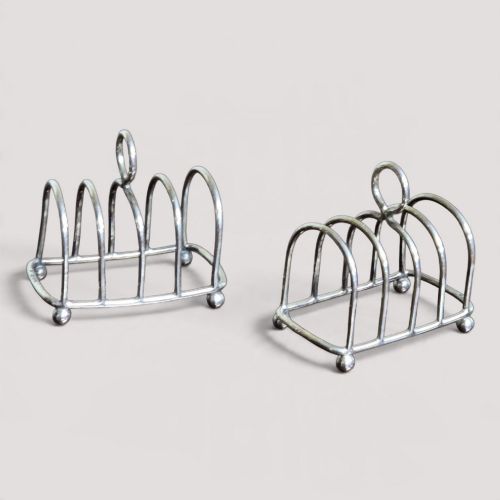
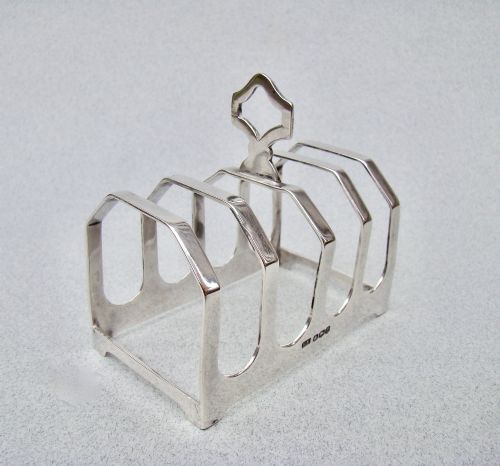
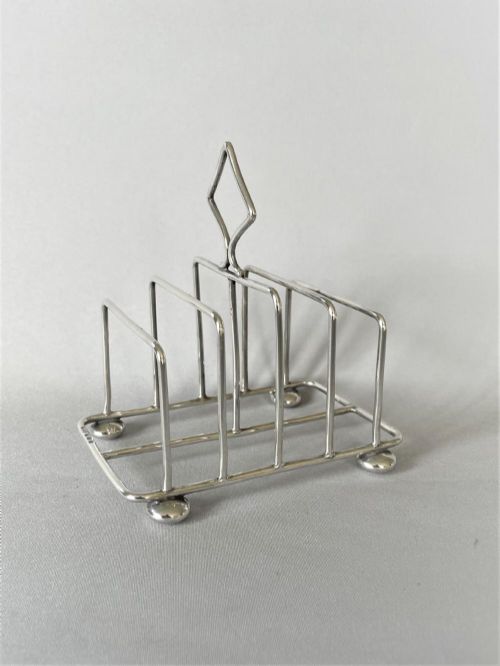
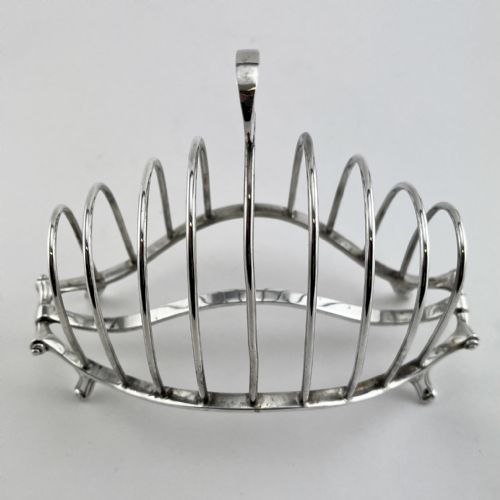
These vintage sterling toast holders are silver tableware pieces designed to keep toast crisp at the breakfast table.
Vintage Sterling Toast Holder
A vintage sterling toast holder is a functional item of tableware designed with individual metal dividers to hold slices of toast upright and prevent them from becoming soggy. When you search for this phrase, you encounter pieces spanning multiple eras, including Georgian, Victorian, Edwardian, and Art Deco styles.
The selections available here range from simple four-slice configurations to larger six-slice designs created by noted silversmiths. Most examples date from the nineteenth and early twentieth centuries, reflecting changing dining habits and table settings across the decades.
Makers utilised distinct regional hallmarking standards across British assay offices, including Sheffield, Chester, and London. Buyers frequently find matching pairs alongside individual pieces bearing traditional maker marks.
Materials and construction
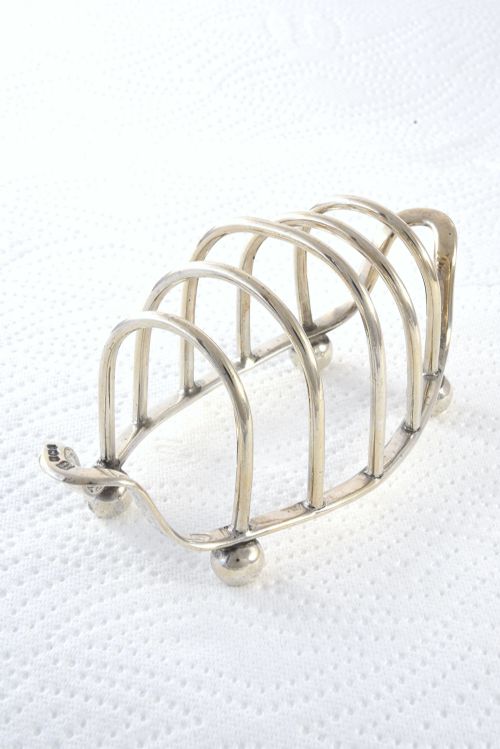
These items are constructed from sterling silver or solid silver, shaped with wirework or stamped bars to form the individual arched partitions. Silversmiths soldered these dividers onto a matching base plate, often supported by small feet or ball mounts.
Handles were frequently incorporated into the central frame or end pillars to allow safe movement around the breakfast table. Assay marks stamped directly into the metal record the specific year, city of testing, and maker.
Vintage Sterling Toast Holder Retail Price Guide 2026
Typical asking prices for vintage sterling toast holder among the pieces listed under this phrase on Sellingantiques today, from the lower quarter to the upper quarter. They describe what is for sale here now, not the wider market.
Assessing the pieces
Quality in these items is determined by the crispness of the wirework, the structural integrity of the solder joints, and the clarity of the maker marks. Thicker gauge silver provides greater rigidity to the individual dividers, preventing bending during daily use.
Design distinction also separates standard utility pieces from more elaborate examples, such as those featuring wishbone motifs or period-specific geometric frames. Pieces bearing clear, unrubbed hallmarks from recognised makers command higher regard.
Emile Viner·Mappin and Webb·Roberts and Belk
The Vintage Sterling Toast Holder Glossary
- Sterling silver
- A silver alloy containing ninety-two point five percent pure silver and seven point five percent other metals, usually copper, chosen for durability.
- Assay office
- An official body that tests the purity of precious metals and stamps items with the appropriate hallmarks.
- Hallmark
- A series of official marks stamped on items to indicate the standard of silver purity, the assay office, and the year of production.
- Wishbone
- A decorative form modelled after a bird's wishbone, utilised for the structural arches of specific twentieth-century racks.
- Slice capacity
- The specific count of individual slots designed to hold pieces of toast upright within the frame.
Vintage Sterling Toast Holder: Frequently Asked Questions
How do I clean silver toast racks?
Silver toast racks require gentle cleaning with a specialised silver cloth or mild liquid polish to remove tarnish. Avoid abrasive materials that can scratch the polished surface or wear down stamped details.
Store the piece in a dry environment to slow down the natural tarnishing process between uses.
Can I use these for modern bread?
Many vintage toast racks accommodate standard modern sliced bread, though older pieces often feature narrower gaps designed for thinner slices. It is helpful to check the distance between the dividers if you intend to use the piece daily.
Thicker artisanal bread may not fit easily into Edwardian or Victorian slots, making those pieces better suited for thinner toast or rusks.
How do I date an antique rack?
Dating is achieved by reading the hallmarks stamped onto the base or frame, which include a specific letter code for the year of assay. Additional clues come from the overall style, such as geometric Art Deco lines or flowing Edwardian wirework.
Assay office symbols, such as the crown for Sheffield or the leopard head for London, further narrow down the origin.