





Vintage Sterling Letter Opener
A vintage sterling letter opener cuts through correspondence with the weight of solid silver and the character of decades past.
Vintage Sterling Letter Opener
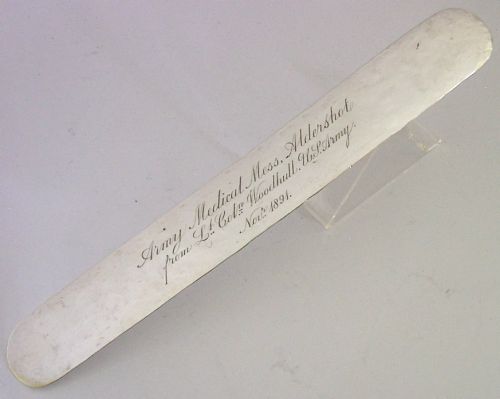
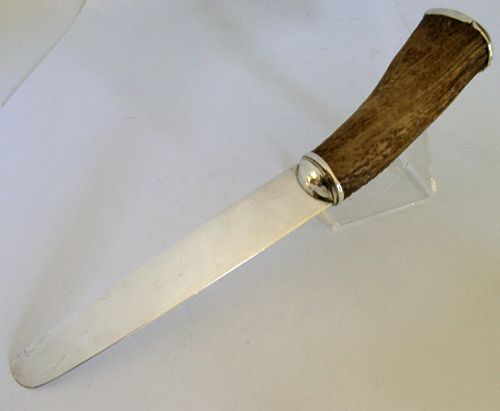
A vintage sterling letter opener is a desk accessory designed to slice open envelopes cleanly, often combining precious metal with organic materials like tortoiseshell, horn, or mother of pearl. These desk tools appear across various eras, spanning from Georgian and Victorian periods through to the Edwardian age and Art Deco years.
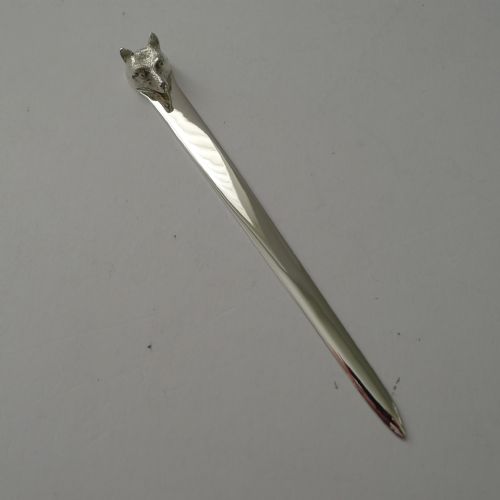
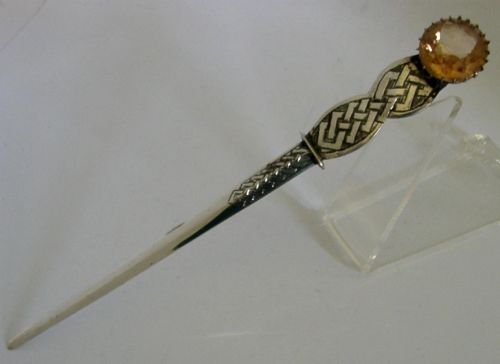
Buyers will encounter both sleek silver blades and combination pieces that double as page turners or paper knives. Forms range from plain provincial Scottish designs set with citrine to novelty animal handles shaped like foxes, greyhounds, ducks, and pheasants.
Origins stretch from English provincial assay offices to Scottish workshops and military commemoratives, connecting modern desks directly to nineteenth and twentieth-century writing habits. Each piece reflects the functional elegance demanded by traditional correspondence before the digital age.
Materials and construction
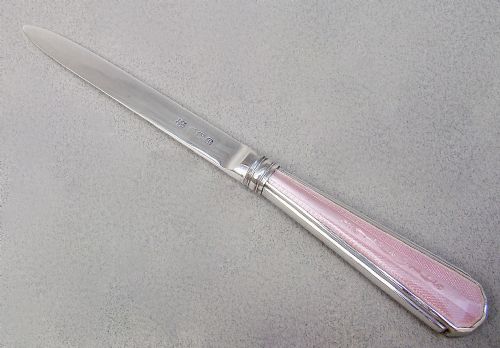
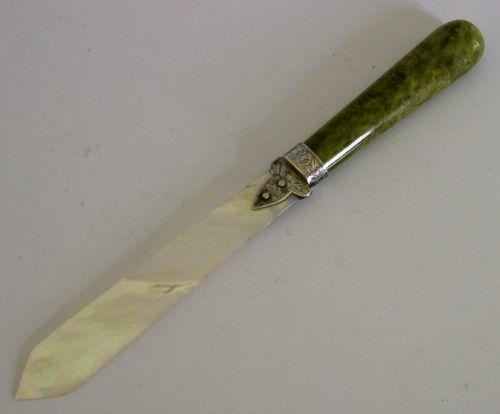
Makers fashioned these pieces using solid sterling silver alongside contrasting materials such as tortoiseshell, horn, Connemara marble, agate, and mother of pearl. Handles frequently incorporate vitreous enamel or guilloche work to add colour and texture to the grip.
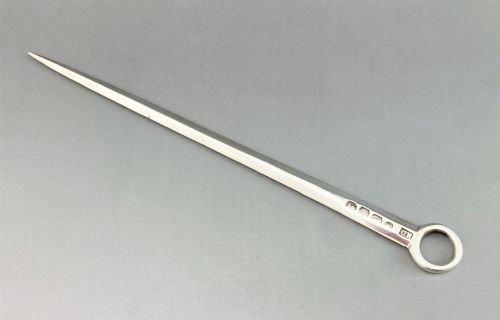
Silversmiths cast, hammered, and engraved the metal components, sometimes integrating natural animal elements like game skewers or horn blades into the design. Hallmarks stamped into the silver record the assay office, date letter, and maker's mark.
Some nineteenth-century writers repurposed old meat skewers into makeshift desk tools before dedicated letter openers became standard study accessories.
Assessing quality and character
The distinction between standard examples and finer pieces rests on the complexity of the design, particularly in novelty animal handles and detailed guilloche enamel work. Pieces bearing well-documented maker marks, such as Asprey or Sampson Mordan & Co., carry greater distinctiveness.
The integration of unusual materials like citrine, agate, or Connemara marble elevates a simple desk tool into a decorative object of notable craftsmanship. The crispness of the hallmark stamps and the secure fitting of the blade into the handle further distinguish superior execution.
The Barker Brothers·Asprey·Sampson Mordan & Co.
The Vintage Sterling Letter Opener Glossary
- Sterling silver
- A silver alloy containing 92.5 percent pure silver and 7.5 percent other metals, usually copper, ensuring durability for functional items.
- Page turner
- A larger desk accessory designed to slit uncut pages in books and heavy documents, frequently paired with letter opener functions.
- Guilloche enamel
- A decorative technique where precise patterns are machined into metal and coated with translucent enamel.
- Hallmark
- Official stamps applied to precious metals indicating the standard of purity, the assay office, and the year of manufacture.
- Provincial Scottish
- Items manufactured in regional Scottish towns outside Edinburgh and Glasgow, often showing distinct local design characteristics.
Vintage Sterling Letter Opener: Frequently Asked Questions
How do I date a silver letter opener?
Dating relies primarily on the stamped hallmarks found on the metal body, which include symbols for the assay office and specific year letters.
Stylistic cues such as Art Deco enamel work or Edwardian proportions also help narrow down the period of manufacture.
What is the difference between a letter opener and a page turner?
Letter openers feature narrow blades intended specifically for slicing open envelopes and folded correspondence.
Page turners are substantially larger and broader, originally built to separate folded paper sheets in bound volumes and uncut books.
Can I use a vintage letter opener daily?
Solid silver blades handle modern paper envelopes with ease, though pieces incorporating delicate tortoiseshell or horn require gentle handling.
Regular use does not harm sturdy sterling silver, provided the handle joints remain secure and stable.
Why do some letter openers feature animals?
Novelty desk accessories became extremely popular during the Edwardian and interwar periods, reflecting a taste for whimsical and figurative silver.
Artists sculpted handles as greyhounds, ducks, pheasants, and foxes to bring personality to everyday office equipment.