


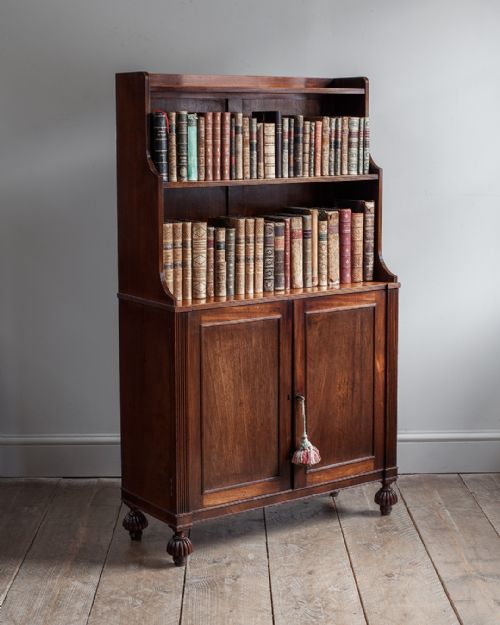

Vintage Standing Shelves
These vintage standing shelves span utilitarian open bookcases and tiered what-nots, offering practical vertical storage rooted in periods from the Regency era through to the Art Deco years.
Vintage Standing Shelves
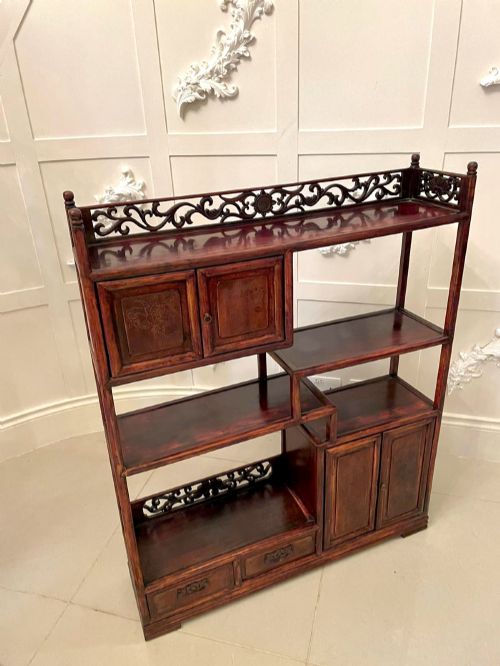
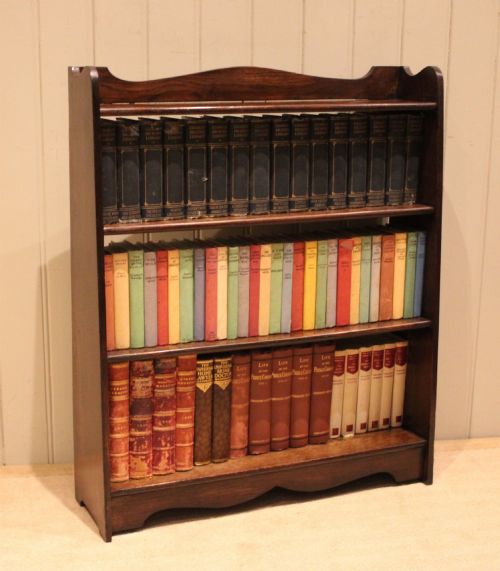
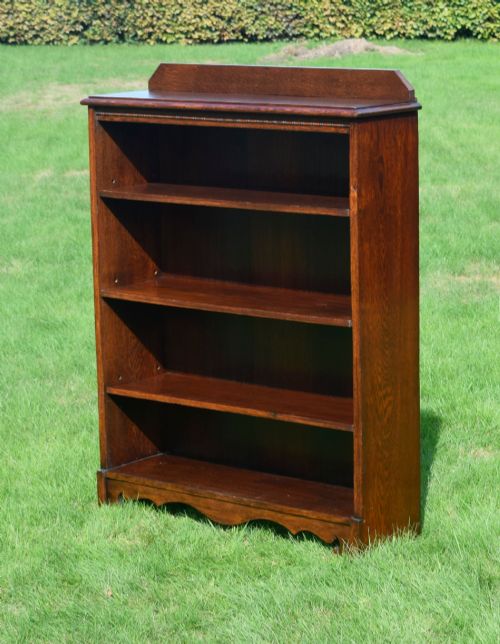
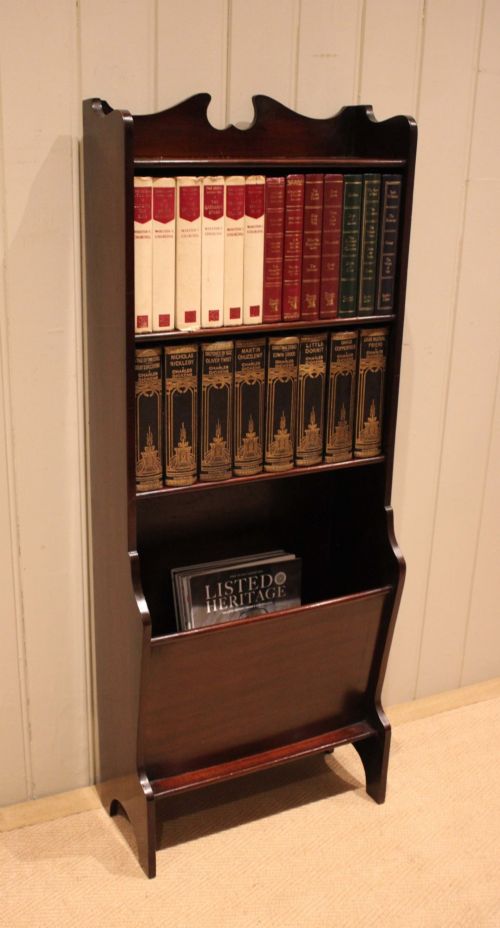
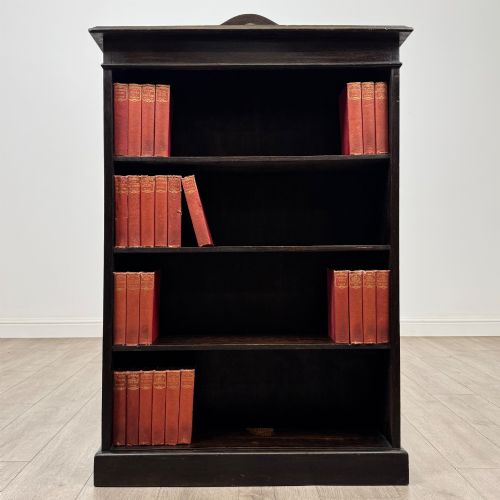
When searching for vintage standing shelves, buyers encounter a diverse selection of freestanding furniture designed to organise books, display ornaments or hold bedside items. The pieces on this page span the 19th Century, Victorian, Edwardian, and 1930s periods, encompassing forms such as open bookcases, tiered stands, etageres, and corner cabinets. Oak and mahogany dominate the inventory, accompanied by walnut, pine, rosewood, and burr walnut.
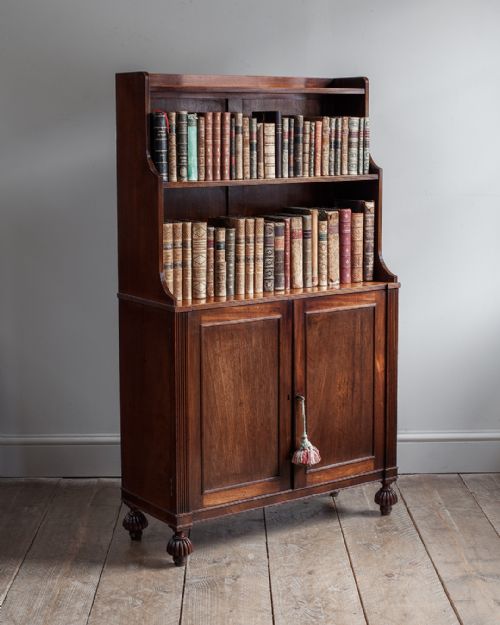
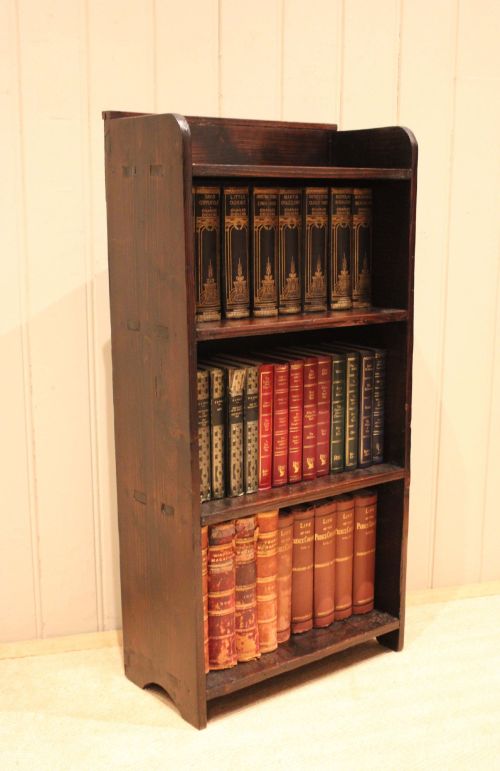
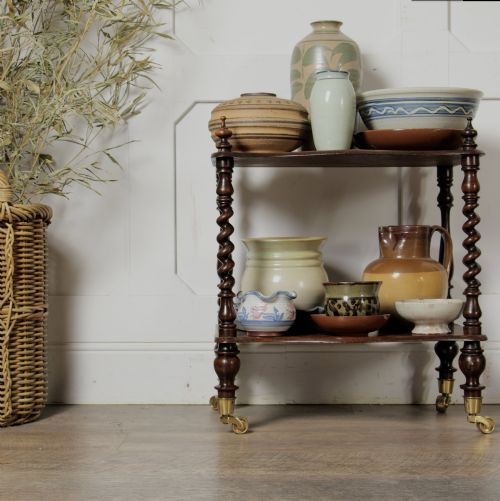
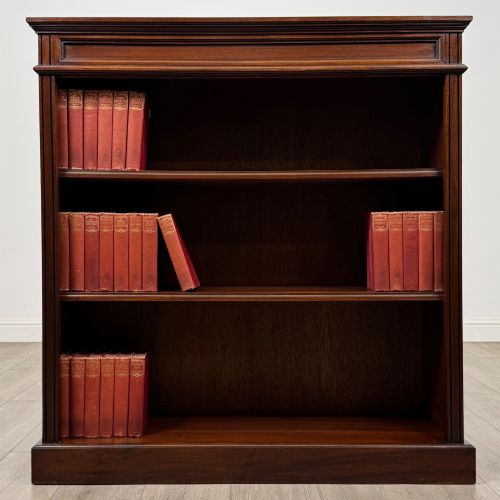
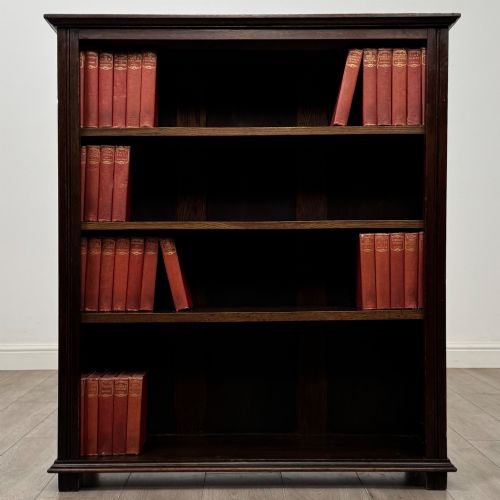
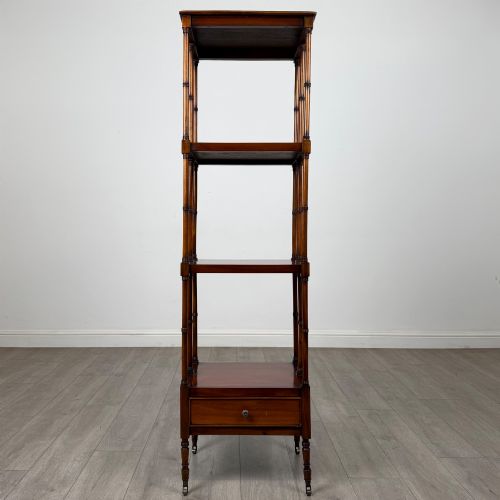
The most common items met on this page are Edwardian and early 20th Century oak open bookcases, alongside Victorian mahogany what-nots and Regency style waterfall bookcases. Pieces range from simple rustic pine and slim oak designs to more decorative inlaid revolving bookcases and brass-mounted rosewood etageres. Side tables with integrated shelves and tiered trolleys also appear, demonstrating the flexible domestic functions these items served across different decades.
Materials and construction methods
Makers utilised solid hardwoods like oak, mahogany, and walnut to construct sturdy frames capable of supporting heavy volumes and display items. Details such as barley twist turned supports, beaded edges, and inlaid motifs reveal the craftsmanship applied during the Victorian and Edwardian periods. Pine and mixed woods provided lighter, more rustic alternatives for domestic settings.
Metal components, including brass fittings and gallery rails, appeared on finer pieces like etageres and revolving bookcases to enhance both stability and appearance. Timber selection governed the aesthetic outcome, with figured veneers such as burr walnut used on select surfaces to catch the eye.
Listings feature woods spanning oak, mahogany, walnut, rosewood, and pine across the Victorian, Edwardian, Regency, and Art Deco periods.
Determining quality and distinction
Quality in these pieces rests upon the selection of timber, the crispness of turned or carved details, and the integrity of the overall structure. Finer examples display carefully matched grain patterns, solid backboards, and thoughtful proportions that elevate them above standard utility items.
The sophistication of the joinery and the presence of considered decorative touches, such as subtle inlay or well-turned barley twist uprights, separate standard utilitarian storage from pieces designed with greater aesthetic ambition.
The Vintage Standing Shelves Glossary
- Whatnot
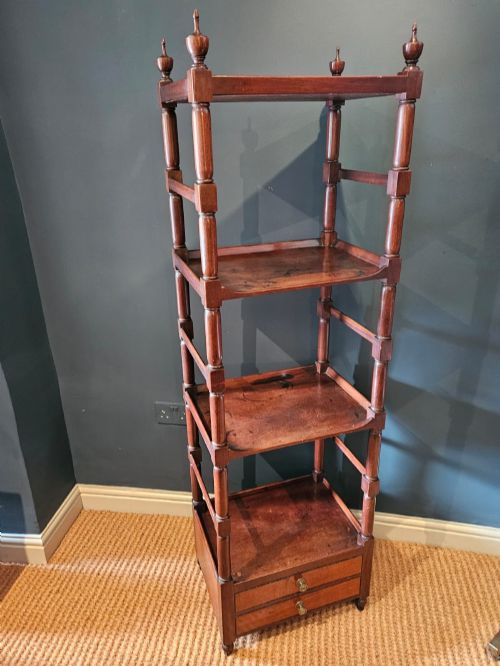
- A tiered set of open shelves used for displaying ornaments or books, popular throughout the Victorian period. These stands often feature turned uprights and multiple levels.
- Waterfall bookcase
- A standing bookcase with graduated shelves that step back from bottom to top, creating a cascading profile. This form appeared frequently in Regency and later revival designs.
- Etagere
- A piece of furniture consisting of a series of open shelves for displaying small objects, often incorporating materials like rosewood and brass. Originating in France, these pieces served both decorative and practical roles.
- Barley twist
- A decorative turning technique resembling a spiral rope, frequently used on the upright supports of Victorian what-nots and stands. This turning style added texture and visual movement to solid timber furniture.
- Revolving bookcase
- A compact bookcase mounted on a rotating pivot mechanism, allowing easy access to books from any angle. Edwardian examples often incorporated inlaid mahogany woodwork.
Vintage Standing Shelves: Frequently Asked Questions
Where did people place what-nots?
These tiered stands typically occupied drawing rooms or parlours where families could display ceramics, small sculptures, and prized books.
Their open construction ensured that decorative objects remained visible from multiple angles within a room.
How do I date an oak bookcase?
Examination of the timber preparation, edge treatments, and construction methods helps establish whether a piece originates from the Victorian, Edwardian, or later periods.
Simpler rustic pine or dark oak versions often point towards the 1920s and 1930s, while Arts and Crafts examples display characteristic plain honesty of form.
Can these shelves hold heavy books?
Solid hardwood versions constructed from oak or mahogany provide robust support for substantial volumes and everyday library use.
Lighter pine or decorative etagere forms suit lighter reading material and decorative objects rather than heavy encyclopaedias.
What is a revolving bookcase?
A revolving bookcase is a compact freestanding unit mounted on a concealed rotating base that turns smoothly on a spindle.
This design allowed readers to access an entire collection of books from a single seated position beside a desk or armchair.