


Vintage Staffordshire Ornaments
These vintage staffordshire ornaments bring Victorian parlours to life through ceramic dogs, figures, and cottages shaped by English potters.
Vintage Staffordshire Ornaments
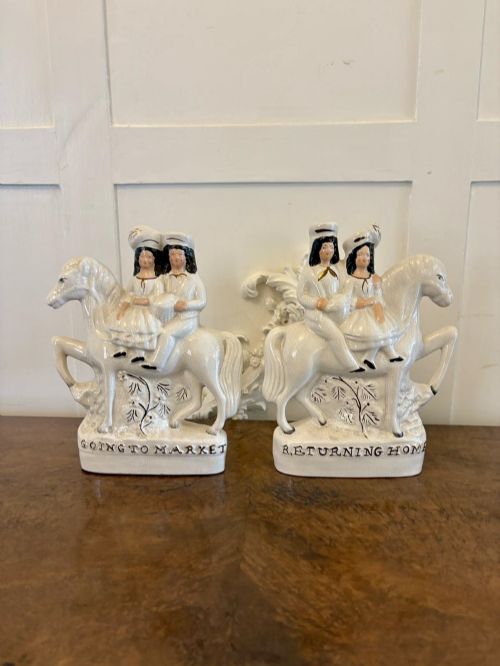
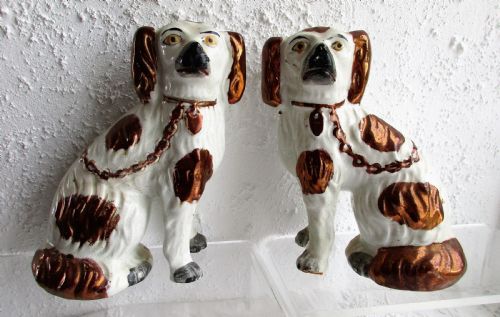
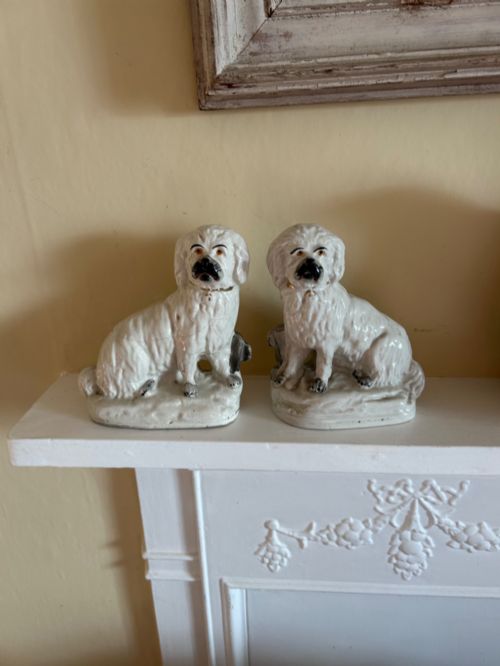
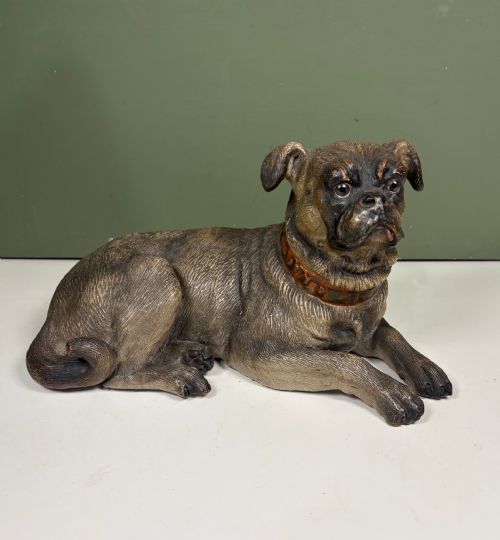
Vintage staffordshire ornaments comprise earthenware figures, animals, and architectural models produced across the nineteenth and early twentieth centuries. These pieces encompass spaniels, pugs, greyhounds, lions, and poodles, alongside human figures ranging from historical subjects to Scottish lairds. Spaniels intended to sit on mantelpieces dominate the selection, often arranged as facing pairs.
Makers shaped these ceramics during the Victorian, Edwardian, and later periods, capturing domestic animals and notable personalities in clay. The forms include flatbacks designed to stand against a wall, bookends, quill holders, and inkwells. Most originate from English potteries working within traditional folk and decorative styles.
Materials and Methods
The firing process bonded the ceramic body with glazes, sometimes incorporating enamel decoration that required subsequent low-temperature fixings. Manufacturers such as Wedgwood and Lancaster and Sons utilised these established ceramic techniques.
Watchful ceramic pugs and spaniels peer out from mantelpieces, having guarded English hearths for well over a century.
Assessing Craftsmanship
The application of glaze and gilt decoration alters the visual depth of a piece. Finer examples maintain crisp enamel work and clean glaze surfaces that reflect careful execution in the kiln.
Wedgwood and Co Ltd·Lancaster and Sons of Hanley·Royal Doulton
The Vintage Staffordshire Ornaments Glossary
- Flatback
- A ceramic figure modelled in the round at the front with a flat, unglazed or partially glazed reverse designed to stand against a mantelpiece wall.
- Lead glaze
- A glossy coating containing lead oxide applied to earthenware to waterproof the porous clay body and impart a smooth finish.
- Copper lustre
- A metallic glaze finish producing a reflective, copper-hued sheen across the ceramic surface.
- Enamel paint
- Coloured glass powder suspended in a medium, fired onto the glazed ceramic body at lower temperatures to achieve vibrant surface hues.
Vintage Staffordshire Ornaments: Frequently Asked Questions
Where were vintage staffordshire ornaments displayed?
Households placed these ceramic figures upon mantelpieces, often positioning matched pairs of spaniels at either end of a fireplace.
Smaller pieces such as inkwells and quill holders occupied writing desks and parlour tables within Victorian homes.
How do I care for ceramic ornaments?
Dust these glazed earthenware pieces gently with a soft, dry brush to prevent accumulation in moulded crevices.
Avoid immersing antique painted ceramics in water, as moisture can harm delicate enamel pigments and exposed clay.
What subjects appear most frequently?
Dogs form the largest category, featuring spaniels, greyhounds, poodles, and pugs modelled individually or with pups.
Human subjects include historical figures, literary characters, royalty, and architectural models such as cottages.
Are these figures solid ceramic?
Most pieces are hollow-moulded earthenware to reduce weight and ensure even firing within the kiln.
Flatback figures utilise this hollow construction while maintaining a flat reverse to sit flush against vertical surfaces.