






Vintage Spiral Candlesticks
These vintage spiral candlesticks bring tactile warmth and turning craft to a room, offering sculptural form through twisted wood and brass.
Vintage Spiral Candlesticks
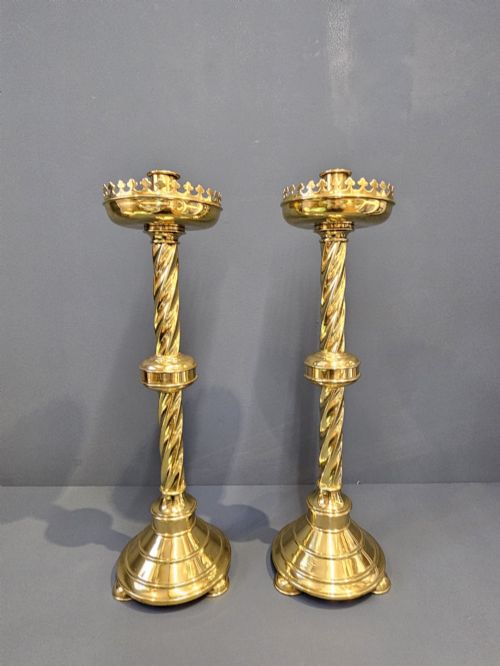
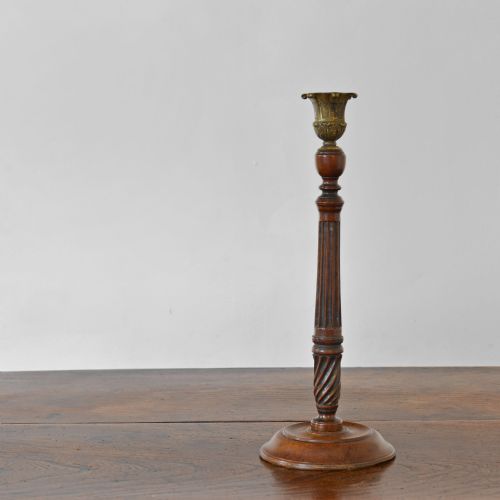
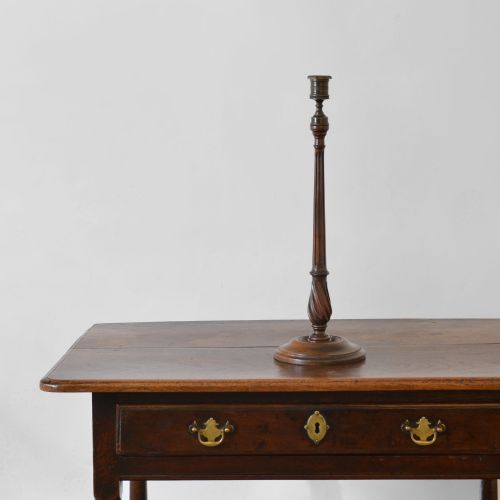
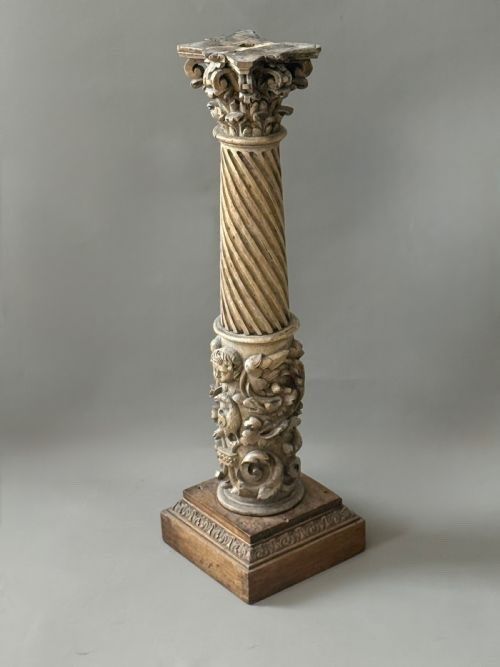
Vintage spiral candlesticks encompass turned table lighting spanning from seventeenth-century continental baroque pillars to twentieth-century oak and brass designs. When searching for vintage spiral candlesticks, buyers encounter substantial church altarpieces, ecclesiastical brassware, and domestic oak or mahogany examples.
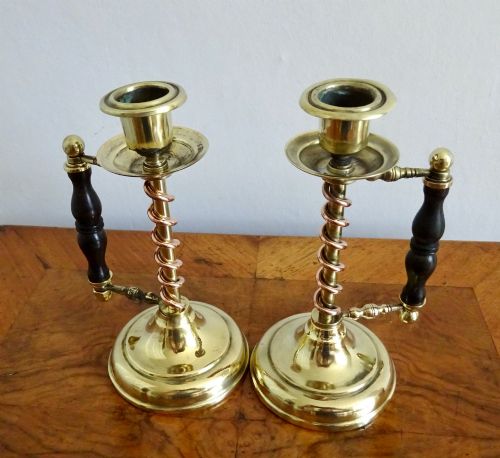
The materials reflect domestic utility and ritual use alike, moving from Georgian hardwoods to Victorian metalwork and arts and crafts copper combinations. Walnut, gesso, paint, and crystal glass also appear across the centuries represented in the inventory.
How they were made
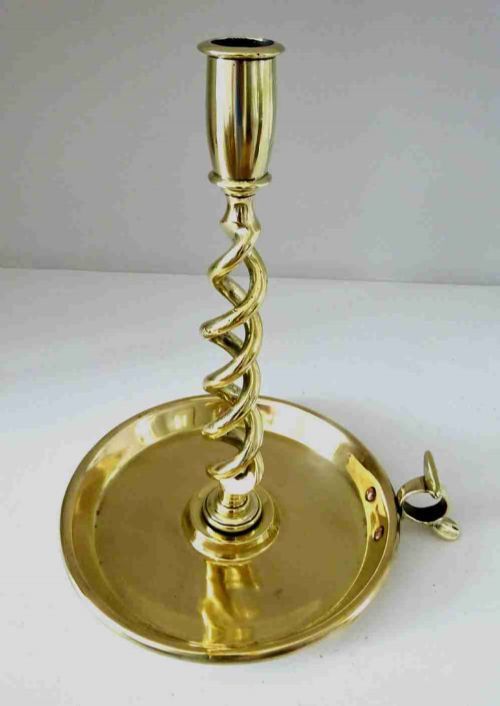
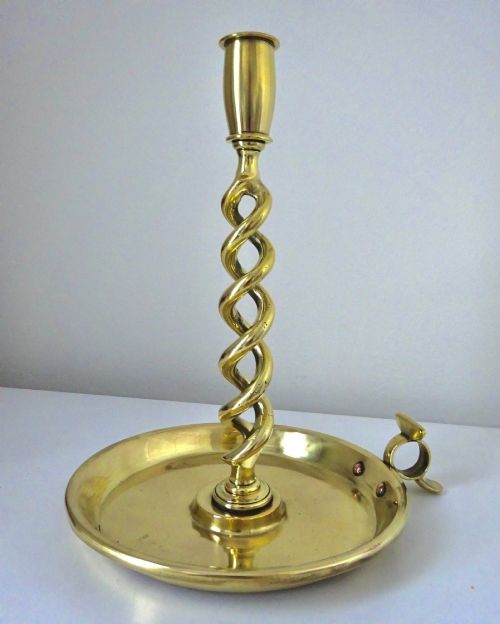
Makers shaped these pieces through woodturning on a lathe to achieve the characteristic helical twist, often termed a barley twist. Artisans also cast and polished brass and copper components, sometimes combining metal shafts with wooden bases or fitted trays.
Woodworkers utilised oak, walnut, and mahogany, carving details by hand on larger continental baroque pillars and folk-art items. Surface finishes vary from polished brass to painted or gessoed wooden textures that show the tool marks of their period.
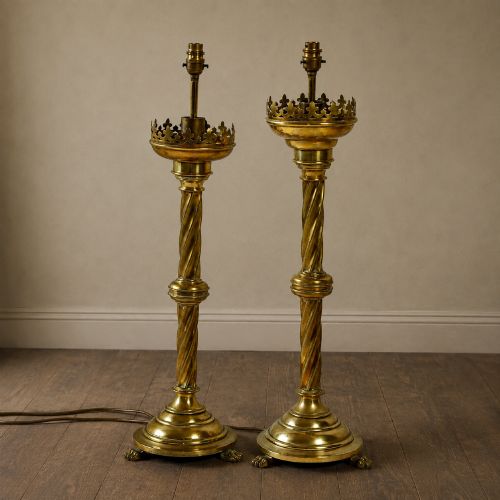
Design styles represented include Gothic Revival, Arts and Crafts, Continental Baroque, and Edwardian domestic forms.
What varies in quality
Quality rests in the precision and depth of the spiral cut, where crisp, uniform twists demonstrate superior turning skill. Heavier gauge brass, substantial timber sections, and stable fitted bases distinguish the finer examples from simpler work.
Proportion and scale dictate visual impact, with taller monumental pillars and matched pairs commanding greater presence. Original patination and the integrity of brass tops or fitted trays further separate standard production items from distinguished specimens.
T Thomason And Co
The Vintage Spiral Candlesticks Glossary
- Barley twist
- A cylindrical column carved or turned in a helical spiral resembling a stalk of barley. This profile became particularly popular during the seventeenth century and saw revivals in the Victorian and Edwardian eras.
- Ecclesiastical
- Items made for church use, including altar candlesticks and large brass church pieces. These examples are frequently heavier and taller than domestic lighting.
- Gesso
- A plaster-like material applied to wood surfaces as a base for paint or gilding. It appears on period pieces to create smooth decorative finishes.
- Gothic Revival
- An architectural and decorative style drawing inspiration from medieval forms. Pieces from this movement often incorporate pointed arches and heavier ecclesiastical detailing.
- Turned
- Shaped on a lathe by rotating timber or metal against cutting tools. This method creates symmetrical columns, bases, and spiral stems.
Vintage Spiral Candlesticks: Frequently Asked Questions
How do I date an oak spiral candlestick?
Dating relies on timber species, turning style, and construction methods. Earlier seventeenth and eighteenth-century pieces display hand-turned irregularities, while twentieth-century examples often feature standardised machine cutting.
Hardware components like screw threads and base plates also offer clues. Comparing the patina of the wood with brass tops helps confirm the period.
Were all spiral candlesticks originally for church use?
Many larger examples served in churches as altar candlesticks or processional lights. These ecclesiastical pieces are typically taller and heavier than domestic versions.
Smaller turned wood and brass items were made for homes, used on dining tables, desks, and sideboards. Both domestic and church items share similar helical turning techniques.
How do I clean tarnished brass candlesticks?
Maintenance requires gentle cleaning to preserve the historic surface patination rather than achieving a bright modern shine. Mild soap and warm water remove surface dust without stripping age.
Harsh metal polishes should be avoided on antique brass because they remove original character. A soft cloth helps maintain the finish safely over time.
Can I convert these candlesticks into table lamps?
Several pieces arrive already adapted as lamp bases with fitted electrical wiring. Unconverted candlesticks can sometimes be adapted, though purists prefer keeping them in their original candle-holding state.
Professional rewiring ensures safety if conversion is undertaken. Reversible modifications preserve the underlying antique structure.