
Vintage Spindle Chair
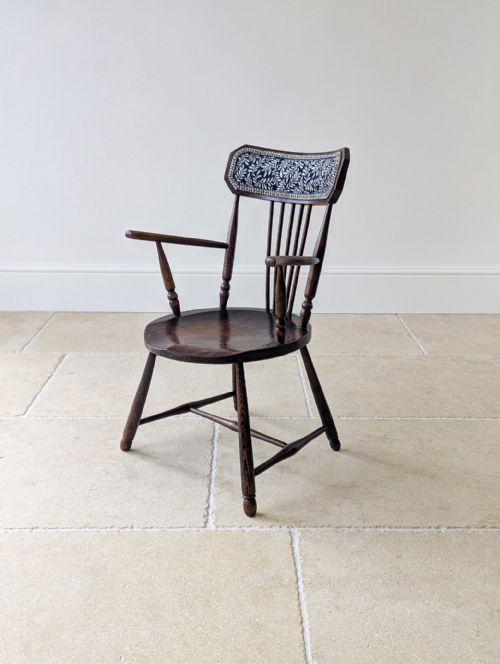
A vintage spindle chair brings rustic charm to a room, offering sturdy vernacular construction and turned wooden supports.
Vintage Spindle Chair
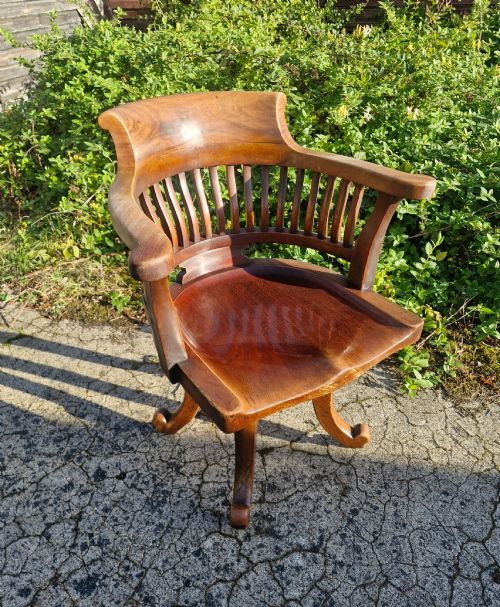
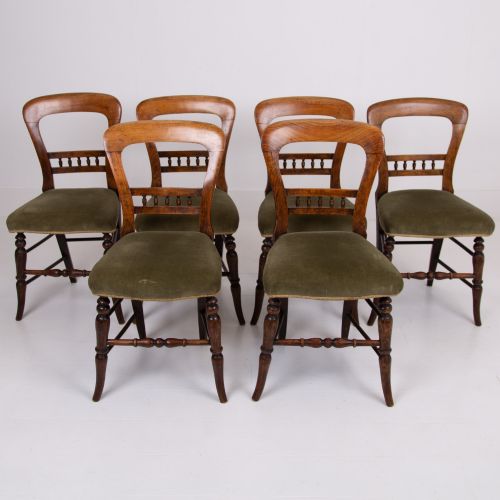
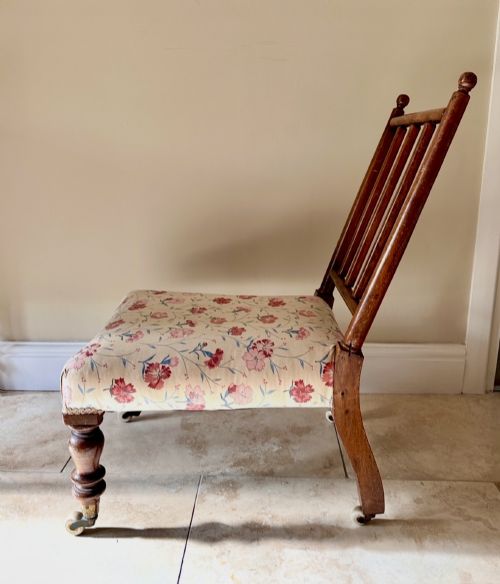
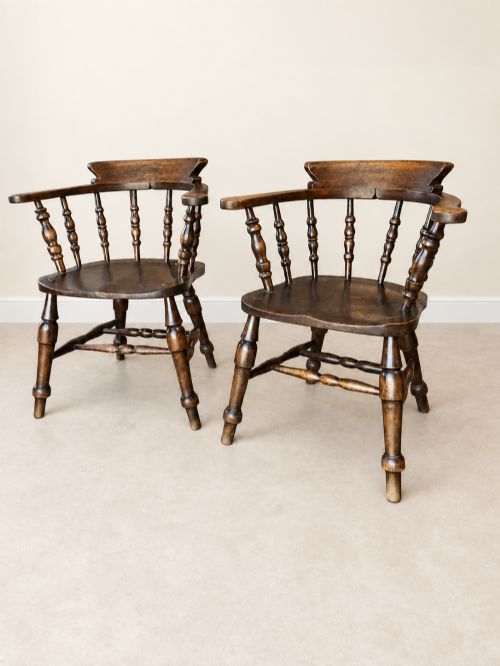
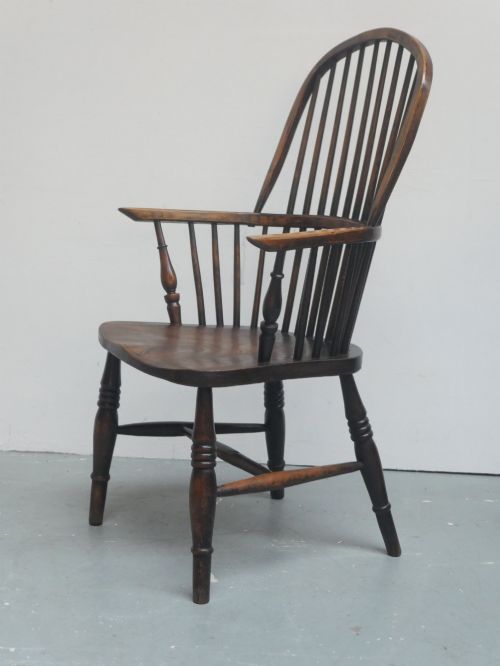
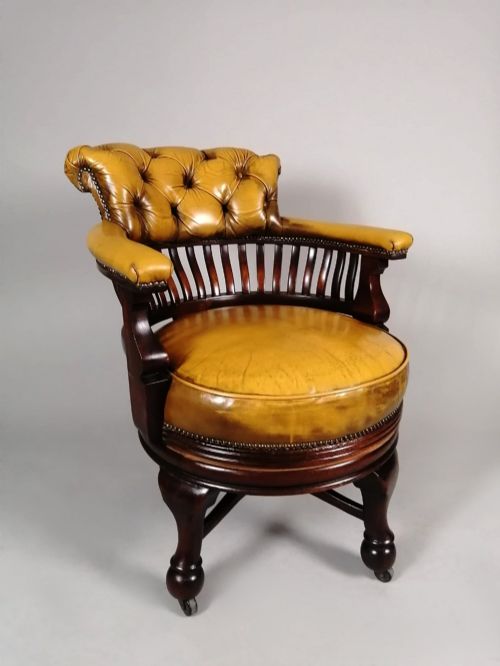
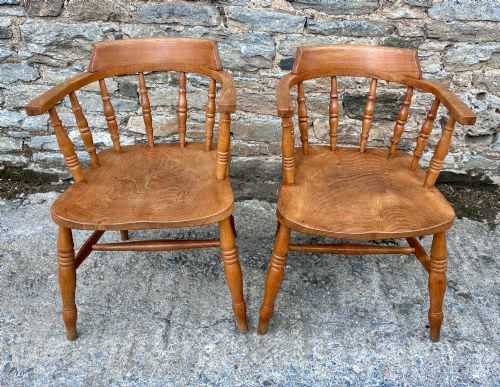
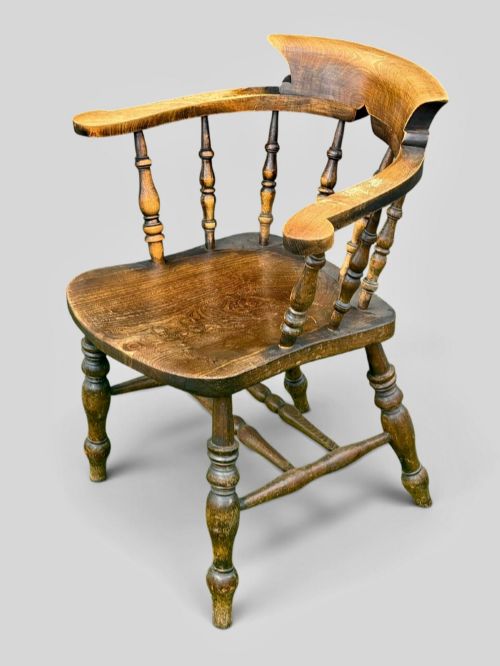
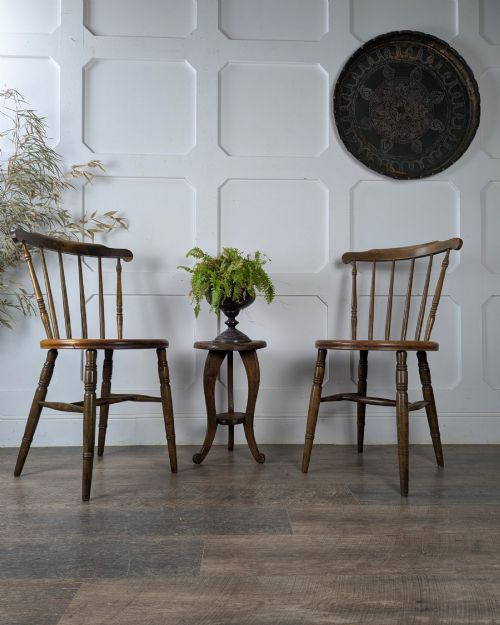
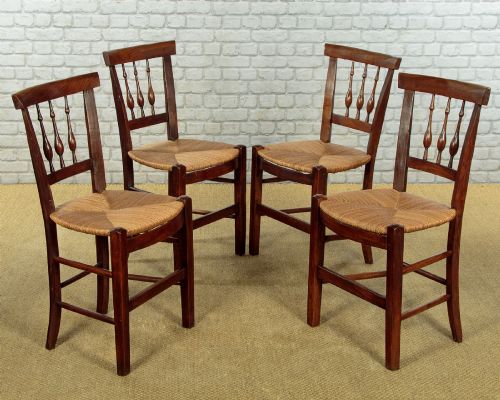
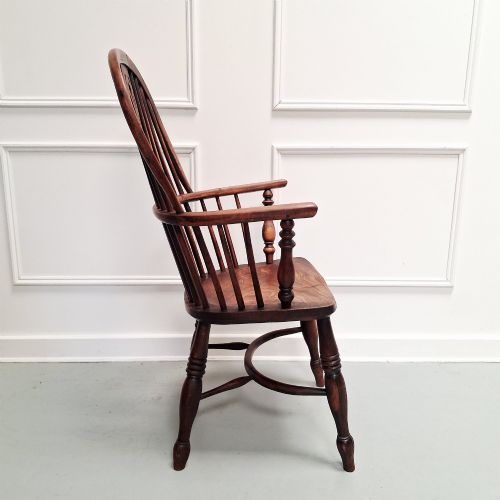
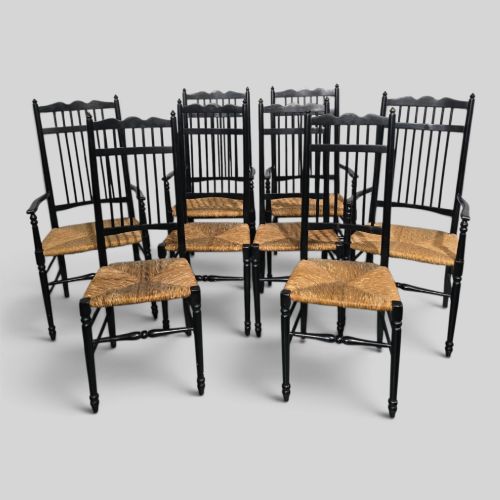
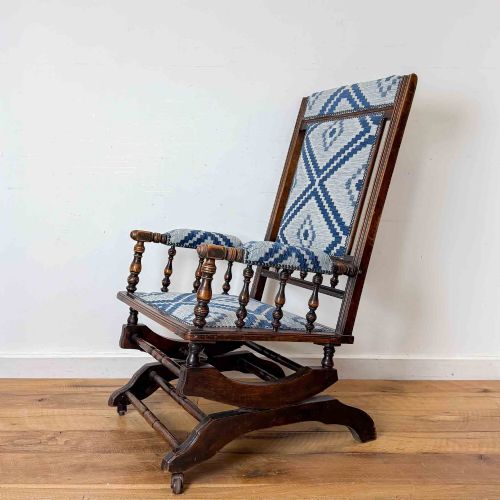
When you search for a vintage spindle chair, you encounter a wide array of seating rooted in nineteenth and early twentieth-century domestic life. These pieces encompass rustic farmhouse dining chairs, revolving desk armchairs, smokers bows, and rocking chairs originating from English, Scottish, and Scandinavian country traditions.
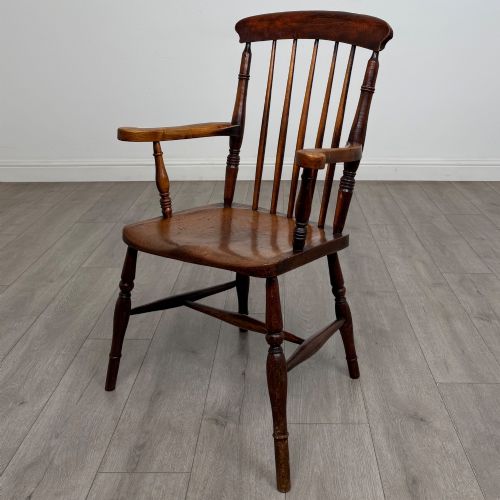
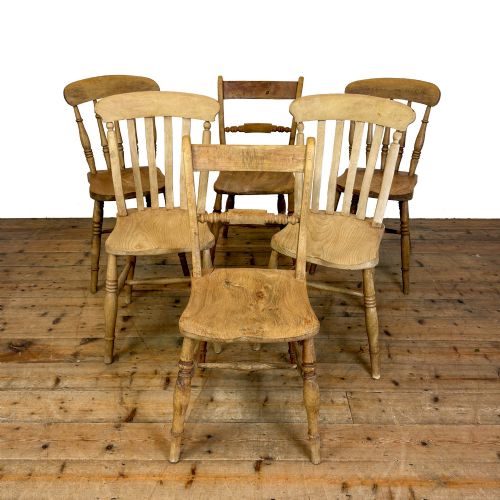
The most common versions on this page are vernacular Windsor and stick-back kitchen chairs constructed from elm and beech. These forms range from single library armchairs to matched sets of dining chairs built for everyday domestic use.
How they were made
These chairs rely on traditional bodging and joinery techniques, combining steam-bent wooden bows with turned spindles fitted into solid timber seats. Craftsmen selected contrasting native woods for strength and appearance, frequently pairing elm seats with beech spindles and ash or oak frames.
Makers shaped solid seats from thick slabs of timber and secured the legs and backsticks using wedged tenon joints. Additional comfort and texture came from woven rush seating or leather upholstery fixed with brass tacks.
Object forms range from Windsor armchairs and rocking chairs to dining sets, daybeds, and revolving desk chairs.
What varies in quality
The character of the timber and the crispness of the turning define the distinction between standard workshop output and superior examples. Chairs featuring richly grained elm seats and well-balanced, slender spindle profiles demonstrate a higher level of rural craftsmanship.
Structural integrity and the survival of original surface patination separate well-preserved pieces from those with excessive replacement parts. Original turning on the legs, arm supports, and crest rails indicates an untouched standard of manufacture.
Codina·J Spencer
The Vintage Spindle Chair Glossary
- Smoker's bow
- A low-backed Windsor armchair with a continuous curved arm rail supported by turned spindles, designed for domestic or tavern use.
- Stick back
- A chair design where multiple slender turned wooden spindles form the backrest, inserted directly into the seat.
- Windsor
- A chair built with a solid wooden seat into which the legs and back spindles are separately bored and wedged.
- Bodge
- A traditional method of green woodturning practiced in woodland encampments to produce chair components.
- Harlequin set
- A collection of similar antique chairs gathered together to form a matched dining group despite minor individual variations.
Vintage Spindle Chair: Frequently Asked Questions
What is a spindle chair?
A spindle chair is a wooden seat featuring vertical turned wooden rods supporting the backrest or arms. These designs emerge primarily from nineteenth-century vernacular and farmhouse traditions.
Such chairs utilise solid timber seats combined with steam-bent components to provide sturdy domestic seating. The spindle construction lightens the visual weight of the heavy wood frame.
How do I date a Windsor chair?
Dating a Windsor chair involves examining the wood species, tool marks on the underside of the seat, and construction methods. Earlier examples often display wider saddle seats and ash underframes.
Victorian and Edwardian iterations frequently incorporate beech and elm with machine-turned spindles. Evaluating the wear patination around the footrest area also helps determine age.
Are these chairs comfortable for daily use?
Most antique spindle chairs feature ergonomic saddled wooden seats shaped to fit the body comfortably. Their sturdy framework makes them suitable for daily dining or desk use.
Adding a loose seat cushion provides extra padding for prolonged sitting. The open spindle back supports posture while maintaining a compact physical footprint in a room.
What woods were used in these chairs?
Cabinet makers and rural carpenters relied on native hardwoods available in local woodlands. Elm served as the preferred material for solid carved seats due to its resistance to splitting.
Beech and ash provided strong, flexible timber for turned legs, bows, and spindles. Oak and mahogany appeared more frequently in formal desk or office armchairs from the late Victorian period.