


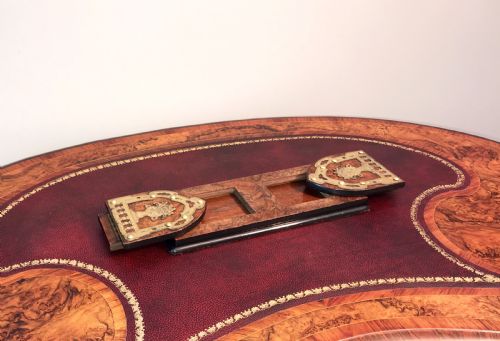
Vintage Sliding Book Rack
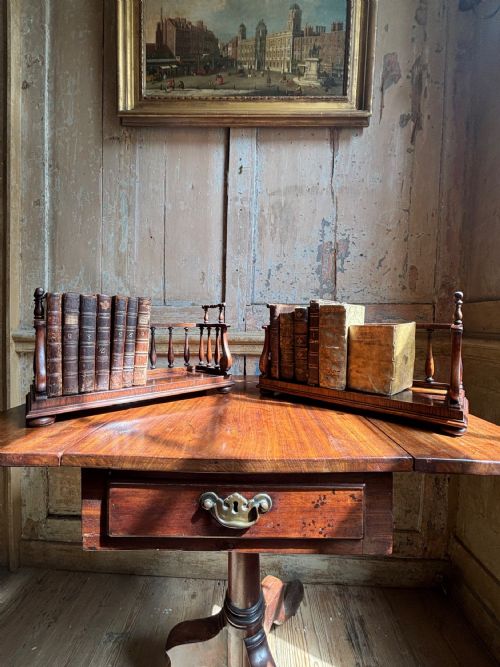
These vintage sliding book racks are clever expanding desk accessories designed to hold volumes upright on a shelf or tabletop.
Vintage Sliding Book Rack
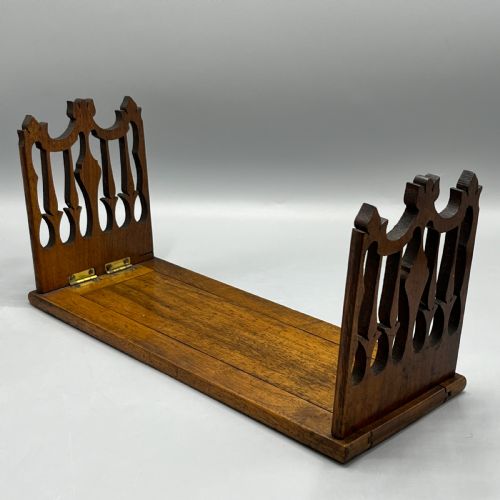
When you search for a vintage sliding book rack, you are looking at practical desk accessories and library furnishings made to expand and contract as your collection of volumes changes. These pieces usually feature a central wooden base with hinged or sliding ends that pull outward to accommodate more books.
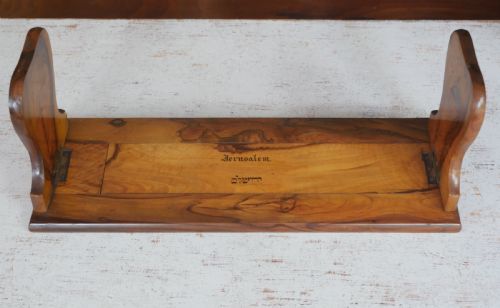
The versions you are most likely to meet on this page span the Victorian period into the early twentieth century, taking forms such as book stands, troughs, and novel rests. They originate from British workshops as well as overseas sources like Jerusalem, Kashmir, and Anglo-Indian centres, reflecting global tastes in home libraries.
How they were made
Cabinetmakers constructed these sliding book racks using dense timbers including walnut, burr walnut, rosewood, oak, maple, and olive wood. They often selected these figured woods for their rich grain patterns, which brought warmth to nineteenth-century and Edwardian studies.
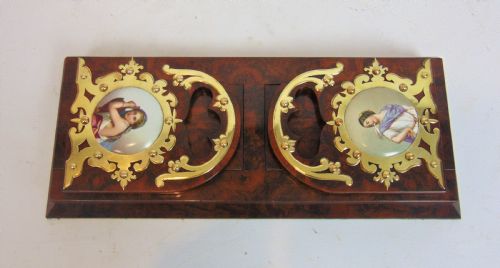
Many examples incorporate fitted brass mounts, hinges, and extending mechanisms to ensure smooth operation when pulling the sides apart. Artisans also embellished specific pieces with hand-painted porcelain plaques, carved teak details, and Tunbridge mosaic work.
Current listings feature nineteenth-century and early twentieth-century pieces spanning the Victorian, Edwardian, and Art Deco periods.
What varies in quality
The distinction between standard examples and the finest pieces lies in the choice of materials and decorative enrichment. Simpler variants rely on plain oak or mahogany construction, whereas superior pieces utilise heavily figured rosewood or burr walnut.
Quality also shows in the integration of specialised decoration, such as finely painted porcelain plaques or intricate carved woodwork. The precision of the sliding mechanism and the weight of the brass mounts further separate utilitarian items from exceptional library pieces.
The Vintage Sliding Book Rack Glossary
- Book slide
- A desk accessory with an expandable mechanism designed to hold a varying number of books upright between two ends. It sits easily upon a library table or bookshelf.
- Tunbridge ware
- A form of woodworking characterised by microscopic mosaic patterns made from naturally coloured woods. It frequently decorates nineteenth-century boxes and book racks.
- Anglo-Indian
- A style of decorative arts produced in India during the British period, often featuring dense carved teak and distinctive regional motifs.
- Novel rest
- A specialised form of book rack designed specifically to hold lighter reading material or current novels on a table.
Vintage Sliding Book Rack: Frequently Asked Questions
What is a sliding book rack?
A sliding book rack is an adjustable desk or shelf accessory with expanding sides that hold a changing number of volumes upright.
These pieces were common in nineteenth-century and early twentieth-century libraries and studies to keep working collections organised.
How do you use a vintage book slide?
You place your books between the two end supports and push or pull the base to fit the exact width of the volumes.
The expanding mechanism allows the rack to grow longer or shorter as you add or remove books from your display.
What woods were used for book racks?
Makers utilised a variety of domestic and exotic timbers including rosewood, walnut, oak, maple, and olive wood.
Finely grained woods like burr walnut were frequently chosen for more decorative library pieces.
How do I date an antique book slide?
Dating relies on observing the timber, the style of the carving or brass mounts, and the construction methods used in the base.
Pieces range from mid-nineteenth-century Victorian designs to Edwardian and Art Deco examples from the early twentieth century.