


Gothic Revival Book Trough
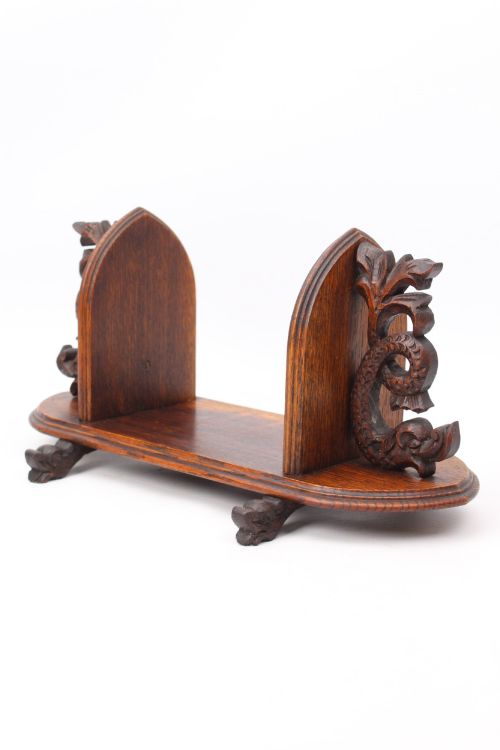
A gothic revival book trough is a sturdy desk accessory designed to hold volumes upright, bringing architectural pointed arches and heavy timber into the home library.
Gothic Revival Book Trough
These pieces draw upon architectural motifs from the medieval period, translating ecclesiastical forms into domestic desk accessories. The selection spans the Victorian and Edwardian eras, with oak and walnut appearing frequently alongside brass mounts.
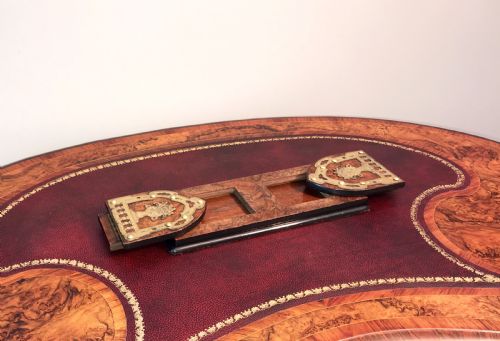
The form exists to organise and display volumes close at hand on a library table or desk. Extending versions utilise sliding mechanisms to accommodate varying numbers of books.
Materials and construction
Cabinet makers utilised dense hardwoods such as oak, walnut, mahogany, and maple to build these durable desk accessories. Ebonised finishes were also applied to achieve a dark, solemn surface suited to the gothic aesthetic.
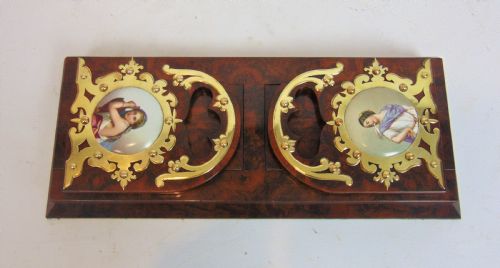
Brass mounts and hinges provide structural reinforcement while adding metallic contrast to the timber. Selected pieces incorporate decorative elements such as agate or porcelain plaques set into the wood.
Some nineteenth-century makers added secret compartments to book slides, presumably to hide letters from prying family members.
Distinguishing quality
The standard of timber selection and joinery determines the structural integrity of each piece. Heavier woods and precise dovetailing or mitring separate robust examples from simpler constructions.
The integration of brass mechanisms, patent hardware, and decorative inlays distinguishes standard production from finer workshop output. Patinated metals and well-fitted extending actions indicate careful initial manufacture.
Betjemanns
The Gothic Revival Book Trough Glossary
- Book slide
- An extending desk accessory with sliding ends designed to hold a row of volumes upright. The expanding action relies on wooden channels or metal tracks.
- Gothic Revival
- An architectural and decorative style drawing inspiration from medieval forms. It utilises pointed arches, trefoils, and heavy timber construction.
- Ebonised wood
- Timber treated with a dark finish to imitate ebony. This technique was popular in nineteenth-century cabinet making for dramatic contrast.
- Patent
- A legally protected mechanical invention registered by a maker. In desk accessories, this often refers to extending or folding actions.
Gothic Revival Book Trough: Frequently Asked Questions
What is a gothic revival book trough used for?
These pieces were built to keep working volumes close to hand on a desk or library table. They held dictionaries, Bibles, and novels securely between upright ends.
Today, they serve the same practical function in a study while adding period character to a room. Their compact footprint makes them straightforward to place on shelves or side tables.
How do extending book slides work?
Extending models use a sliding mechanism built into the base. As you add or remove volumes, the ends slide outward or inward along the channel to hold the row tight.
Brass tracks and hinges often assist this movement, ensuring the extending action remains smooth. The mechanism allows the holder to adapt to changing collections of books.
Which woods are most common?
Oak and walnut appear most frequently in these pieces, providing a heavy and durable foundation for daily use. Mahogany and maple are also encountered across nineteenth-century examples.
Some makers utilised ebonised wood to achieve a darker, formal appearance. Brass mounts and occasional porcelain plaques provide contrast to the timber.
How do I date a Victorian piece?
Dating relies on observing the timber choice, construction techniques, and hardware style. Pieces from the mid-nineteenth century often display heavy brass mounts and rich walnut or oak.
Patent marks and registration stamps can sometimes narrow down the production year. Edwardian examples tend to show lighter construction while retaining traditional forms.