


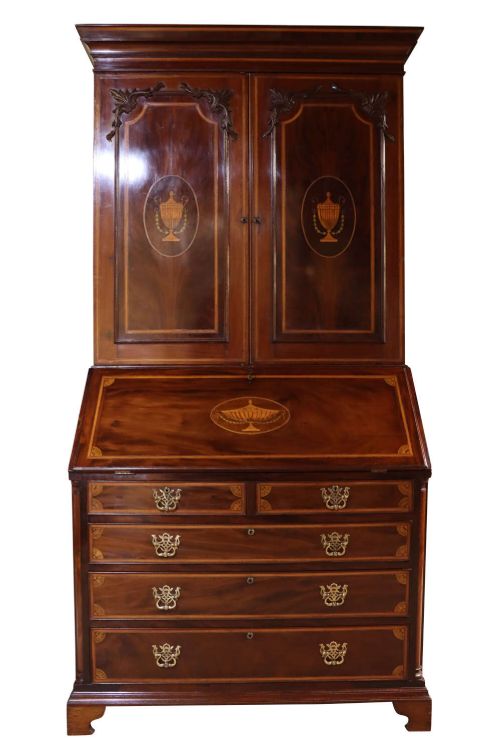
Vintage Slant Desk
A vintage slant desk is a practical writing cabinet with a sloping fall front, designed for correspondence and storage.
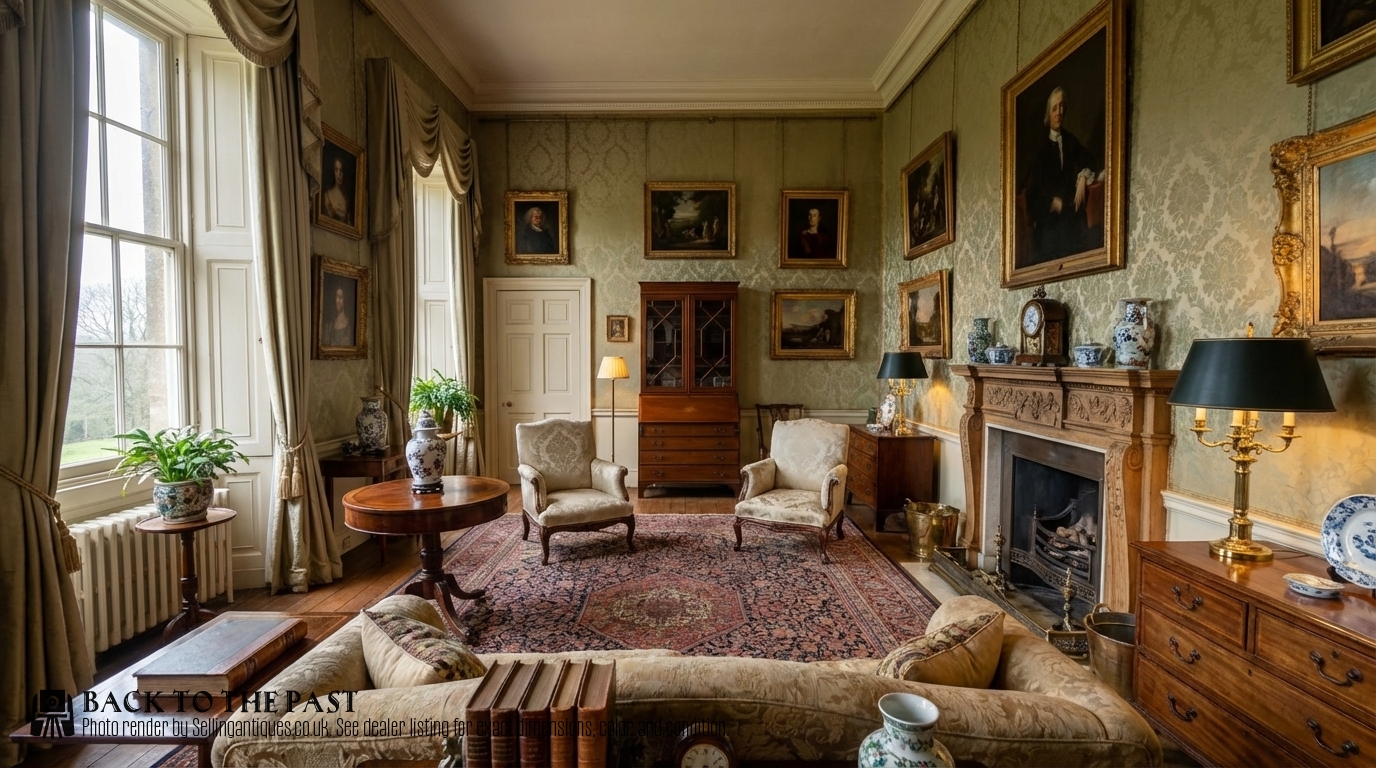
Vintage Slant Desk
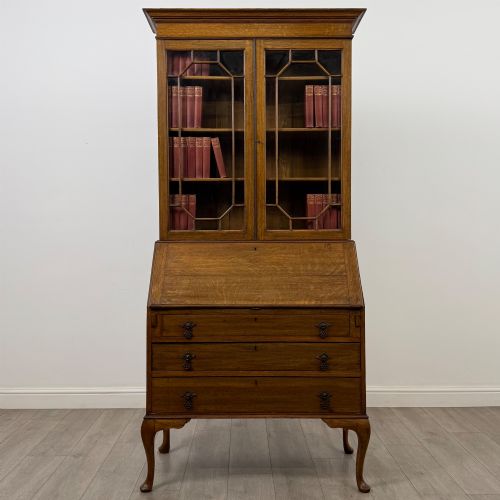
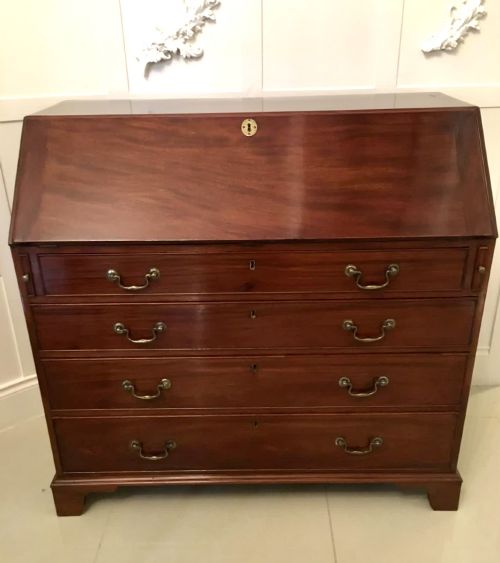
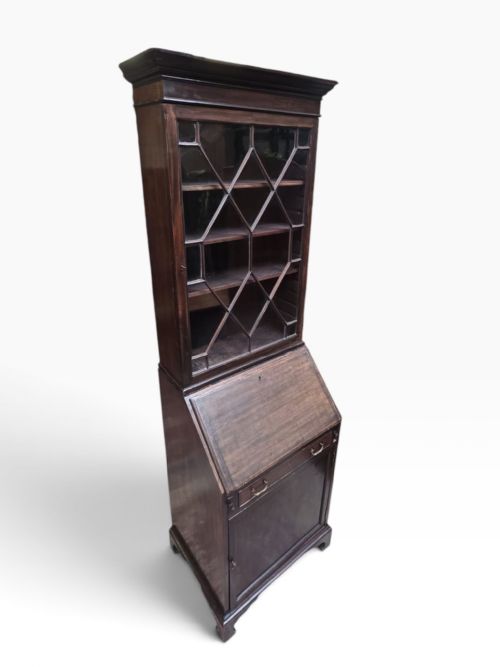
A vintage slant desk, commonly found in forms such as bureaux and bureau bookcases, serves as a compact writing station with a hinged flap that opens to reveal internal compartments and pigeonholes. When buyers search for a vintage slant desk, they encounter pieces ranging from simple domestic writing cabinets to tall bookcase combinations.
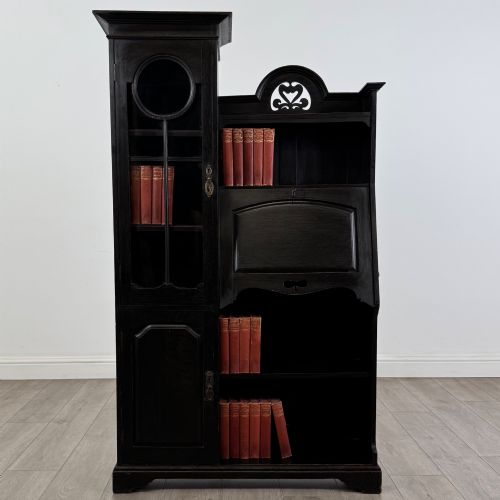
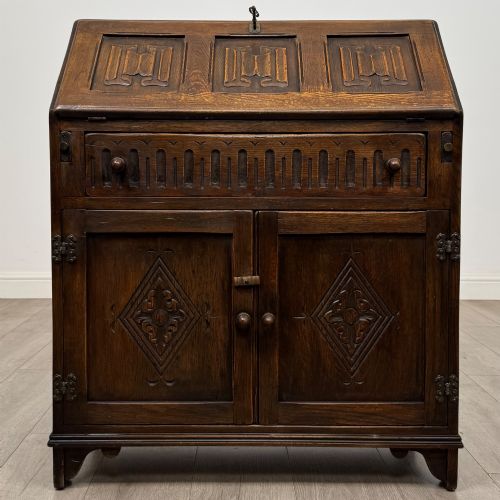
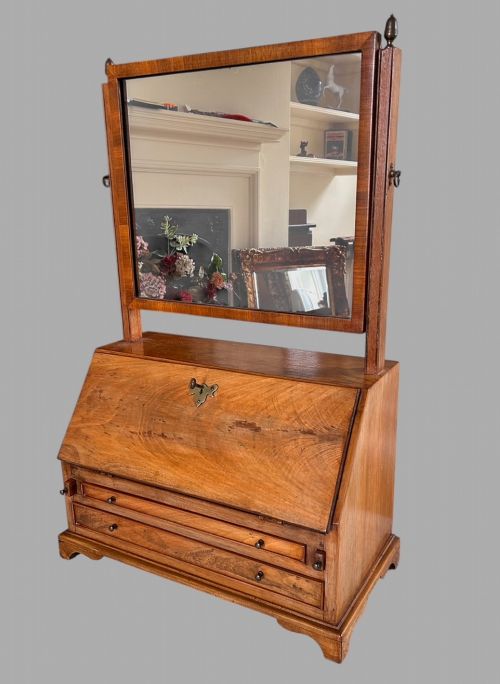
The selection spans numerous eras, with Edwardian oak and walnut examples appearing frequently alongside Georgian, Victorian, and early twentieth-century variations. Makers utilised diverse formats, including table-top versions, desks on stands, and pieces influenced by Queen Anne, Jacobean, and Arts and Crafts styles.
How they were made
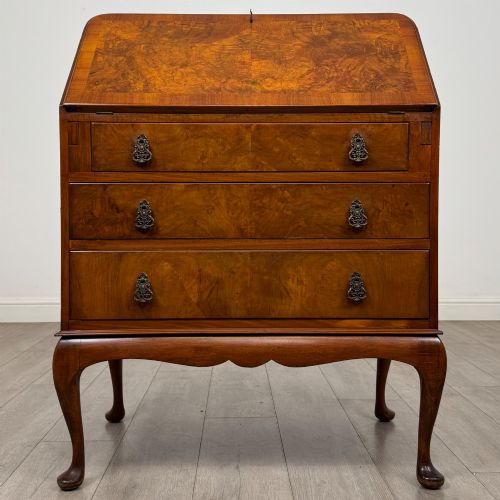
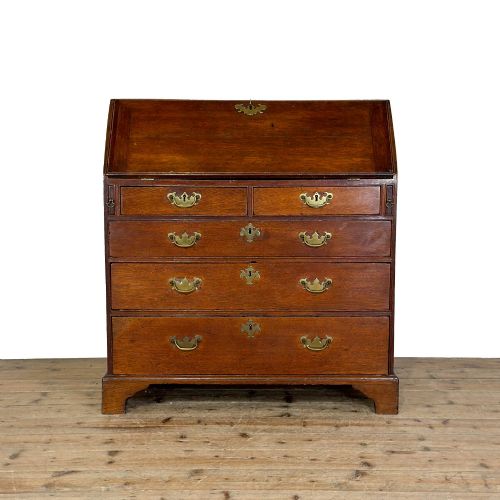
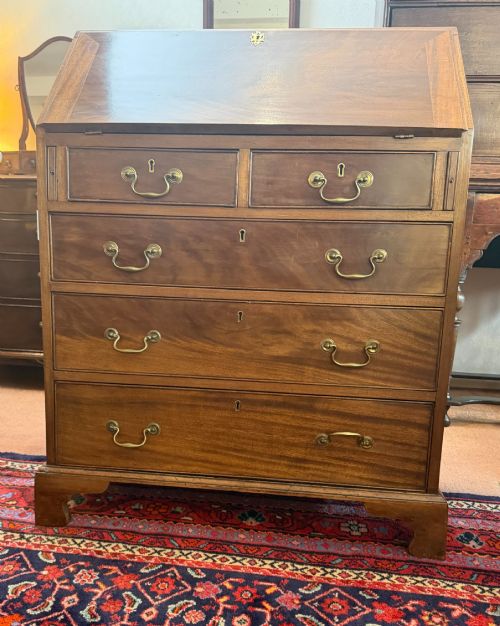
Construction relies heavily on traditional timber framing, utilising solid and veneered woods such as oak, mahogany, walnut, burr walnut, and yew wood. Cabinetmakers shaped fall fronts and drawer carcases to house fitted compartments, frequently incorporating brass handles, hinges, and occasional glass panels for upper bookcase sections.
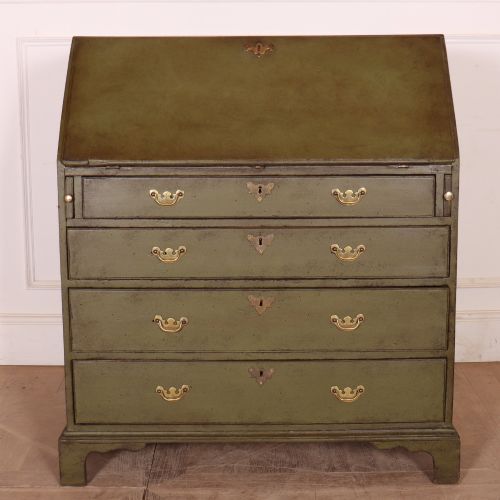
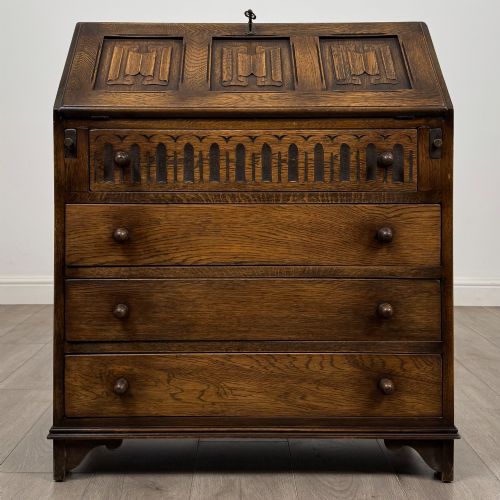
Surface treatments and decorative techniques vary according to the period and style, ranging from carved linenfold panels and painted finishes to figured veneers and satinwood inlays. Workshops also produced ebonised treatments and simpler polished wood surfaces to suit changing domestic tastes.
Design styles span Edwardian, Georgian, Arts and Crafts, Jacobean Revival, Queen Anne, and Art Deco periods.
What varies in quality
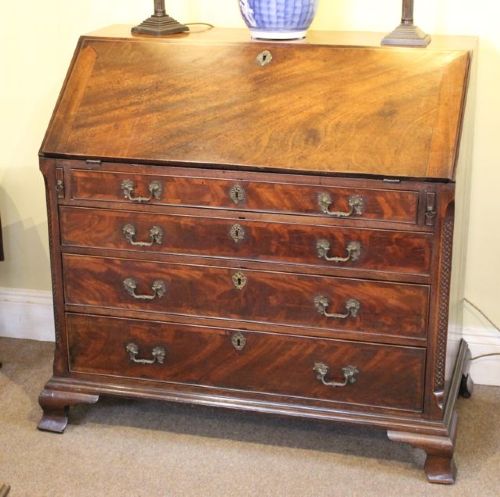
The refinement of the timber selection largely determines the standing of a piece, with highly figured burr walnut, rich mahogany, and select oak demonstrating superior material choice. Finer examples display meticulous grain matching across the fall front and drawer fronts, enhancing the visual depth of the wood.
Internal joinery and secondary detailing separate standard production from exceptional work, visible in the complexity of the interior pigeonholes, secret compartments, and the crispness of carved elements like linenfold panels or brass hardware integration.
Heals of London·Arthur Basil Reynolds·Larkin
The Vintage Slant Desk Glossary
- Bureau
- A writing desk featuring a sloping hinged lid or fall front that conceals a fitted interior with small drawers and pigeonholes. This term often encompasses similar slant-front writing furniture.
- Fall front
- The sloping writing flap of a desk that pulls down or folds forward to provide a horizontal surface for correspondence. It typically rests on lopers or support arms when open.
- Linenfold
- A style of wood carving that imitates folded fabric, frequently seen on the panels of early twentieth-century oak pieces. This decorative motif adds texture to drawer fronts and cabinet doors.
- Bureau bookcase
- A combination piece consisting of a slant desk base surmounted by a glazed or panelled bookcase cabinet. These taller units maximise vertical storage space in a study or library.
- Burr walnut
- Timber taken from the warted growths of walnut trees, yielding intricate, swirling grain patterns highly prized by cabinetmakers. It is frequently used for decorative veneering on high-status writing furniture.
Vintage Slant Desk: Frequently Asked Questions
What is a vintage slant desk?
A vintage slant desk is a traditional writing cabinet featuring a sloping lid that opens to form a writing surface above drawers and pigeonholes.
These pieces were built across various centuries, with many surviving examples originating from the Edwardian era and the Georgian period in woods like oak and mahogany.
How do I use a slant desk?
The sloping front pulls down or lowers onto wooden supports, creating a flat desk space for writing letters or placing a laptop.
Inside, the small drawers and compartments organise stationery, while the lower drawers provide general household storage.
Where should I place it?
These desks suit studies, living rooms, and bedrooms due to their compact footprint and enclosed storage capability.
Positioning them away from direct sunlight and heat sources preserves the wood finish and prevents veneer cracking.
How do I date a desk?
Dating relies on examining the construction methods, timber types, and decorative styles such as Arts and Crafts, Jacobean Revival, or Queen Anne.
Hardware styles, drawer dovetailing, and maker labels also help establish the chronological period of manufacture.