



Vintage Silver Tantalus Bottle
A vintage silver tantalus bottle secures spirits under lock and key, combining fine crystal and metalwork for the after-dinner table.
Vintage Silver Tantalus Bottle
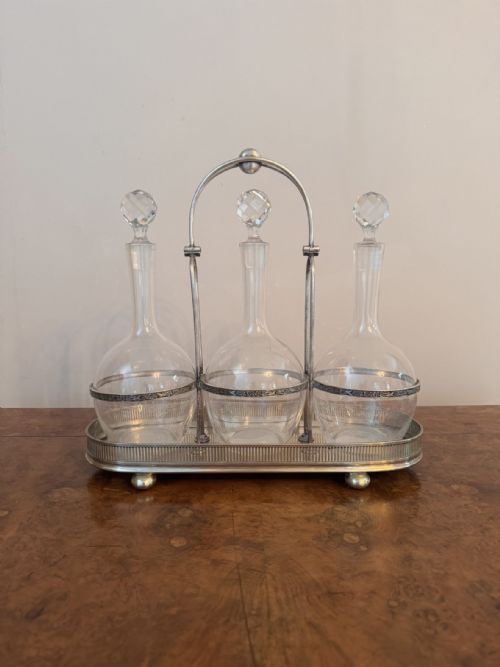
A vintage silver tantalus bottle sits within a locking frame designed to keep expensive spirits secure from unauthorized access by guests or staff. Most examples found here take the form of decanter sets housed in stands holding two or three vessels.
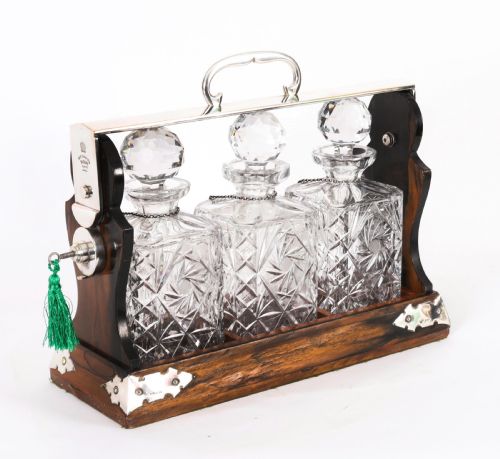
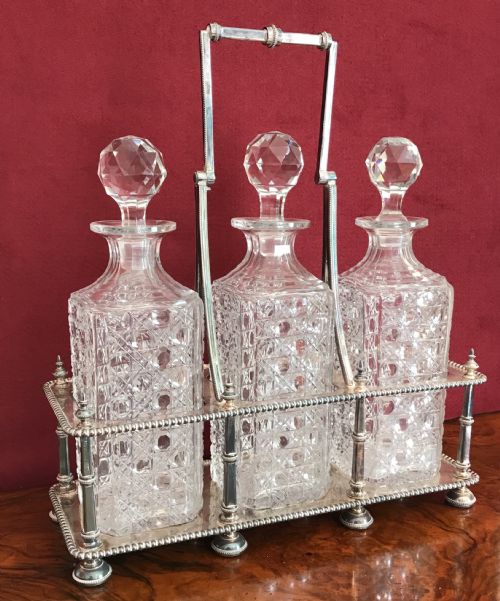
The objects span periods from the Victorian era through the Edwardian years and into the Art Deco period of the nineteen-thirties. Forms range from oak and coromandel wood frames to silver plated and sterling silver stands holding cut glass and crystal decanters.
How they were made
Maker workshops built the frames using sturdy timbers like oak and exotic coromandel wood, fitted with metal locking mechanisms and carrying handles. Silversmiths applied silver plate, Old Sheffield plate, or sterling silver mounts to secure the bottles.
The bottles themselves utilise heavy cut glass or cut crystal, shaped with deep facets and geometric patterns designed to catch the light when filled with amber spirits.
Periods represented span from the Victorian era and Edwardian period through to Art Deco designs of the nineteen-thirties.
What varies in quality
Quality rests in the precision of the locking mechanism and the substance of the timber frame, where dense coromandel and quarter-sawn oak outlast softer woods. Heavier gauge silver plating or solid sterling mounts indicate higher workshops.
The glass contributes significantly to the standard of the piece, with deep hand-cut crystal decanters displaying sharper facets and greater weight than standard pressed glass alternatives.
Betjemann·Elkington·The Goldsmith Co.·Hukin and Heath
The Vintage Silver Tantalus Bottle Glossary
- Tantalus
- A locking drink cabinet or frame that holds decanters visible yet out of reach. The name derives from the mythological figure who was kept just out of reach of food and water.
- Coromandel wood
- A dense, heavily grained timber imported from Asia, prized by nineteenth-century cabinet makers for luxury boxes and frames. It provides a dark, striped surface finish.
- Old Sheffield plate
- An early form of composite metal made by fusing a thin sheet of silver to a copper base before rolling. This technique produces a warm tone distinct from later electroplating.
- Cut crystal
- Glass containing lead oxide that increases brilliance and weight, shaped with hand-ground facets. It forms the heavy, sparkling bottles fitted into these stands.
- Silver plate
- A thin layer of silver bonded to a base metal, commonly utilised on nineteenth- and twentieth-century frames. It offers the appearance of solid silver at a lower production cost.
Vintage Silver Tantalus Bottle: Frequently Asked Questions
How does the lock work?
The locking bar typically swings down over the stoppers to prevent them from being removed while the frame is secured with a key.
Unlocking the mechanism allows the bar to lift or slide aside so individual bottles can be lifted free.
Are the keys usually original?
Many surviving examples retain their working keys, though replacement keys are sometimes fitted by specialists to operate the original locks.
Lock mechanisms varied between makers, meaning replacement keys require careful adjustment to fit the original wards.
How should I clean the glass?
Wash the decanters by hand using warm water and mild detergent, avoiding harsh abrasives that might scratch the surface.
Allow them to dry thoroughly upside down on a cloth before returning them to the wooden frame.
Where were they used?
These stands sat on sideboards or dining tables in late Victorian and Edwardian drawing rooms after formal meals.
They allowed hosts to display fine whiskey or brandy while controlling access to the spirits.