
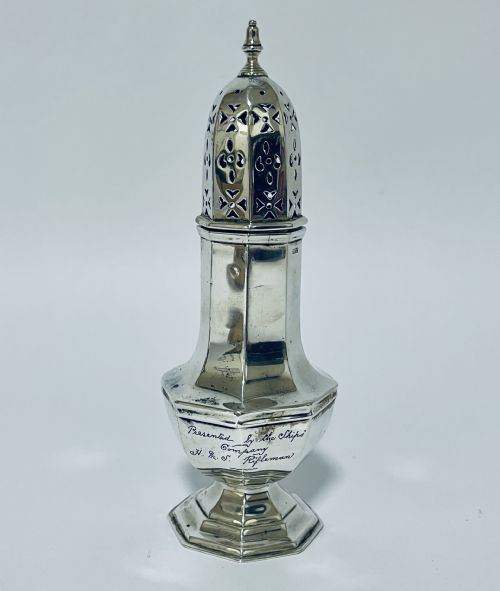
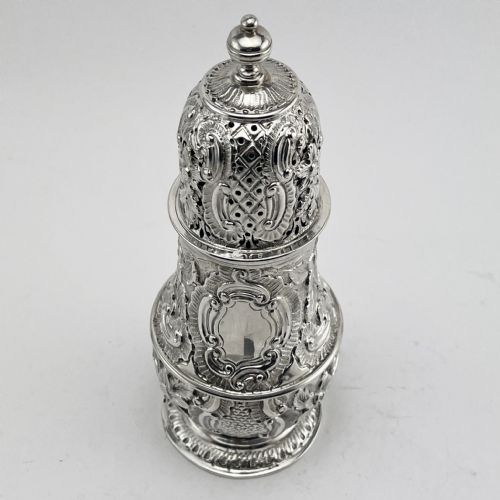


Vintage Silver Sugar Sifter
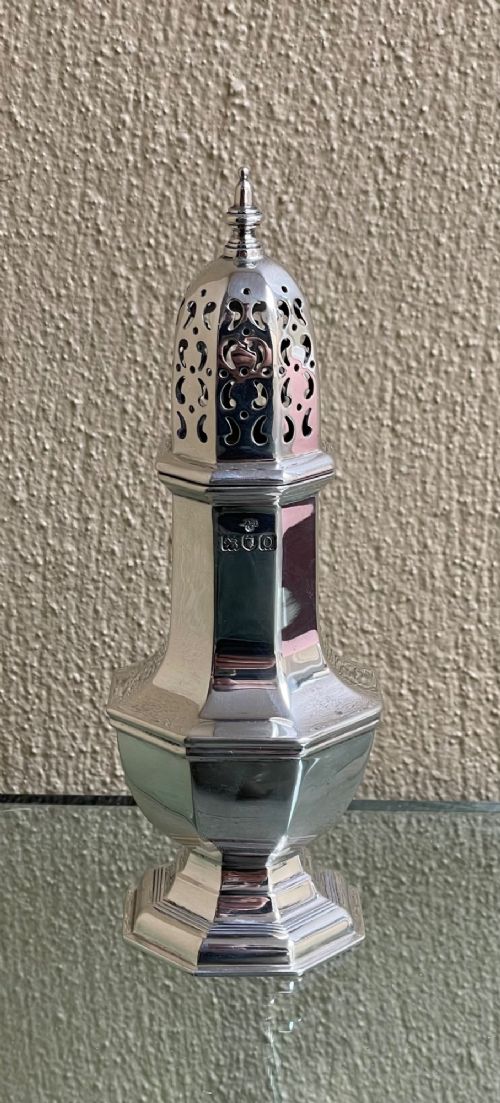
A vintage silver sugar sifter brings a touch of formal dining history to the table, designed for dusting loose sugar over desserts and pastries.
Vintage Silver Sugar Sifter
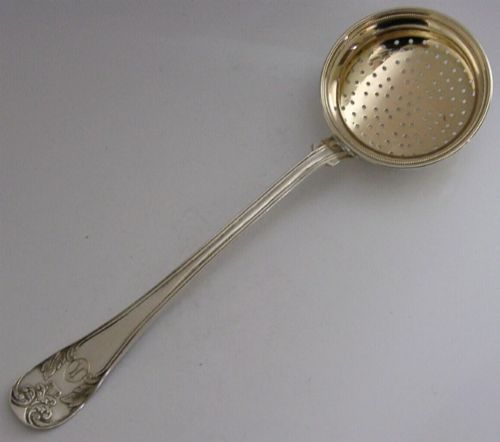
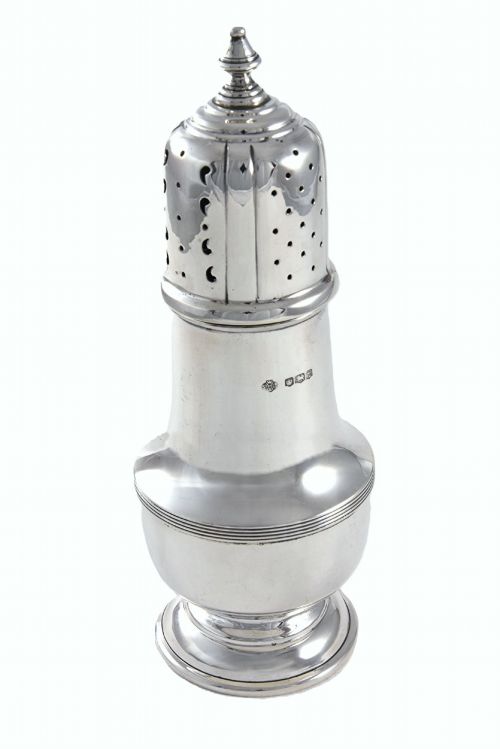
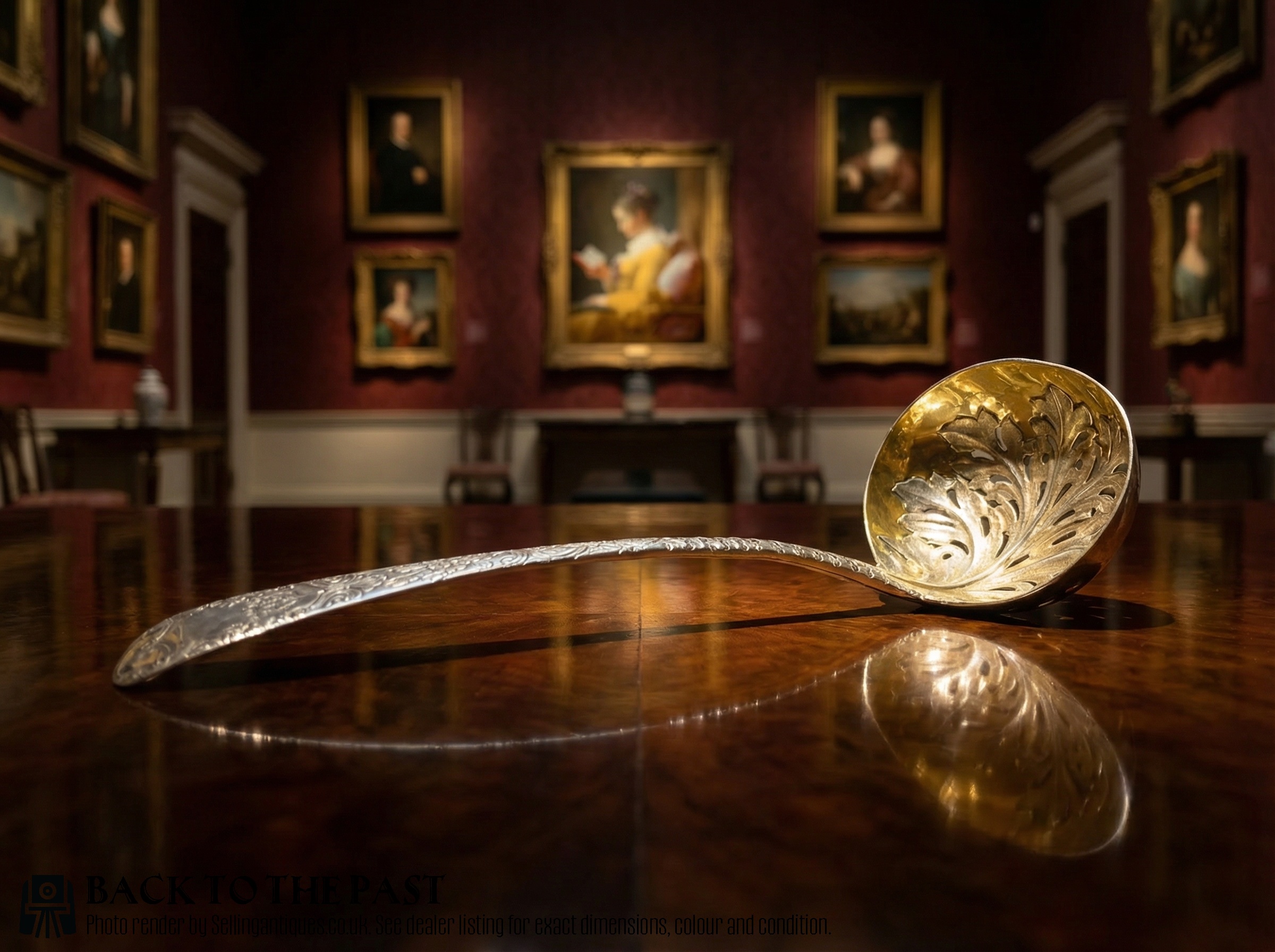
A vintage silver sugar sifter takes the form of a tall shaker, caster, or perforated spoon used for dispensing fine sugar onto food. Buyers seeking a vintage silver sugar sifter will encounter various traditional vessels designed for this specific table service.
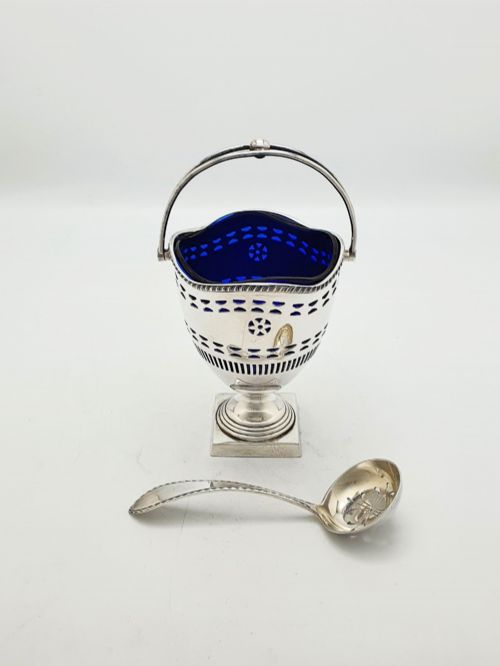
The selections span distinct historical eras, featuring pieces from the Georgian, Victorian, Edwardian, and Art Deco periods. Forms range from classic solid silver casters to cut glass bottles with pierced silver tops and paired glass bowls with matching ladles.
Makers utilised sterling silver, silver plate, and silver gilt, often combining the metalwork with cobalt glass, cranberry glass, or clear cut glass liners. Styles shift from ornate Victorian cornucopia designs to clean geometric Art Deco polygon shapes.
How they were made
Silversmiths shaped solid silver and silver plate through hammering, spinning, and casting, creating the tapered bodies of the shakers and the flat bowls of the spoons. Pierced lids and strainer heads were hand-pierced or punched with intricate patterns to allow the sugar to flow evenly.
Glass components, such as cut glass bottles and coloured glass liners in cobalt or cranberry hues, were mouth-blown and wheel-cut to fit precisely within the metal mountings and baskets.
The selection spans multiple design movements, encompassing Georgian, Victorian, Edwardian, Art Deco, and Mid-20th Century aesthetics.
What varies in quality
Quality rests upon the weight of the metal, the crispness of the piercing on the cap, and the integrity of any glass inserts. Substantial gauge silver and well-defined hallmarks indicate superior manufacturing standards.
The artistic execution of the style, whether an elaborate Edwardian repoussé body or a restrained Art Deco polygon form, dictates the distinction between standard tableware and finer pieces.
Evald Nielsen·Barker Brothers·James Dixon And Sons Ltd·Horace Woodward And Co Ltd·Roberts And Belk·Berthold Muller Hanau
The Vintage Silver Sugar Sifter Glossary
- Caster
- A small container with a perforated top used for sprinkling sugar or spices. These vessels stand on a flared foot and feature screw-fit or pull-off covers.
- Silver Gilt
- Silver that has been coated with a thin layer of gold on its surface. This technique provides a rich golden interior or exterior finish.
- Hallmark
- An official stamp applied to precious metals indicating the standard of purity, the assay office, and the year of manufacture. British pieces carry distinct town marks and date letters.
- Repoussé
- A metalworking technique where the artist hammers the design from the reverse side to form raised relief patterns on the front. It is frequently seen on Victorian and Edwardian examples.
Vintage Silver Sugar Sifter: Frequently Asked Questions
What is a sugar sifter used for?
These vessels serve to sprinkle castor or icing sugar over cakes, puddings, and fruits. The perforated lid or specialised spoon ensures an even distribution without clumps.
In period dining, they sat on the table as part of the dessert service, allowing guests to sweeten dishes to their personal taste.
How do I clean antique silver?
Wash the silver gently in warm water with a mild liquid soap using a soft cloth. Avoid harsh abrasive dips that strip the natural patina accumulated over the decades.
Dry the piece thoroughly with a soft microfibre cloth to prevent water spots and maintain the shine of the metal.
How do I date a silver sifter?
Examine the hallmarks stamped onto the metal surface, which typically include a maker's mark, a standard mark, an assay office mark, and a date letter. Matching the date letter against official assay office tables reveals the exact year of production.
Stylistic indicators such as Art Deco geometric lines or Victorian ornamentation also help narrow down the decade of manufacture.
Are glass liners original?
Many pierced bowls and baskets feature coloured glass liners made of cobalt or cranberry glass. Original liners fit snugly into the silver framework without excessive movement.
Replacements are common due to accidental breakage over time, though period-appropriate replacements still match the style of the silver mount.
Can I use my sifter today?
Solid silver and silver-plated sifters remain fully functional for modern dining use. Simply fill the interior with dry castor sugar and replace the cap securely before shaking.
Hand washing is recommended after use to protect both the metal and any glass or gilt components from sticky residue.