


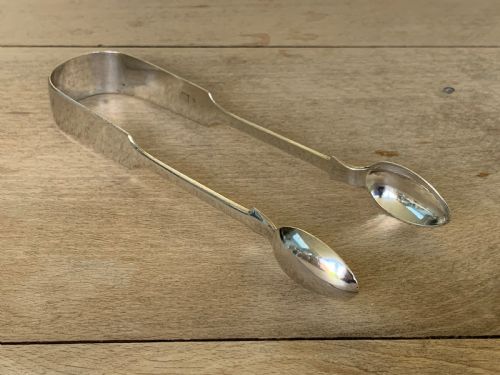


Vintage Silver Sugar Nips
Vintage silver sugar nips are small implements for sweetening tea, and collectors value them for their bright metal and neat mechanical spring.
Vintage Silver Sugar Nips
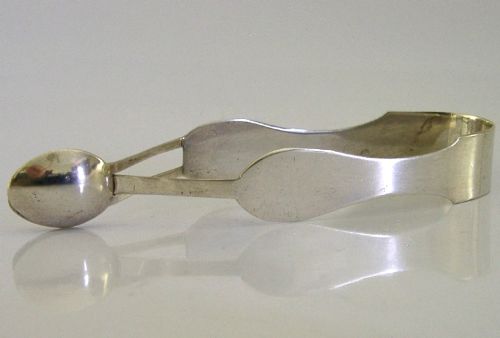
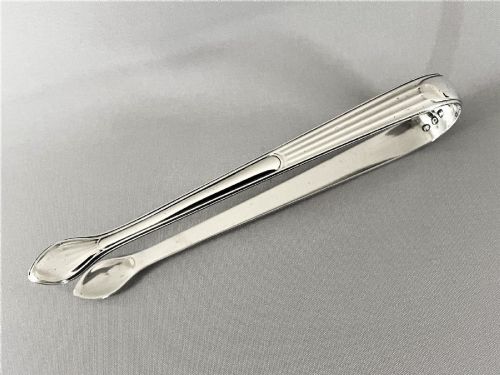
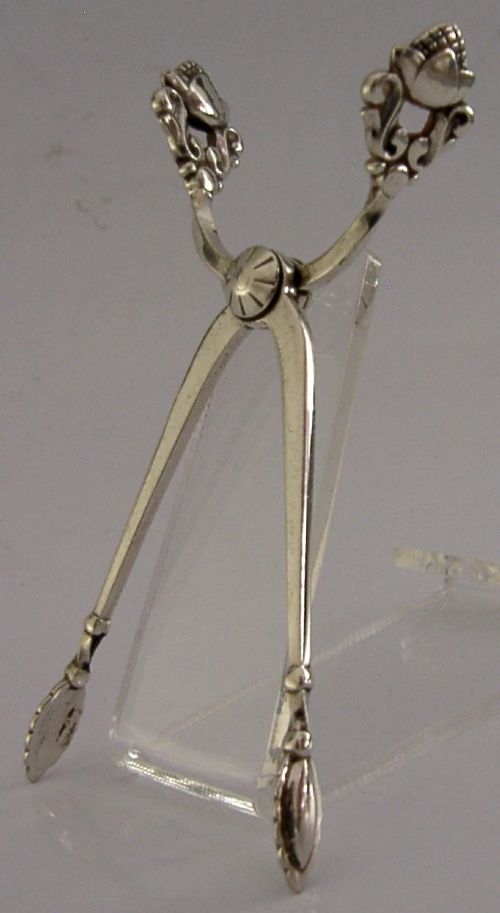
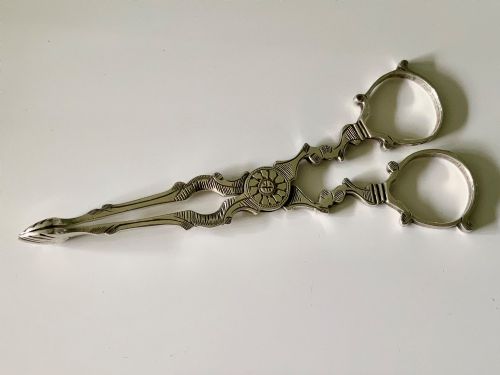
When you search for vintage silver sugar nips, you are looking at small domestic instruments designed to lift sugar lumps into a cup. The examples meeting you here cross several eras, running from the Georgian period and the Regency through Victorian designs into twentieth-century Art Deco and Danish Modern work.
Most entries take the form of sugar tongs, reflecting how makers used the terms interchangeably. You will encounter pieces originating from English provincial towns, Scottish workshops, Irish centres, and Scandinavian design houses.
The heavier early items demonstrate the traditional smithing methods of the eighteenth century, while later versions adopt the clean lines associated with mid-century production. Each piece remains tied to the ritual of the tea table.
How they were made
The pieces listed here are fashioned entirely from sterling silver, relying on the natural spring of the metal to provide the bounce in the bow. Silversmiths formed the arms either by casting the metal into shaped moulds or by hammering sheet silver to achieve the desired taper.
Decoration on the earlier items often involves hand engraving or cast motifs applied to the shoulders. Later twentieth-century examples lean towards minimal shaping, where the silhouette of the pattern defines the object rather than surface chasing.
Design styles represented here range from early Georgian forms and George IV Irish work to Danish Modern and Art Deco patterns.
What varies in quality
Quality in these implements rests on the crispness of the original detail and the spring tension of the arms. A superior pair maintains a firm resistance when squeezed, returning cleanly to its open position without slackness at the pivot or hinge.
The distinction between standard production and finer work lies in the depth of the metal and the precision of the maker's mark. Pieces bearing clear punches from recognised silversmiths retain a sharper definition in their bowls and shoulders.
Bateman Family·Georg Jensen·Josiah Williams And Co
The Vintage Silver Sugar Nips Glossary
- Sterling silver
- A silver alloy containing 92.5 percent pure silver by mass, with the remainder made up of other metals for durability. This standard is the primary material recorded across all listings.
- Sugar tongs
- An alternative term for sugar nips used interchangeably by makers and dealers. They function to grasp individual sugar lumps.
- Cast silver
- Metal poured into a mould to set into a specific shape before finishing. This technique creates heavier items with solid relief decoration.
- Assay mark
- A stamp applied by an official office guaranteeing the purity of the metal. These marks help determine the origin and period of the piece.
Vintage Silver Sugar Nips: Frequently Asked Questions
What are vintage silver sugar nips used for?
These implements were designed specifically for handling sugar lumps during tea service. They allowed the host to place sugar into cups without touching the cubes by hand.
Today, collectors use them for the same purpose or display them alongside other silver tableware.
How do I tell Georgian sugar nips apart from Victorian ones?
Georgian examples typically feature simpler, hand-wrought lines or bright-cut engraving on the arms. They often display heavier gauge silver and distinct provincial hallmarks.
Victorian pieces tend to show heavier cast ornamentation, more ornate bowl shapes, and date letters stamped by official assay offices.
Are all sugar nips made of sterling silver?
The examples on this page are formed entirely from sterling silver. Makers stamped them to certify the metal standard.
Different periods used slightly different alloy standards, but all listed items conform to sterling purity.
How should I clean my silver sugar nips?
Maintenance requires gentle washing with warm soapy water and a soft cloth to remove tarnishing without wearing away the details. Avoid harsh abrasive cleaners that scratch the surface.
Regular handling often keeps the high points bright naturally.