



Vintage Silver Spoon Fork
These vintage silver spoon fork finds bring period craftsmanship straight to the table, offering practical utility wrapped in the weight of Victorian, Edwardian, and later twentieth-century design.
Vintage Silver Spoon Fork
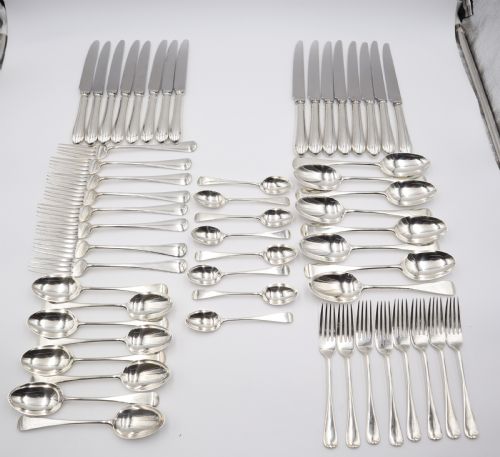
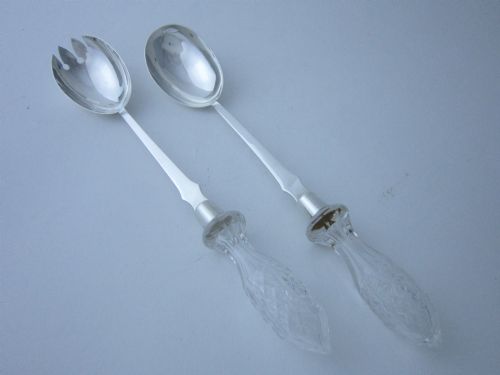
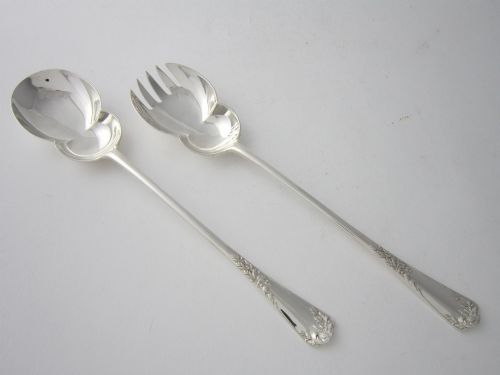
When you search for vintage silver spoon fork items, you encounter functional dining implements spanning the Victorian, Edwardian, and mid-century periods. These range from single pickle forks and jam spoons to boxed Christening sets and large canteens for twelve persons.
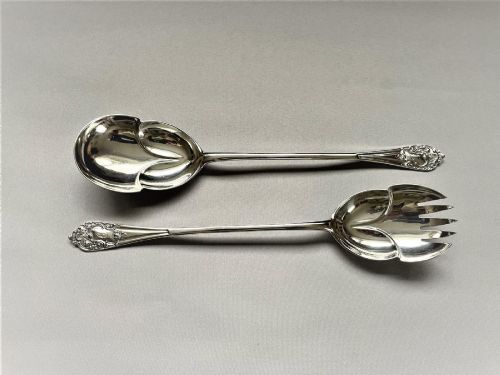
The pieces on this page most commonly include salad servers, serving utensils, and canteens formed from sterling silver and standard silver. Alongside these are specialised items like pocket knives, vanity jars, and condiment sets.
Origins stretch across traditional and utilitarian styles, capturing the shift from grand nineteenth-century dining rituals to twentieth-century domestic service. Every item reflects the specific domestic needs of its era, whether for formal entertaining or everyday use.
How they were made
Makers shaped these items using sterling silver and standard silver, frequently pairing the metal with cut glass, steel, and stainless steel for functional edges and vessels. Fitted presentation cases incorporate velvet, silk, and leather linings to protect the silver within.
Techniques relied on traditional silversmithing methods such as rat tail reinforcement on salad servers and multi-bladed construction for camping knives. Hallmarks stamped directly into the metal record the assay office and date of manufacture.
Object types span cutlery sets, salad servers, serving utensils, canteens, pocket knives, and vanity jars across traditional and utilitarian styles.
What varies in quality
Quality reveals itself in the thickness of the silver gauge and the crispness of the handle stamping or rat tail detail. Substantial weight in the hand distinguishes a superior canteen or serving spoon from lighter utilitarian pieces.
The integrity of fitted storage also marks the standard of a set, with intact silk, velvet, and leather boxes preserving the original presentation. Finer examples maintain uncompromised joins between silver bowls, tines, and handles.
Jowika
The Vintage Silver Spoon Fork Glossary
- Sterling silver
- A silver alloy containing 92.5 percent pure silver by mass, providing the durable standard used for most of these spoons, forks, and canteens. It offers both a bright finish and lasting strength for daily dining.
- Rat tail
- A traditional strengthening ridge running down the back of a spoon bowl from the handle, visible on salad servers from the Edwardian period. This reinforcement protects the joint between handle and bowl.
- Christening set
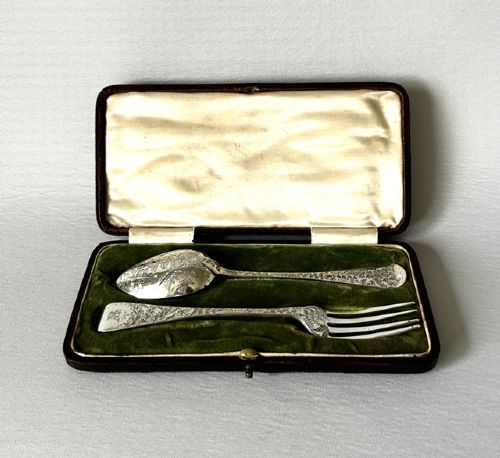
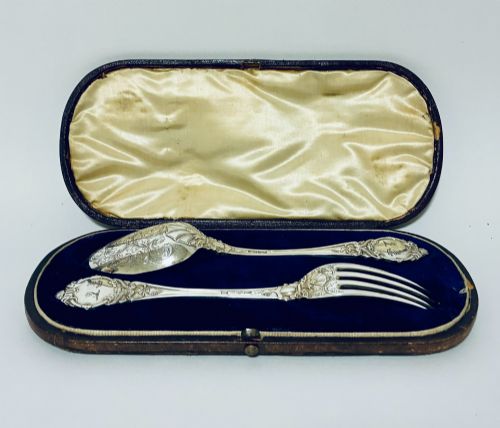
- A matched grouping of a spoon and fork, often boxed in silk or velvet, presented as a traditional gift for an infant. These Victorian items frequently feature engraved decoration.
- Canteen
- A fitted wooden or leather case housing a complete service of cutlery for multiple persons, such as twelve diners. These comprehensive sets span Victorian and later nineteenth-century manufacturing.
- Pickle fork
- A narrow, multi-tined fork designed specifically for piercing and serving pickles or preserves without bending. It often appears alongside matching jam spoons and butter knives in Edwardian condiment sets.
Vintage Silver Spoon Fork: Frequently Asked Questions
What periods do these silver utensils come from?
The pieces span the Victorian and Edwardian eras, alongside items from the 1800s, 1890s, 1900s, 1920s, and 1930s. Each period carries distinct design characteristics tied to dining customs of the time.
Assay marks and hallmarks stamped into the silver often provide specific production dates and locations. This allows you to trace the exact age of canteens, salad servers, and condiment sets.
How were boxed Christening sets used?
Christening sets containing a spoon and fork were traditionally given as ceremonial gifts to celebrate a child's naming ceremony. They served as a child's first personal cutlery rather than everyday nursery tools.
Kept safe in velvet and silk-lined presentation boxes, many survived in excellent condition because they were preserved as keepsakes rather than placed into regular rotation.
What is included in an Edwardian condiment set?
Edwardian condiment sets typically group a pickle fork, a jam spoon, and a butter knife designed for table service. They coordinate in style and material, often featuring sterling silver construction.
These specialised pieces accommodated specific foods served during formal Edwardian breakfasts and teas, supplementing standard dining flatware.
How do I care for antique silver cutlery?
Antique silver requires gentle washing in warm water with a mild soap followed by immediate drying with a soft cloth. Avoid abrasive cleaners that wear down the hallmarks and thin the silver surface over time.
Store silver cutlery in tarnish-resistant cloth rolls or lined boxes to minimise exposure to air. Regular, careful use actually helps maintain a natural, pleasing shine across the metal.