



Vintage Silver Salt Spoons
These vintage silver salt spoons are miniature tableware essentials that bring period character to any table setting.
Vintage Silver Salt Spoons
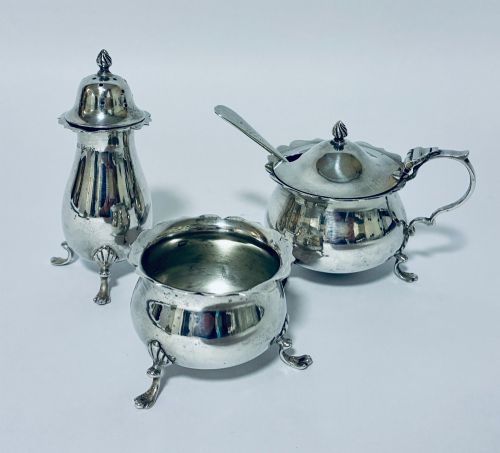
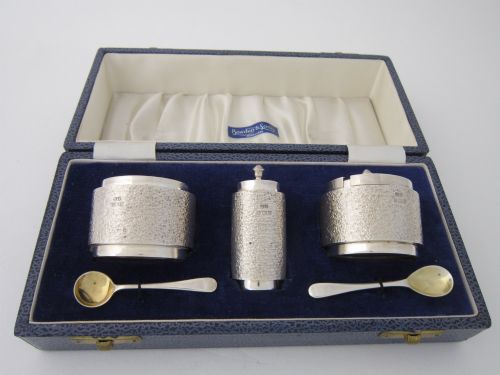
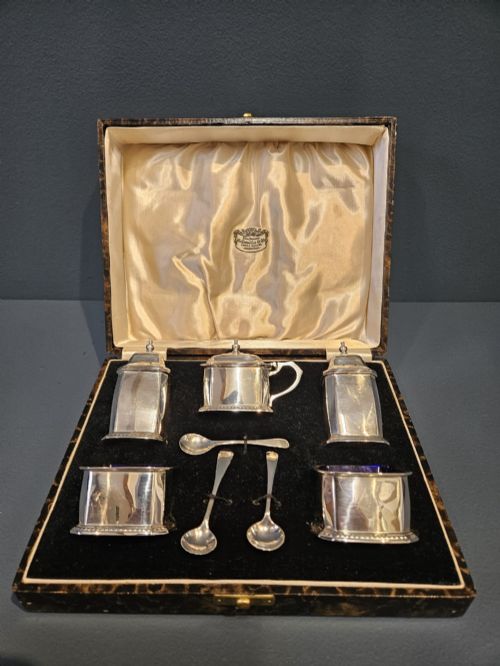
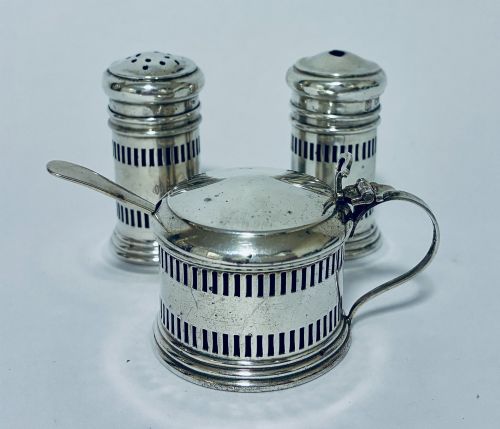
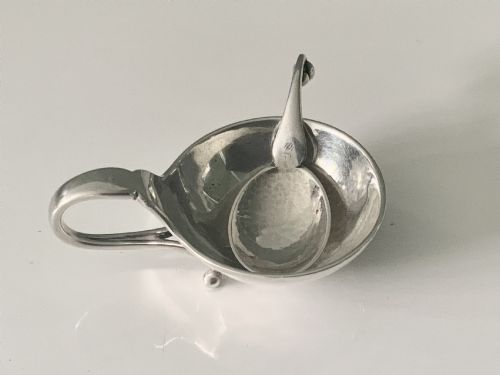
Vintage silver salt spoons are diminutive implements designed to transfer loose salt from an open cellar to an individual plate. Collectors encounter these pieces most frequently within larger cruet sets, condiment sets, or fitted presentation cases.
The selections span distinct historical eras, ranging from the Edwardian period and the 1900s through to the 1920s, 1930s, and mid-century modern designs. Styles reflect changing aesthetic movements, encompassing George III revival work, Art Nouveau, and Art Deco forms.
Materials and construction
Makers utilised solid sterling silver and durable silver plate for the bowls and handles of these spoons. Metalwork techniques combined traditional hand-forging with stamped components, often finished with crisp hallmarks denoting town, maker, and standard.
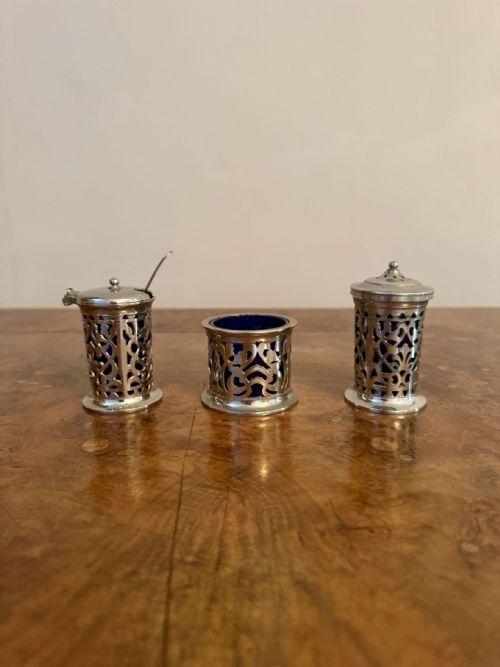
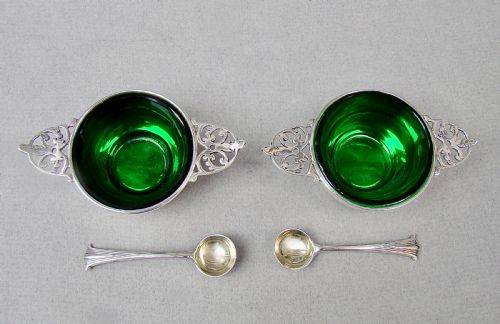
Associated condiment vessels frequently incorporate cut glass and cobalt glass liners to hold the salt securely. Presentation boxes lined with velvet and silk demonstrate the careful packaging typical of fitted sets from the Edwardian era onwards.
Vintage Silver Salt Spoons Retail Price Guide 2026
Typical asking prices for vintage silver salt spoons among the pieces listed under this phrase on Sellingantiques today, from the lower quarter to the upper quarter. They describe what is for sale here now, not the wider market.
Even the tiniest silver spoon once had to wait patiently for the butler to polish it before Sunday lunch.
Factors of quality
Quality in vintage silver salt spoons rests upon the crispness of the original maker marks and the preservation of delicate bowl shapes. Heavier gauge metal provides a more substantial feel in the hand compared to lighter stamped alternatives.
The integrity of associated pieces matters greatly when spoons form part of a cruet or condiment set. Matching sets where spoons retain their original fitted velvet or silk-lined cases command particular interest.
Georg Jensen·Josiah Williams & Co·Bricks & Sons·Wilmot Manufacturing Co
The Vintage Silver Salt Spoons Glossary
- Cruet set
- A matched collection of bottles, casters, or open cellars designed to hold condiments like salt, pepper, mustard, and vinegar. These groupings often include the miniature spoons necessary for serving.
- Salt cellar
- An open dish or vessel used to hold loose table salt before the widespread adoption of mechanical shakers. They frequently feature cobalt glass liners.
- Sterling silver
- An alloy of silver containing 92.5 percent pure silver and 7.5 percent other metals, usually copper, ensuring durability for tableware.
- Silver plate
- A base metal, such as copper or nickel brass, coated with a thin layer of pure silver through electroplating or older fusion methods.
- Quaich
- A traditional two-handled Scottish drinking vessel, sometimes referenced in novelty salt cellars and associated tableware.
Vintage Silver Salt Spoons: Frequently Asked Questions
How were salt spoons used?
Diners used these small spoons to transfer loose salt from an open cellar onto the edge of their dinner plate. This prevented guests from dipping their fingers or personal cutlery directly into the communal salt container.
Over time, table customs shifted towards enclosed shakers, rendering these delicate spoons primarily decorative or collectible items for modern table settings.
Do salt spoons always come in sets?
While many survive today as part of cased condiment sets or larger cruet arrangements, individual spoons frequently appear on their own. Matched sets complete with presentation boxes are particularly sought after by collectors.
Single spoons still serve their original purpose well when paired with antique open salt cellars.
How do I date these spoons?
British silver pieces usually carry date letters and town marks within their hallmarks, allowing for precise dating down to the specific year of production. Stylistic clues such as Edwardian curves or Art Deco geometric lines also point to distinct periods.
Unmarked silver plated items rely on the style of the piece and the design of any accompanying presentation case for chronological placement.