

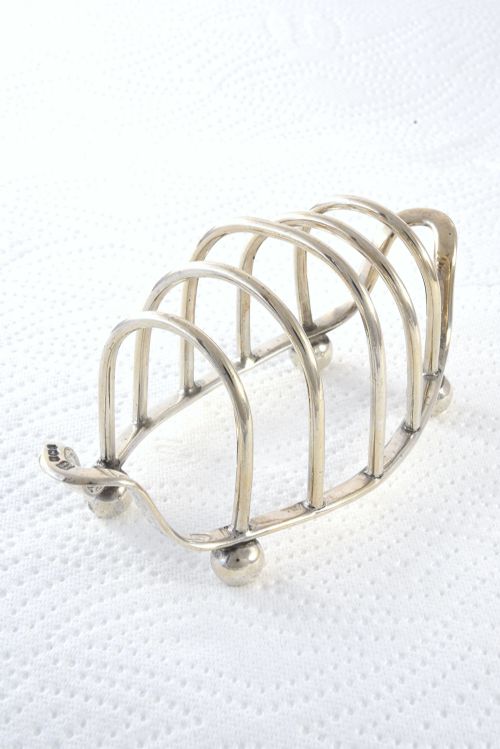


Vintage Silver Rack
A vintage silver rack brings order to the dining table and hallway, holding toast, letters, or umbrellas in gleaming metal.
Vintage Silver Rack
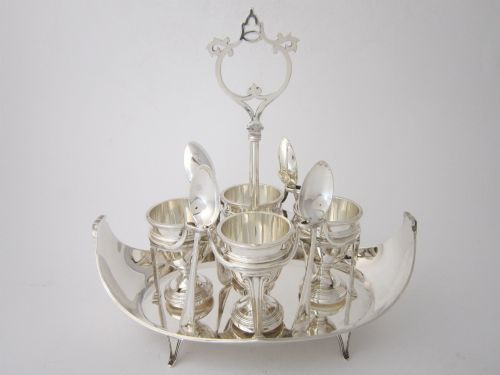
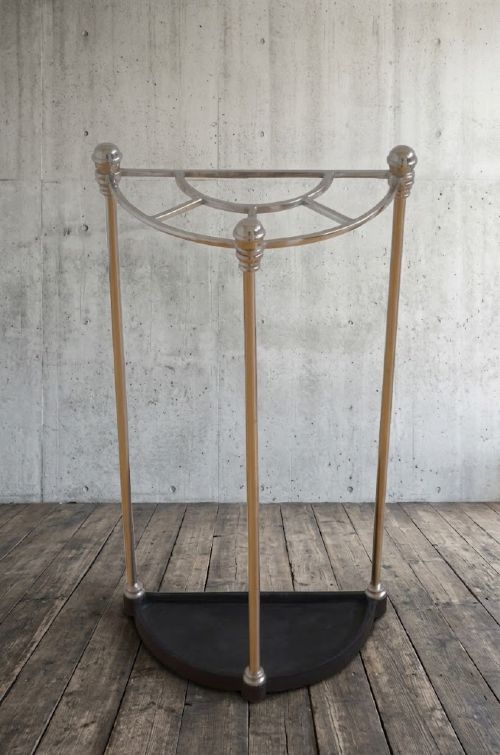
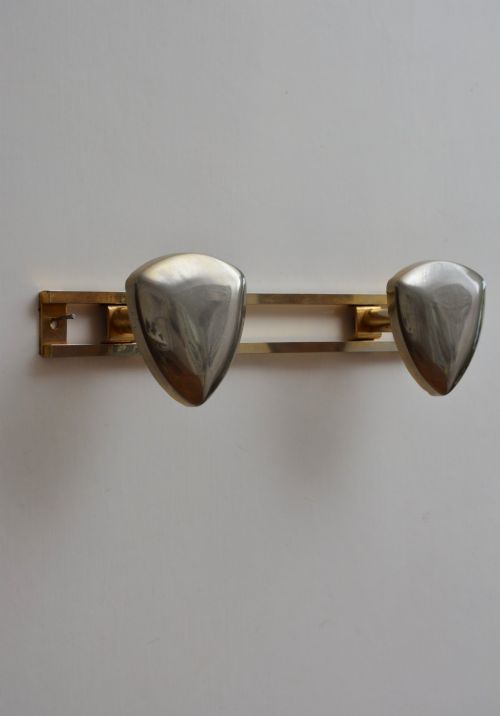
Buyers seeking a vintage silver rack encounter a diverse array of domestic metalwork designed for organisation and service. The selections range from table accessories like toast racks and egg cruets to larger hallway items such as umbrella stands and coat hooks.
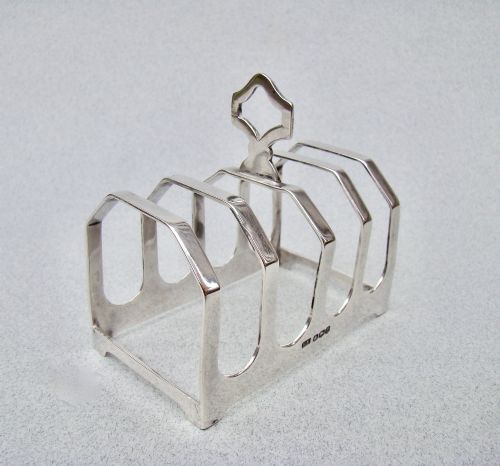
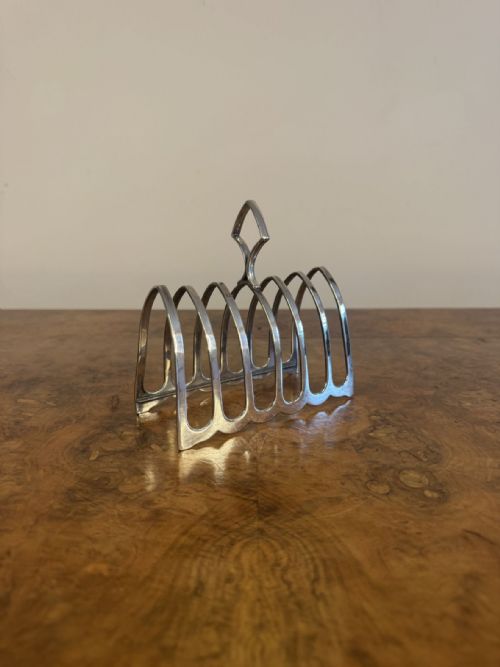
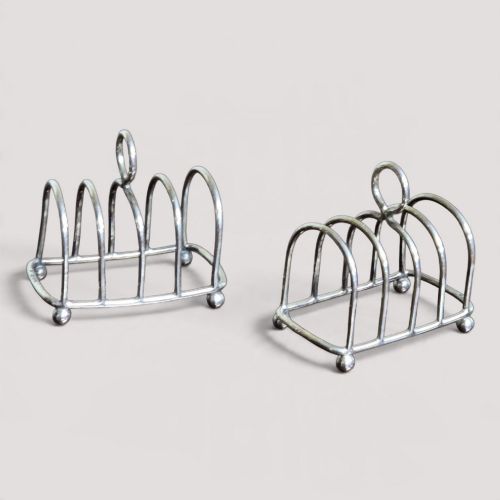
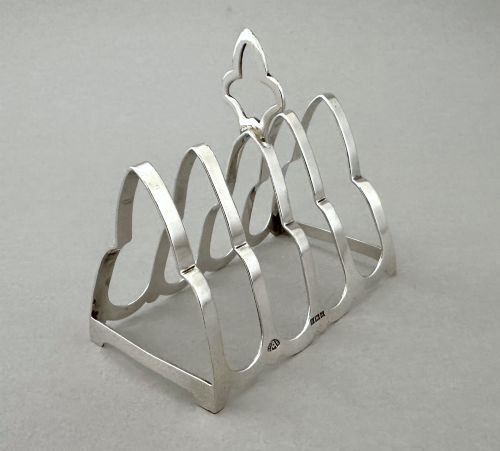
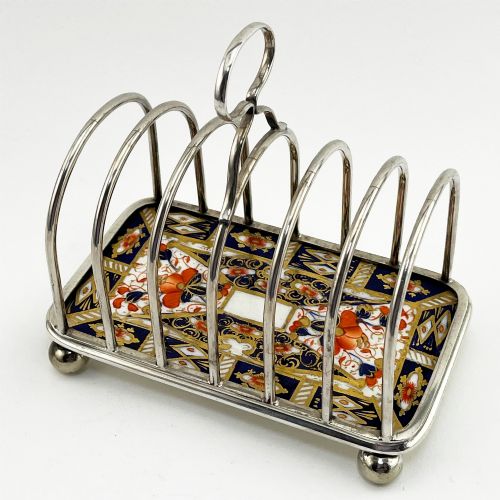
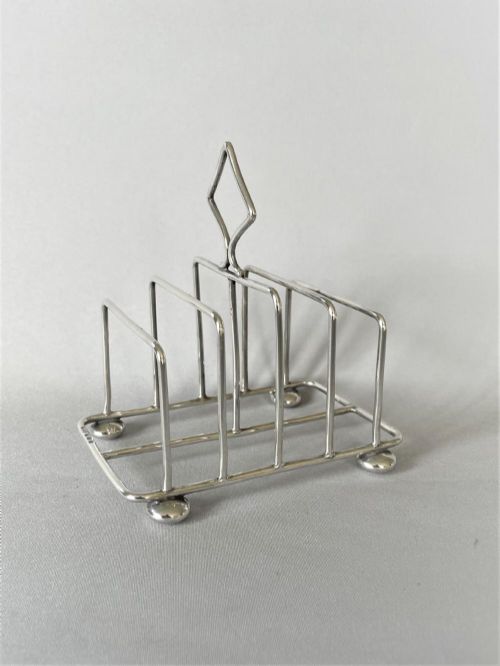
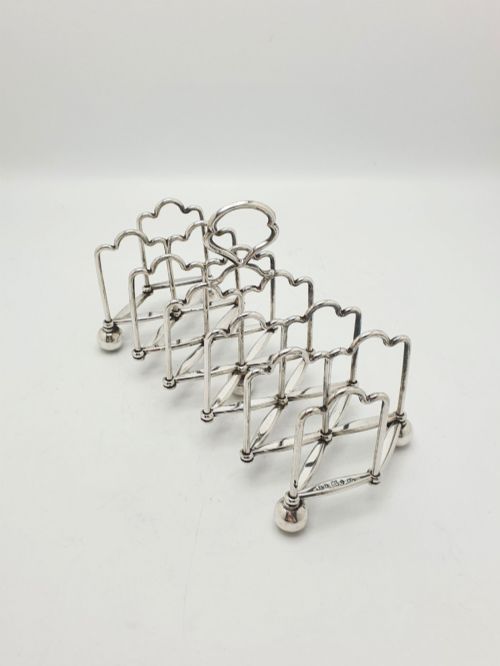
Toast racks dominate the selection, appearing in forms spanning the Victorian, Edwardian, and Art Deco periods. These table pieces emerge in both sterling silver and silver plate, often featuring wirework divisions shaped to hold slices upright.
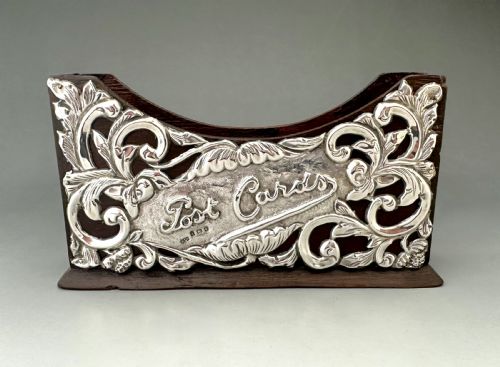
Beyond the dining table, the category expands to include letter holders, desk accessories, and bottle frames. These functional objects reflect the varied material culture of the nineteenth and early twentieth centuries.
Materials and construction methods
Makers utilised sterling silver and silver plate over base metals like nickel silver or copper, alongside cast iron for heavier hallway stands. Many pieces incorporate supplementary materials such as oak bases, cut glass bottles, or ceramic china inserts.
Construction techniques include silver plating over a base metal foundation, cast metal framing, and soldered wirework for individual divisions. Hallmarks and manufacturer marks stamped into the metal often indicate the maker and assay office of origin.
Vintage Silver Rack Retail Price Guide 2026
Typical asking prices for vintage silver rack among the pieces listed under this phrase on Sellingantiques today, from the lower quarter to the upper quarter. They describe what is for sale here now, not the wider market.
Certain toast racks double as miniature architectural marvels, holding your breakfast carbohydrates in frames resembling Gothic cathedrals.
Evaluating craftsmanship and design
Quality rests in the weight of the metal and the precision of the construction, particularly where individual wire divisions join the base. Heavier gauge sterling silver and substantial silver plate withstand daily use better than thinner alternatives.
Design distinction separates standard production items from pieces bearing specific stylistic movements, such as Aesthetic Movement influences or Art Deco geometric lines. The presence of makers like Elkington or Mappin and Webb adds notable provenance to the construction.
Elkington·Mappin and Webb·Roberts and Belk·Walker and Hall·Hukin and Heath
The Vintage Silver Rack Glossary
- Silver plate
- A layer of silver bonded to a base metal core such as copper or nickel silver. This technique offered the appearance of solid silver at a lower production cost.
- Sterling silver
- An alloy containing a high proportion of pure silver mixed with small amounts of other metals for durability. British pieces typically carry hallmark stamps verifying this standard.
- Toast rack
- A small table accessory featuring vertical metal divisions designed to hold slices of toast upright. Designs range from simple wire loops to elaborate architectural frames.
- Cruet set
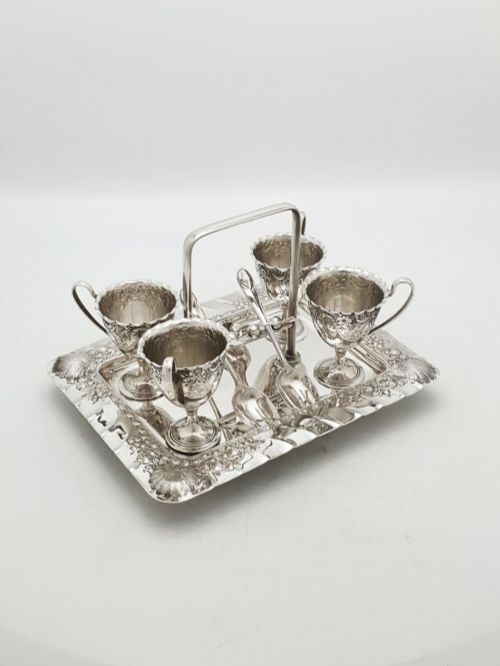
- A matched collection of small containers and stands for condiments, eggs, or bottles used at the dining table. They frequently incorporate silver stands fitted with cut glass bottles.
- Tantalus
- A decorative frame holding decanters of spirits behind a locking mechanism. The design allows people to see the contents while restricting unmonitored access.
Vintage Silver Rack: Frequently Asked Questions
What is a silver toast rack used for?
A silver toast rack holds pieces of toast upright on the breakfast table, allowing air circulation to keep the toast crisp rather than soggy.
These pieces range from compact four-slice versions to larger six-slice designs created during the Victorian and Edwardian eras.
How do I clean a vintage silver rack?
Clean silver plate and sterling silver pieces using a dedicated silver polish and a soft cloth to remove tarnish. Avoid harsh abrasives that can wear away silver plating on older items.
For pieces with wooden bases or ceramic inserts, take care to keep moisture away from vulnerable non-metal components during cleaning.
What is the difference between sterling and silver plate?
Sterling silver consists of solid precious metal throughout the entire piece, marked by official assay stamps. Silver plate applies a thin layer of silver over a base metal foundation like nickel or copper.
Both materials appear frequently across vintage dining and desk accessories from the nineteenth and twentieth centuries.
How can I date my vintage silver rack?
Dating relies on identifying maker marks, style characteristics, and British hallmarks where present. Victorian and Edwardian pieces often display distinct ornamentation, while Art Deco items feature geometric forms from the 1920s and 1930s.
Associated materials such as oak frames or cut glass inserts also provide clues to the manufacturing period.