



Vintage Silver Powder Compact
These vintage silver powder compacts offer a tactile glimpse into past dressing routines, prized for their intricate enamel lids and pocketable metal engineering.
Vintage Silver Powder Compact
When you search for a vintage silver powder compact, you are looking at functional dressing table accessories and pocket cases designed to hold cosmetic powder, rouge, or pills. These pieces span from the 1900s through the 1950s, capturing shifting social habits and design movements.
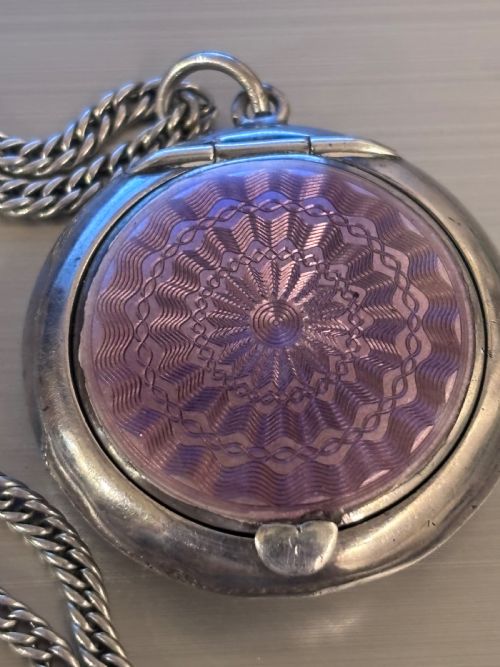
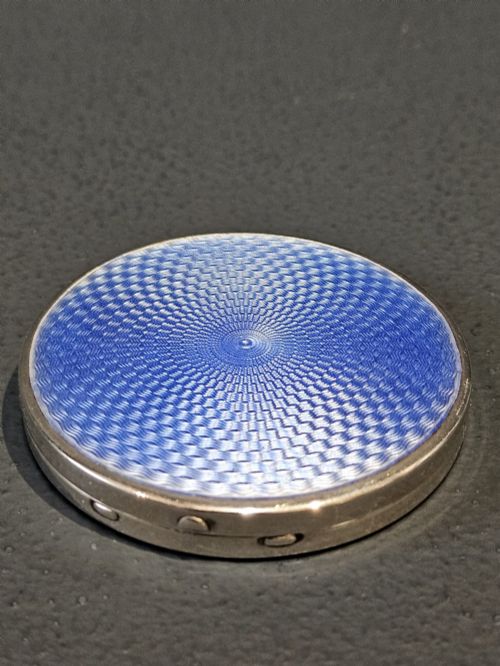
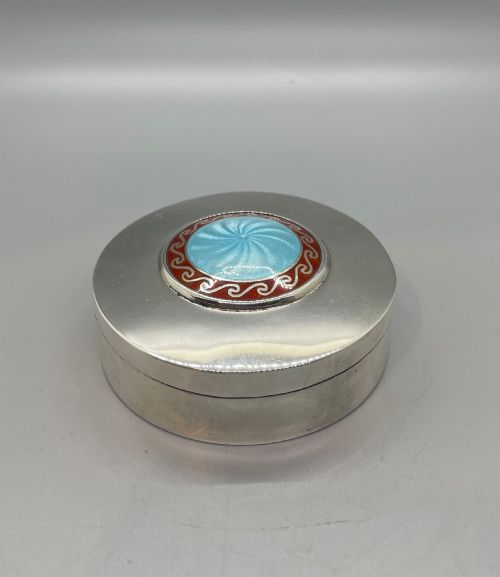
The version you are most likely to meet on this page is the Art Deco creation from the 1920s and 1930s, often rendered in sterling silver or 800 silver with colourful enamel decoration. Alongside standard powder compacts, you will encounter combination cases, lipstick holders, mesh bags, and small trinket boxes serving similar vanity functions.
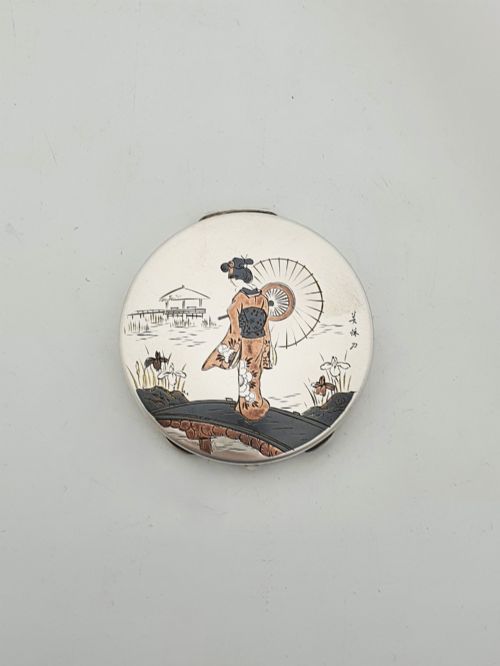
Origins vary widely across these listings, taking in English workshops in Birmingham and London, alongside continental European pieces from Italy and France, as well as Persian and Chinese export silver. Each regional style brings distinct decorative traditions, from geometric engine-turned patterns to hand-painted scenic miniatures.
How they were made
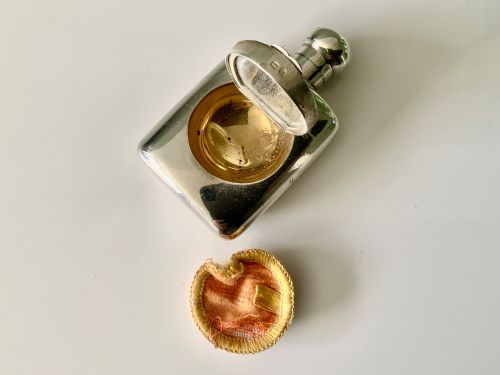
Makers shaped these items primarily from sterling silver, standard silver, and metal alloys, frequently applying silver-gilt finishes or pairing the metal bodies with flexible mesh and suede linings. Structural integrity relied on precise hinges, latches, and internal mirrors or compartments designed for daily use.
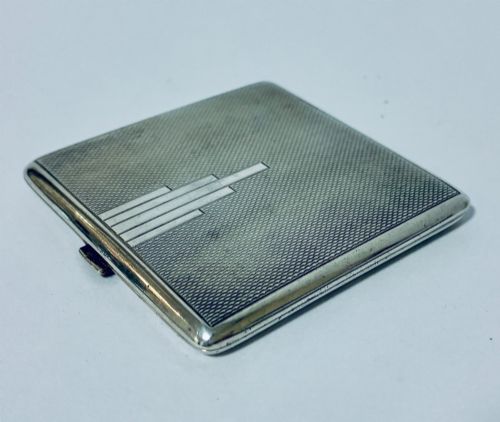
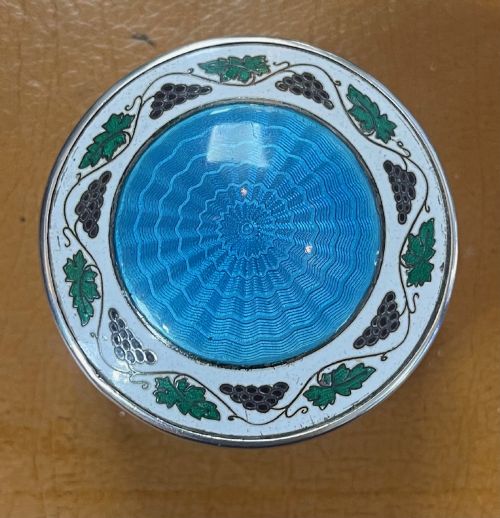
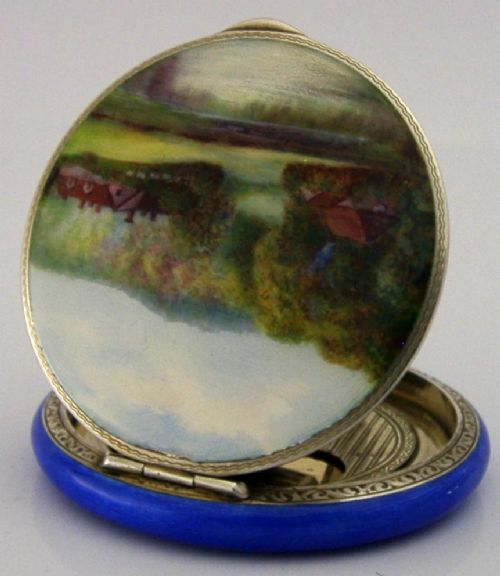
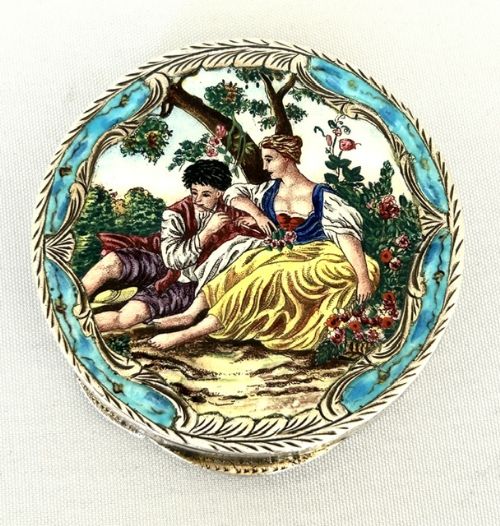
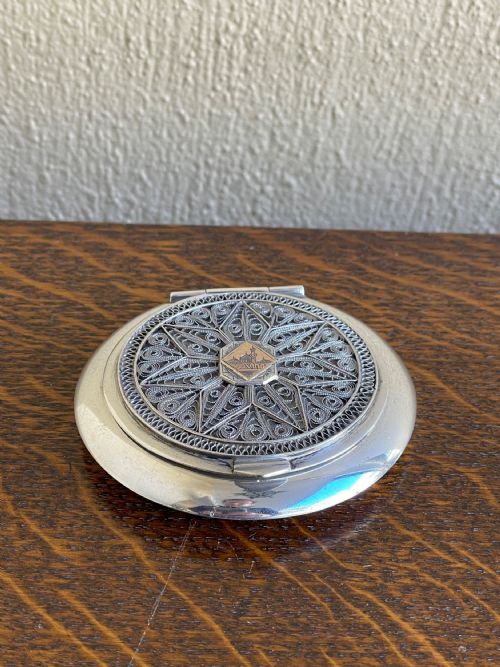
Surface decoration often involved vitreous enamel, applied over engine-turned or guilloche metal grounds to create translucent patterns that caught the light. Artisans also utilised filigree work, hand-painted scenic details, and cast relief motifs in styles ranging from Rococo Revival to clean Art Deco geometry.
Vintage Silver Powder Compact Retail Price Guide 2026
Typical asking prices for vintage silver powder compact among the pieces listed under this phrase on Sellingantiques today, from the lower quarter to the upper quarter. They describe what is for sale here now, not the wider market.
One clever Art Deco design combines two separate ladies' faces into a single compact motif.
What varies in quality
The standard of enamel work separates simpler pieces from finer examples, particularly where guilloche patterns create complex under-layer reflections beneath coloured glazes. Intact, undamaged enamel without chips or hairline fractures elevates a compact considerably.
The crispness of hallmarks, maker marks, and engine-turned casting defines the manufacturing pedigree, showing the care taken by silversmiths in Birmingham, London, or European workshops. Additionally, the tight closure of the lid and the original condition of internal mirrors and linings indicate how well a piece was constructed and preserved.
Henry Matthews·Elkington and Co·Henry Perkins and Sons·Richard Hudnut·Giuliano Spinelli·Houbigant
The Vintage Silver Powder Compact Glossary
- Guilloche
- A decorative technique where a mechanical lathe etches a precise, intricate geometric pattern into a metal surface beneath a translucent enamel layer.
- Sterling silver
- A silver alloy containing 92.5 percent pure silver by mass, frequently marked on British pieces alongside assay office symbols and date letters.
- Silver-gilt
- Silver that has been coated with a thin layer of gold on its surface, sometimes referred to as vermeil.
- Filigree
- Delicate openwork ornamentation formed from fine intertwined metal threads, seen on Persian and other export pieces.
- Engine turned
- A method of mechanical engraving that produces precise geometric surface patterns on metal compact cases.
Vintage Silver Powder Compact: Frequently Asked Questions
How do I date a silver compact?
British pieces typically carry hallmarks that include assay office marks and date letters, allowing precise dating down to the exact year of manufacture.
Continental and later mid-century items rely more on stylistic markers like Art Deco geometry or maker signatures stamped into the metal.
What is the difference between a compact and a vanity case?
A powder compact is specifically built to hold loose or pressed cosmetic powder, often including a sifter and a mirror inside the lid.
Vanity cases are larger combination pieces designed to hold multiple items such as lipstick, cigarettes, coins, and compact mirrors simultaneously.
Can I still use these for powder?
Yes, many retain their original inner trays and catch mechanisms, though modern loose powder may require a fresh gauze or sifter.
Collectors often prefer to keep them as display objects or for dry storage rather than daily cosmetic application to preserve the antique interiors.
How should I clean silver and enamel?
Silver sections respond well to gentle polishing with a soft cloth designed for precious metals, avoiding any harsh abrasive dips.
Enamel surfaces should be wiped carefully with a damp cloth and dried immediately, keeping moisture away from aged mirror edges and internal hinges.