



Guilloche Enamel Locket
These guilloche enamel locket pieces combine intricate engine-turned metalwork with translucent coloured glass, offering a tangible link to past craftsmanship that collectors prize.
Guilloche Enamel Locket
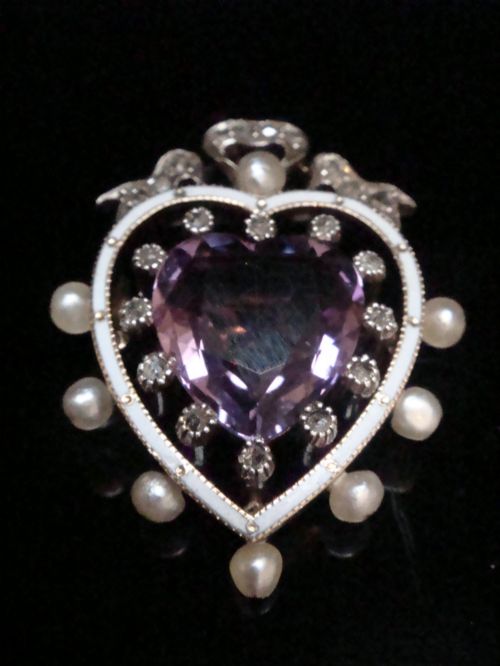
A guilloche enamel locket represents a distinct category of pendant jewellery and small portable containers designed to hold keepsakes or cosmetics. When searching for a guilloche enamel locket, buyers encounter items ranging from heart-shaped pendants to compacts and egg charms.
The selection on this page draws primarily from Victorian, Edwardian, and Art Deco periods, encompassing both British and continental origins. Forms span simple silver lockets to elaborate gold pieces set with pearls and diamonds.
Makers such as Henry Perkins & Sons, Charles Horner, Marius Hammer, and Meyle & Mayer appear across the inventory, reflecting standard production methods of their respective eras.
How they were made
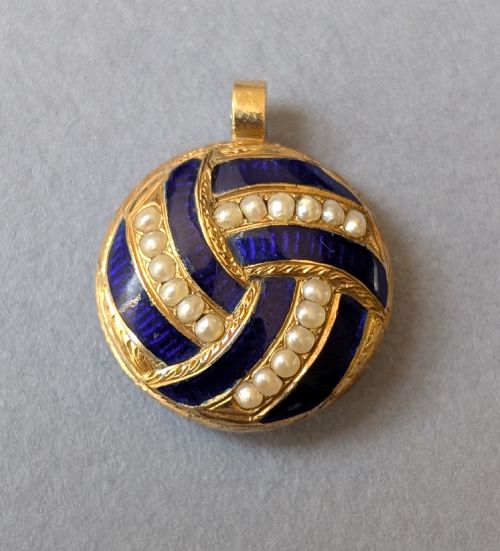
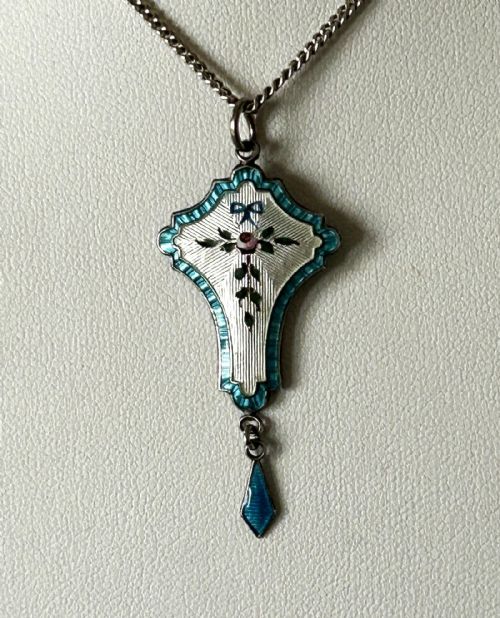
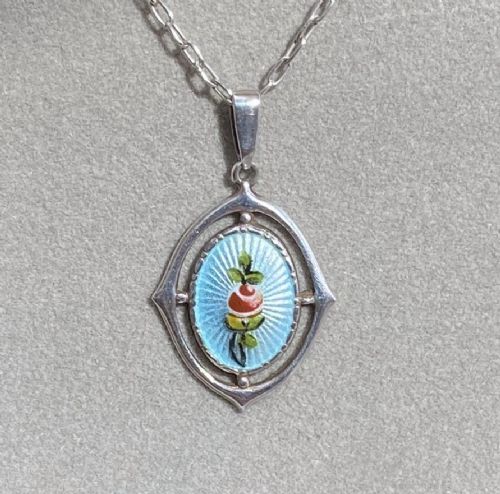
Craftsmen utilised mechanical lathes to engrave precise geometric patterns onto a metal base, usually sterling silver, silver gilt, or gold of various carats including 15ct and 18ct. This engine-turned foundation creates the underlying texture visible beneath the coloured surface.
Vitreous enamel, composed of powdered glass fused by heat, was applied over the engraved metal in translucent layers to reveal the pattern below. Artisans frequently enhanced these pieces by incorporating natural pearls, rose-cut diamonds, and additional gemstone accents.
Guilloche Enamel Locket Retail Price Guide 2026
Typical asking prices for guilloche enamel locket among the pieces listed under this phrase on Sellingantiques today, from the lower quarter to the upper quarter. They describe what is for sale here now, not the wider market.
What varies in quality
The fineness of the underlying engine-turning and the depth of the translucent enamel set pieces apart, alongside the choice of precious metal base such as 18ct gold versus standard silver. Greater complexity in the engraved pattern and richer colour saturation indicate superior workmanship.
The integration of precious stones like diamonds and natural pearls, together with documented attributions to notable makers such as Charles Horner or Marius Hammer, elevates the standing of individual items.
Henry Perkins & Sons·Charles Horner·Marius Hammer·Meyle & Mayer
The Guilloche Enamel Locket Glossary
- Guilloche
- A decorative technique where a mechanical lathe engraves a precise, repeating geometric pattern into metal. This pattern forms the visible foundation for translucent enamel layers.
- Vitreous enamel
- Glass powder melted and fused to a metal surface at high temperatures. It provides a durable, glossy coloured finish on jewellery and compacts.
- Rose-cut diamond
- A vintage diamond cut featuring a flat base and a domed crown with triangular facets. This style was popular in antique jewellery.
- Silver gilt
- Sterling silver that has been coated with a thin layer of gold. It offers the appearance of solid gold while utilising a silver base.
Guilloche Enamel Locket: Frequently Asked Questions
What is a guilloche enamel locket?
A guilloche enamel locket is a hinged pendant or container featuring mechanical engraving beneath translucent glass enamel. These pieces serve as wearable ornaments or small functional items.
They date primarily from the Victorian, Edwardian, and Art Deco periods, utilising materials such as silver, gold, and vitreous enamel.
How do I date a locket?
Dating relies on stylistic markers such as Art Nouveau curves or Art Deco geometry, alongside hallmarks and maker marks stamped on the metal. Materials like 15ct gold also point towards specific historical eras.
Comparing construction techniques and accompanying gemstones helps narrow down the period of manufacture.
Are these lockets made of solid gold?
The inventory includes items fashioned from solid gold, specifically 15ct and 18ct yellow gold. Other pieces consist of sterling silver or silver gilt.
Hallmarks stamped on the metal provide definitive proof of the specific material used.
Can I wear a locket daily?
Wearing a locket daily requires care because vitreous enamel can chip or crack upon heavy impact. Storing the piece safely when not in use preserves the enamel and metalwork.
Periodic checks of the hinge and clasp ensure the locket remains secure during regular wear.