

Vintage Silver Plate Candlestick
These vintage silver plate candlestick options bring traditional illumination to rooms through plated metal forms made in various historic styles.
Vintage Silver Plate Candlestick
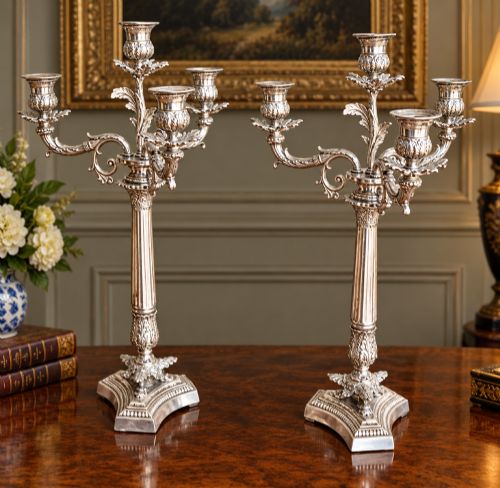
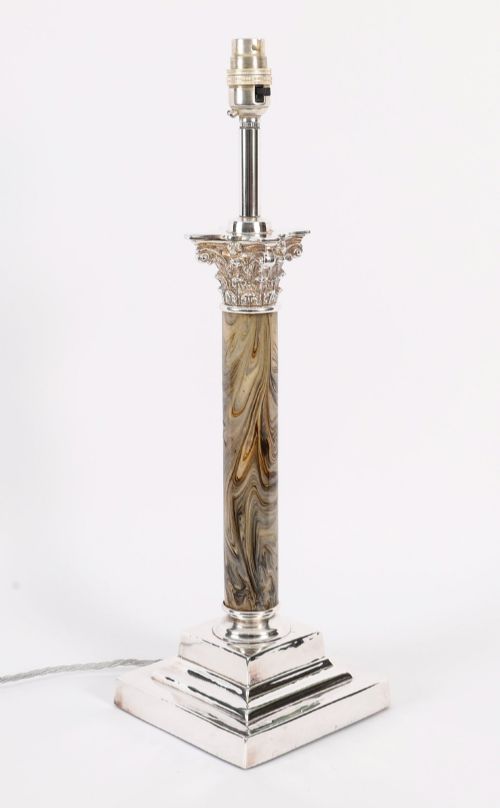
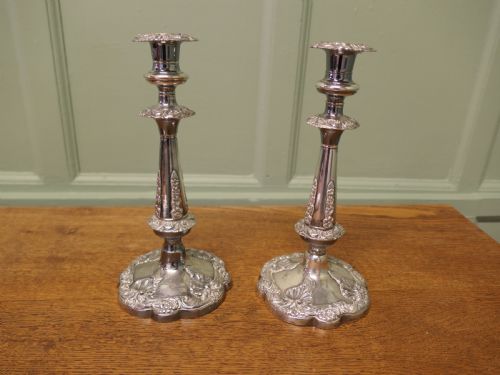
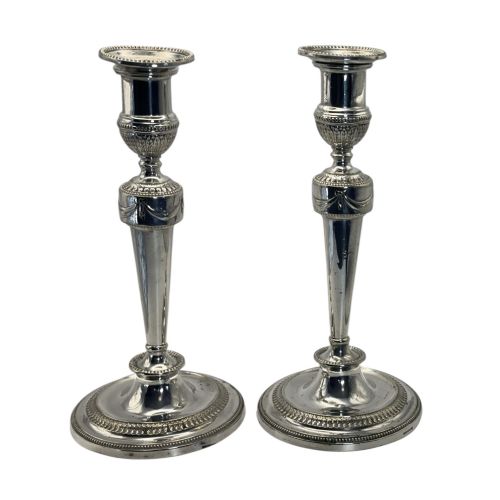
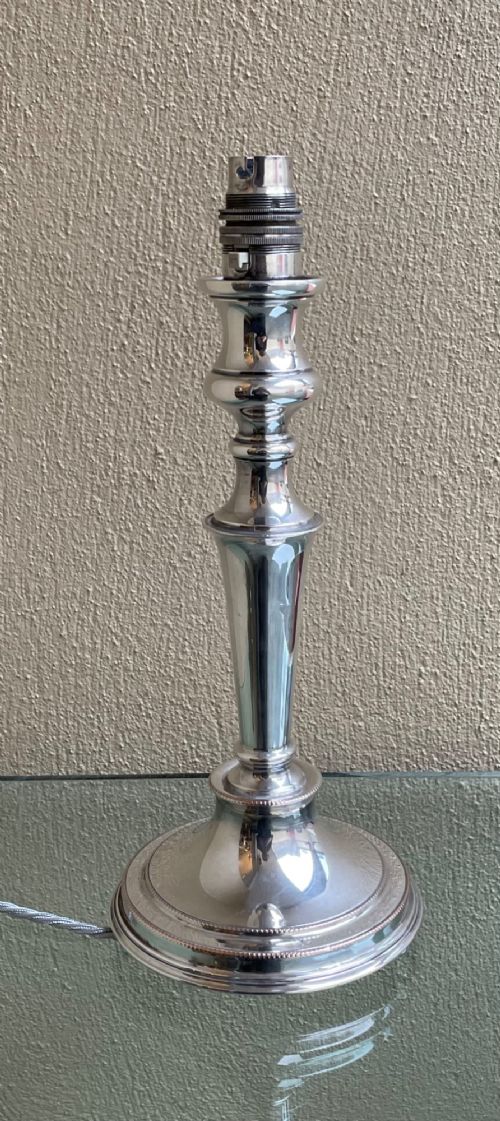
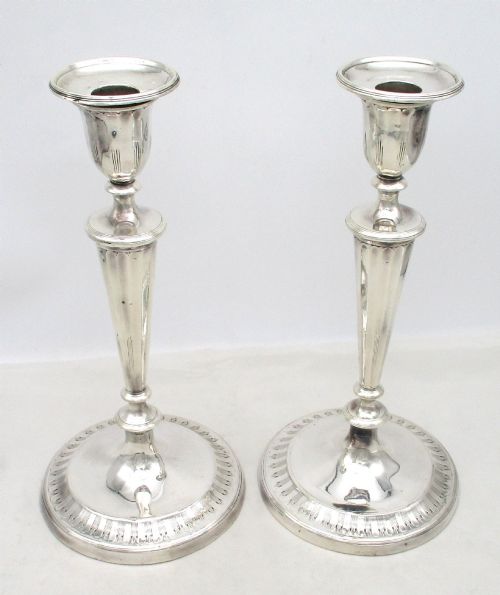
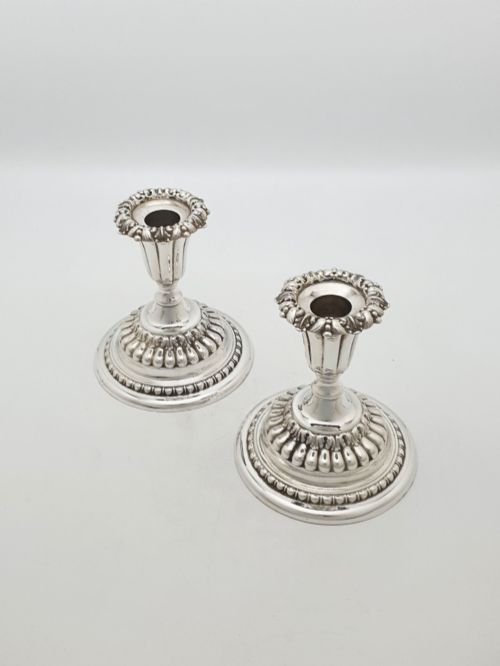
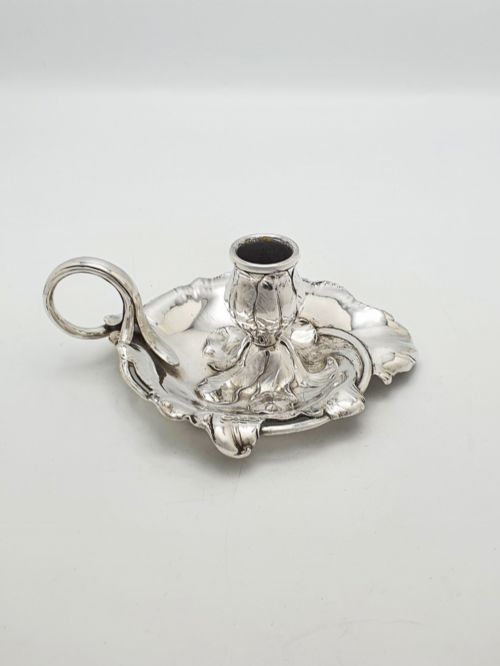
A vintage silver plate candlestick selection includes pairs and singles spanning the nineteenth century through the Edwardian era and into the 1920s and 1930s. Buyers encounter diverse lighting forms ranging from standard table sticks and low chambersticks to telescopic designs and converted table lamps.
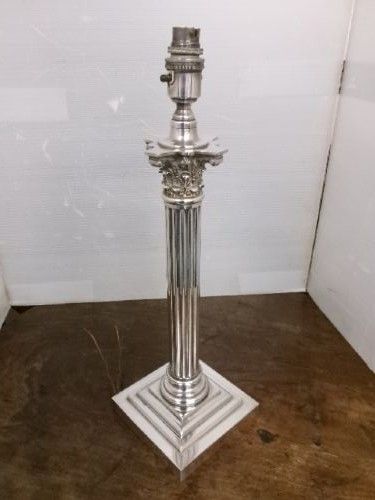
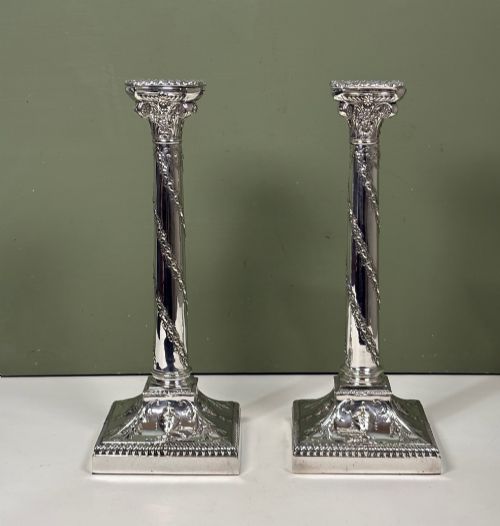
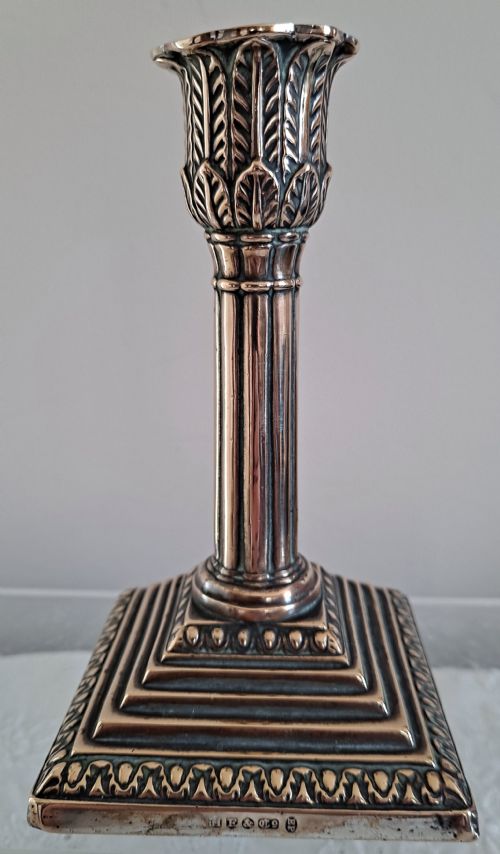
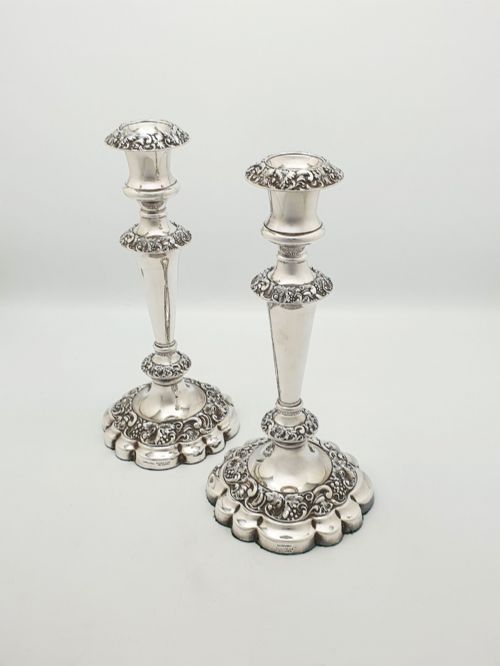
The objects reflect distinct historical revivals such as Neoclassical Corinthian columns, ornate Rococo curves, and Georgian or Regency patterns. Many pieces originate from British makers and workshops, utilising silver plate over base metals to achieve the appearance of solid silver.
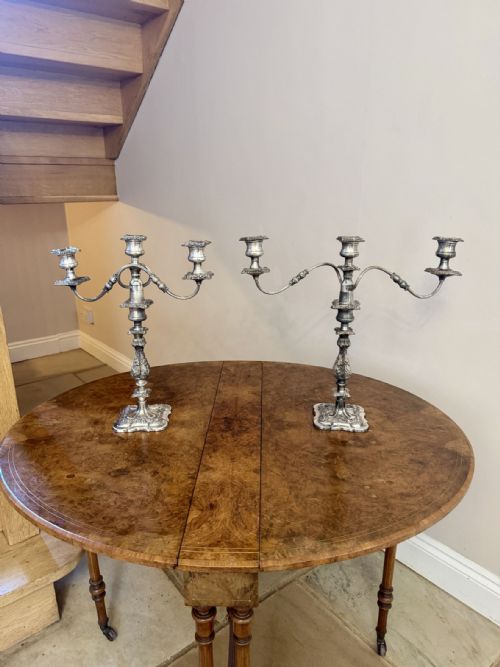
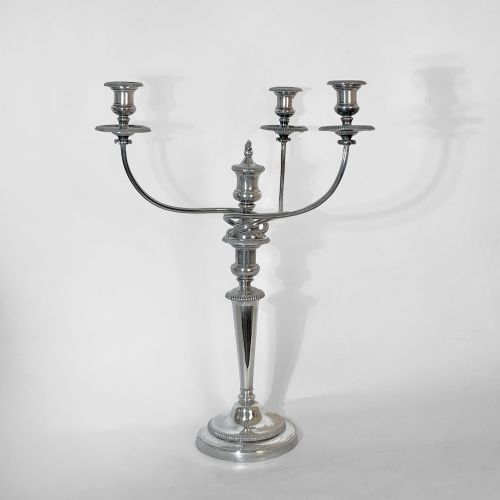
Candelabras and multi-light branched pieces also appear alongside simple domestic holders and reflector candle lamps. The inventory demonstrates how dining and desk illumination evolved across Victorian and twentieth-century interiors.
Materials and construction
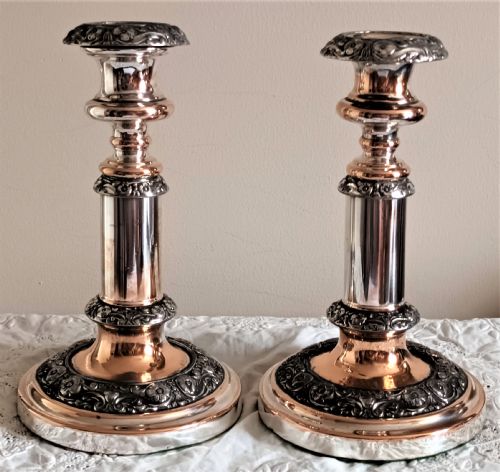
Manufacturers built these objects using base metals such as brass, copper, nickel silver, and electroplated nickel silver, commonly known as EPNS. Sheffield plating techniques appeared earlier, followed by electroplating processes that gained widespread use by the Victorian period.
Workers shaped the metal columns, bases, and nozzle components through spinning, casting, and stamping before applying a layer of silver. Glass shades, fabric elements, and Bohemian crystal components occasionally accompany the metal structures in later table lamps and hurricane lamps.
Materials recorded across the inventory include silver plate, brass, copper, EPNS, and Bohemian crystal.
Distinctions in craftsmanship
The distinction between standard domestic production and superior work rests on the crispness of cast ornamentation and the thickness of the applied silver coating. Heavier gauge metalwork provides stability to tall columns and multi-light candelabras, preventing structural wobble.
Maker marks from established firms indicate workshop standards, while finer examples exhibit hand-chased detail on acanthus leaves, fluting, and beaded borders. The integrity of the underlying metal structure relative to the surface plating determines the longevity of each piece.
Mappin and Webb·WMF·Smith and Sissons and Co
The Vintage Silver Plate Candlestick Glossary
- Silver Plate
- A thin layer of silver bonded to a base metal core such as copper or brass. This method offered an accessible alternative to solid sterling silver for domestic items.
- Old Sheffield Plate
- An early method of fusing a sheet of silver to a copper ingot before rolling them together into sheets. This technique predates modern electroplating.
- EPNS
- Electroplated Nickel Silver, denoting a base alloy of copper, nickel, and zinc coated with silver using an electrical current. It became standard in the nineteenth century.
- Corinthian Column
- A classical architectural column form featuring ornate acanthus leaves on the capital. Makers frequently adapted this design for tall table lamps and candlesticks.
- Candelabra
- A branched lighting fixture holding multiple candles on a single base. These pieces often feature removable arms to allow single-candle use.
Vintage Silver Plate Candlestick: Frequently Asked Questions
How do I clean silver plated candlesticks?
Use a soft cloth and a gentle silver polish formulated specifically for plated items to maintain the surface. Avoid harsh abrasive cleaners that can wear away the thin silver layer over the base metal.
Regular dusting with a dry microfiber cloth prevents tarnish build-up in the detailed recesses of Rococo or Neoclassical ornamentation. Store or display the items away from direct heat sources and damp environments.
Were these candlesticks converted to lamps?
Some pieces entered service as electric table lamps during the twentieth century, while others retain their original candle-burning configuration. Conversions often utilise existing central hollows without damaging the structural integrity of the metal.
Check the base and wiring channels to understand how an electrical fitting was integrated into the antique frame. Retaining convertible elements allows flexibility in how the object functions in a modern room.
What is the difference between Sheffield plate and EPNS?
Old Sheffield plate involves mechanically fusing a sheet of silver to copper, visible as a subtle copper seam along edges where the metal wears. Electroplated nickel silver relies on an electrochemical process introduced in the nineteenth century.
Electrified plating coats a white metal alloy uniformly rather than sandwiching silver onto copper. Both methods produced durable household goods that mimic solid silver.
How can I date a silver plated candlestick?
Examine the style clues, such as heavy Victorian casting, Edwardian neoclassical restraint, or Art Nouveau asymmetric leaf forms. Maker marks, registry numbers, and construction techniques inscribed on the base provide further chronological evidence.
Comparing the weight, base loading materials, and plating style against known production periods helps narrow down the decade of manufacture. Hallmarks or maker stamps often point to specific active years for the silversmith or firm.