


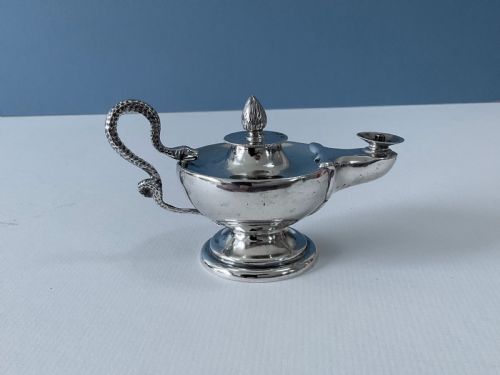


Vintage Silver Oil Lighter
A vintage silver oil lighter sits on the table with weight and presence, ready to spark conversation.
Vintage Silver Oil Lighter
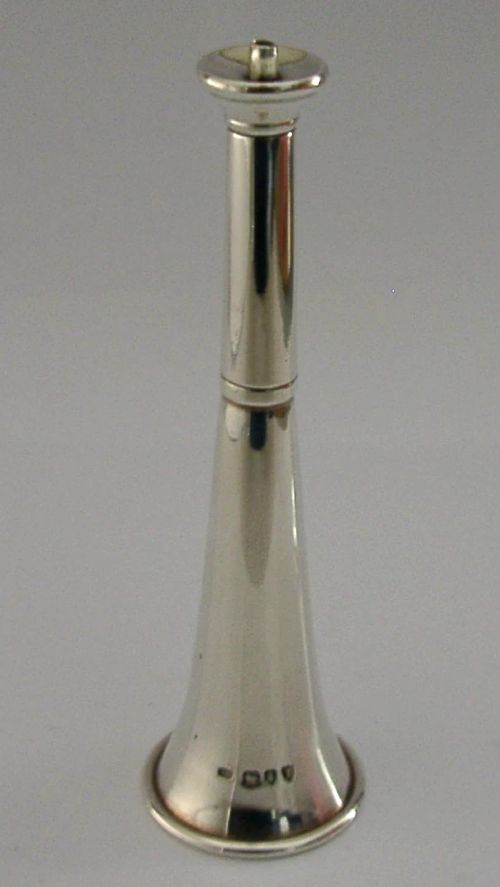
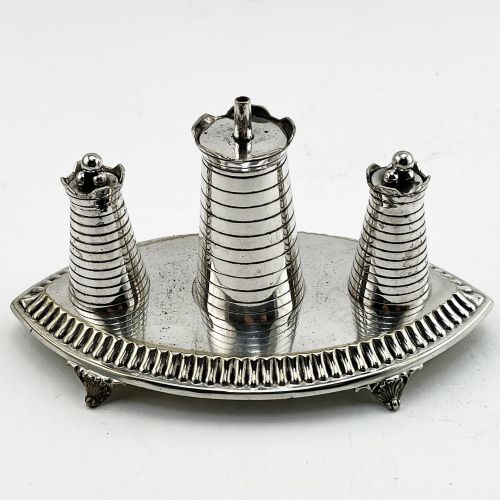
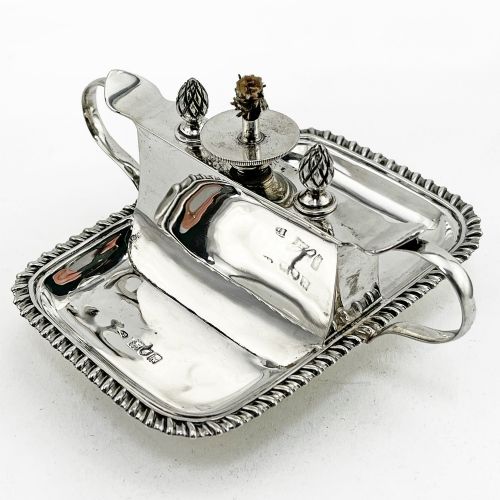
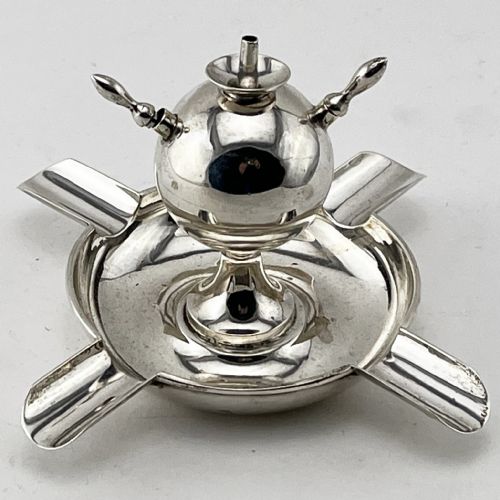
A vintage silver oil lighter is a smoking accessory designed for the table rather than the pocket, appearing in forms such as classical oil lamps, novelty horns, and castle shapes. These pieces bridge functional utility and decorative tabletop display from the Victorian, Edwardian, and later twentieth-century eras.
How they were made
Makers shaped these table lighters from sterling silver, silver plate, and nickel silver, utilising traditional silversmithing and metalworking techniques to achieve both form and function. Internal mechanisms incorporated cotton wicks to draw the fuel, while the metal bodies received detailed chasing, casting, and repousse work.
Novelty and classical revival pieces required specialised casting methods to render intricate details like fox hunting horns, castle turrets, and classical lamp handles. The combination of solid metal construction and fitted fuel reservoirs ensured these smoking accessories could withstand regular use on a dining or library table.
Materials on this page range from sterling silver and silver plate to nickel silver and cotton wicks.
What varies in quality
The distinction between ordinary examples and superior pieces rests upon the crispness of the casting and the prominence of the maker. Master silversmiths produced crisp, deeply chased details on novelty shapes and classical revivals, whereas lesser workshops relied on simpler forms with minimal surface decoration.
Weight and gauge of the metal also divide the range, with heavier sterling silver pieces offering a more substantial feel in the hand compared to lighter silver plate or nickel silver alternatives. The integrity of the original maker marks and the survival of distinct regional styling further elevate the standing of an individual lighter.
Braham·Goldsmith & Silversmith·Comyns·Elkington
The Vintage Silver Oil Lighter Glossary
- Sterling silver
- A metal standard comprising pure silver and other alloys to ensure durability. This material appears frequently across Victorian and Edwardian table lighters.
- Silver plate
- A base metal coated with a thin layer of silver. This technique offered the appearance of solid silver at a more accessible cost.
- Table cigar lighter
- A large smoking accessory intended to remain stationary on a surface. These pieces often featured long handles or spouts to safely light cigars.
- Classical revival
- A design style inspired by the art and architecture of ancient Greece and Rome. Lighters in this taste frequently mimic antique oil lamps.
- Novelty lighter
- An object shaped to resemble something entirely unrelated to its function, such as a hunting horn or a castle. These items delighted Victorian and Edwardian smokers.
Vintage Silver Oil Lighter: Frequently Asked Questions
How do vintage table lighters work?
These pieces operate on a cotton wick system where oil fuel travels up to a burner. A separate snuffer cap typically extinguishes the flame.
Most examples are designed to sit steadily on a table while the user brings the cigar to the flame.
Were these lighters meant for cigarettes?
They were primarily engineered for cigars and pipes rather than cigarettes. Their generous size and heavy metal bases suited the smoking parlours of the nineteenth and early twentieth centuries.
Guests would gather around the table to utilise the central flame.
How do I identify the period of a lighter?
Silver hallmarks and registry marks stamped onto the metal provide the most reliable guide to dating. Stylistic clues like classical revival motifs or Victorian novelty shapes also point to specific decades.
Comparing the manufacturing technique helps narrow down the era of origin.
Can I still use a vintage oil lighter?
Many of these pieces remain mechanically sound and capable of holding fuel and a wick. Careful cleaning and replacement of old cotton ensure proper function.
Collectors often choose to display them as decorative objects rather than active smoking tools.