


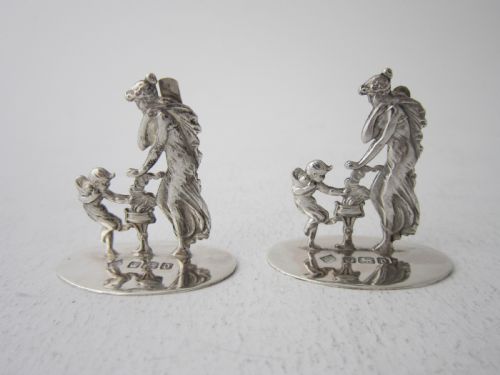


Vintage Silver Menu Stands
These vintage silver menu stands are charming table accessories that bring character and period detail to any formal dining setting.

Vintage Silver Menu Stands
Vintage silver menu stands are small decorative table items designed to hold menu cards or place markers upright during meals. The examples on this page span from the Edwardian period through to the mid-twentieth century, including pieces from the 1900s, 1910s, 1920s, 1930s and 1950s. They appear singly, in pairs or in matched sets ranging from three up to twenty-four pieces.
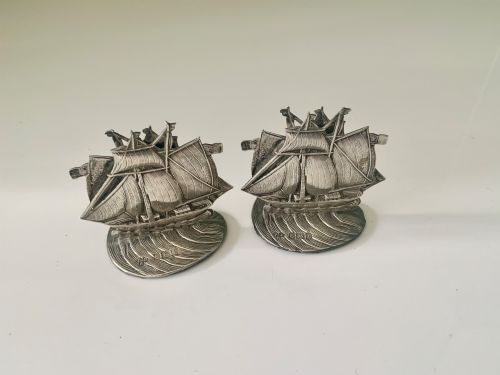
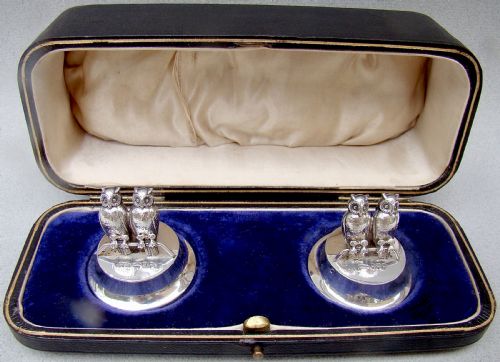
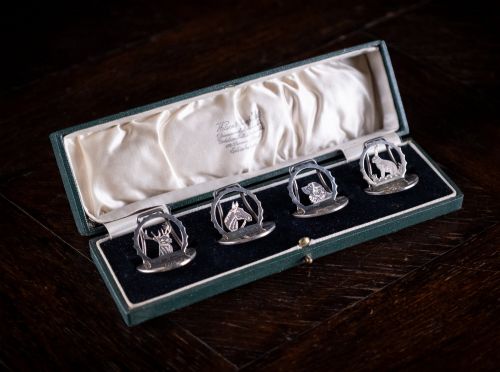
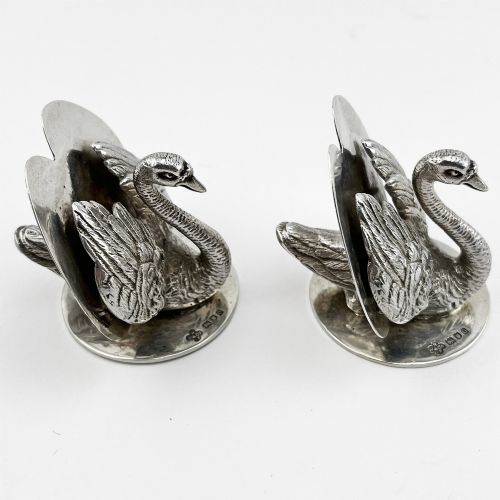
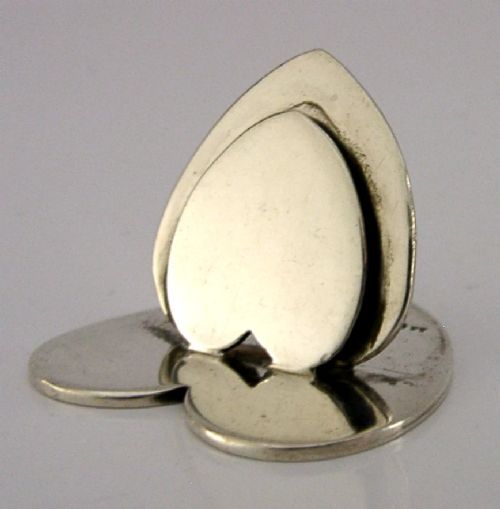
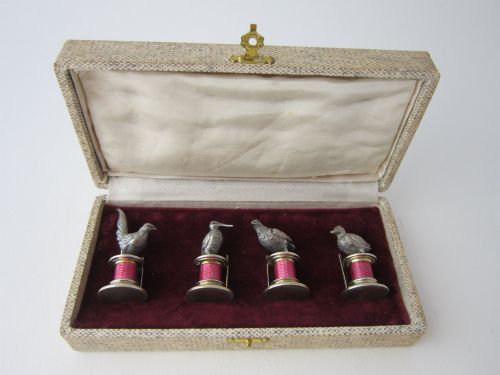
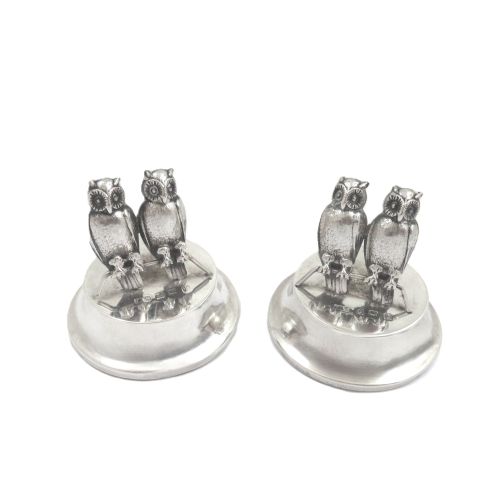
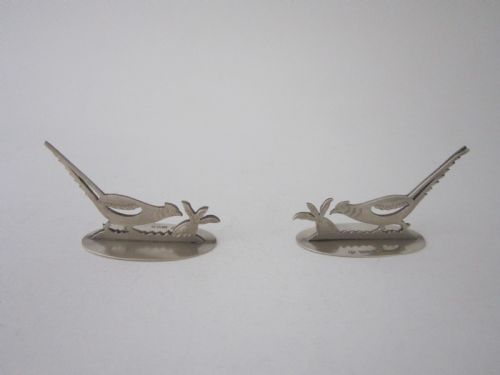
Many of these menu holders take pictorial or figural forms, modelling animals such as owls, swans, foxes, grouse and horses heads, alongside galleons, love hearts and literary themes like Alice in Wonderland. Others incorporate vibrant enamel, guilloche enamel, or military insignia such as RAF and British Military flags. They function primarily as tableware accessories that double as miniature sculptures for the dining table.
The styles represented reflect the prevailing tastes of their eras, covering Edwardian elegance, Art Deco geometry, George V and George VI reigns, Victorian survivals and mid-century modern design. Formats range from simple upright silver clips to cased sets intended for presentation or gift-giving. Buyers seeking specific decorative motifs will find both naturalistic animal studies and heraldic designs among the selection.
How they were made
Makers utilised sterling silver and silver plate as the primary structural metals for these stands, often combining them with supporting materials such as velvet, silk, leather and enamel. Guilloche enamel appears on specific pieces to add translucent colour and pattern beneath the glaze. Structural elements are frequently cast, chased or stamped to achieve detailed figural forms.
Specialised techniques include hand-painting and firing enamel onto silver bases, as seen in the military flag and coloured card holders. Component parts such as the weighted bases, clips and figural sculptures were soldered together before receiving hallmarks or maker stamps. Cased sets often integrated fitted interiors lined in velvet or silk to protect the silver components.
The object forms span menu holders, place card holders, and table accessories modelled as animals, figures, and military flags.
What varies in quality
Quality in these menu stands rests upon the crispness of the casting and the artistry involved in figural models, particularly in animal and literary subjects where anatomical detail defines the work. Maker attribution plays a significant role, with pieces bearing marks from notable firms commanding particular interest for their superior execution. The presence of undamaged enamel work and complete, matching sets further distinguishes finer examples from standard production.
The weight of the silver and the stability of the base construction determine the functional success of each piece in holding heavy cards. Presentation context also alters the tier of a piece, with original fitted cases indicating higher initial retail status. The sophistication of subsidiary materials like guilloche enamel separates workshop output from mass-manufactured alternatives.
Levi & Salaman·A. Wilcox·Sampson Mordan·Asprey·Liberty
The Vintage Silver Menu Stands Glossary
- Sterling silver
- A silver alloy containing 92.5 percent pure silver and 7.5 percent other metals, usually copper, to add durability. This standard is marked by the lion passant on British pieces.
- Guilloche enamel
- A decorative technique where a precise geometric pattern is mechanically engraved beneath a translucent enamel layer. This creates depth and plays with light across the surface of the metal.
- Silver plate
- A base metal, such as copper or nickel brass, coated with a thin layer of pure silver. Plated items offer the appearance of solid silver at a different production scale.
- Place card holder
- A miniature table accessory designed to display the name of a guest rather than a menu. These share identical manufacturing techniques and forms with menu stands.
Vintage Silver Menu Stands: Frequently Asked Questions
What were silver menu stands used for?
These stands held printed menus or guest name cards upright on dining tables during formal meals. They allowed diners to view the courses ahead or find their assigned seats easily.
In grand dining rooms, matching sets were distributed along the length of the table to ensure all guests could consult the menu without passing a single card around.
How do I date an Edwardian silver menu holder?
Dating relies primarily on the stamped hallmarks showing the assay office city, the standard mark, and the specific date letter for the year of production. Stylistic cues such as Edwardian naturalism or specific reigns also help narrow the decade.
Matching the maker's mark against historical records provides the exact year the piece was submitted for testing and hallmarked.
Are place card holders different from menu stands?
Place card holders are generally smaller in scale because they grip a single name card rather than a larger menu. However, many antique designs served both purposes interchangeably depending on the card size used.
On the marketplace, makers often produced matching suites that included both larger menu stands and smaller place markers.
How should I clean antique silver menu holders?
Cleaning requires a soft microfibre cloth and a gentle silver polish formulated specifically for antiques to preserve the fine details. Harsh scrubbing must be avoided, particularly on pieces with enamel or delicate chased surfaces.
If the piece incorporates enamel, leather, or silk linings, moisture and chemical dips should be kept strictly away from those non-silver sections.
Why do some menu holders come in cased sets?
Cased sets were originally retailed as luxury presentation items, often given as wedding presents or special occasion gifts. The fitted boxes lined in velvet or silk kept the delicate silver figures secure and untarnished when not in use.
Finding a complete set in its original box indicates the pieces were treasured and kept together since their manufacture.