

Vintage Silver Links
These vintage silver links bring together pocket watch albert chains, articulated bracelets and mesh purses spanning the Victorian era to the mid-century.
Vintage Silver Links
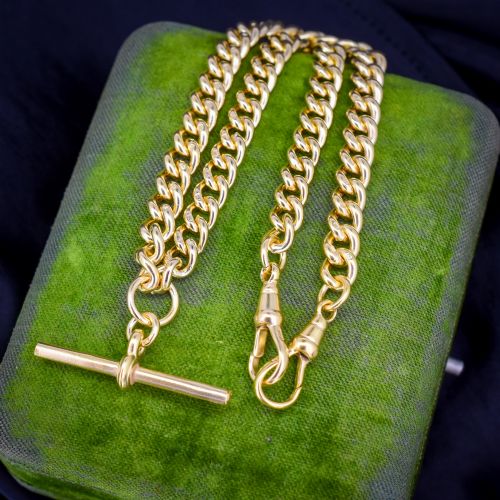
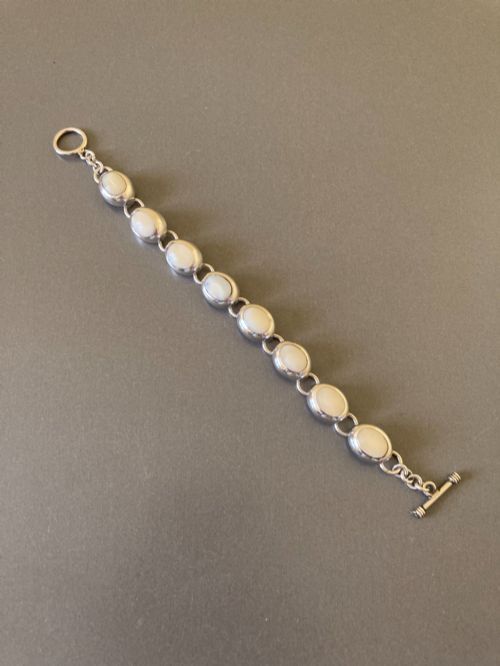
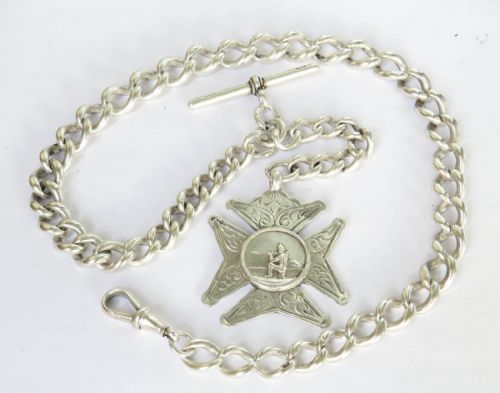
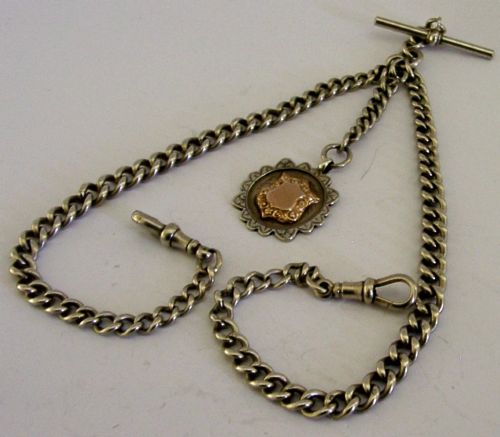
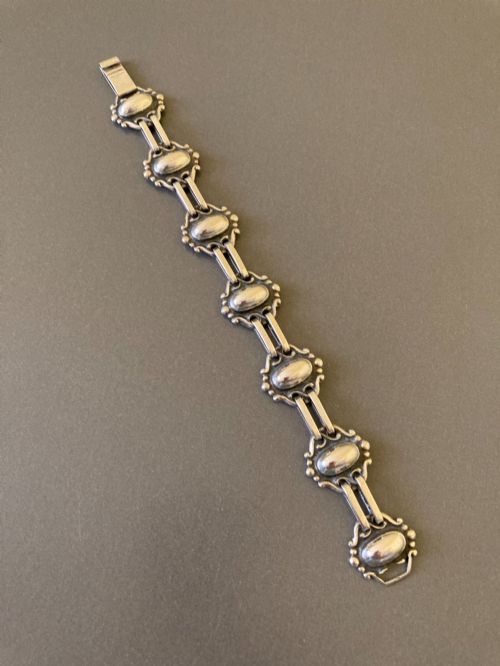
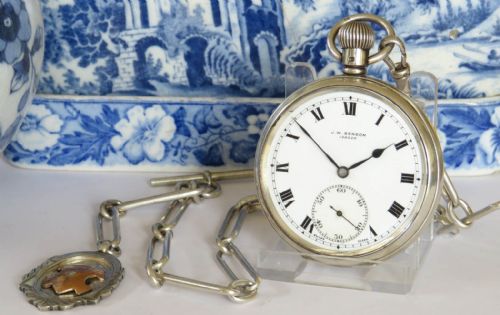
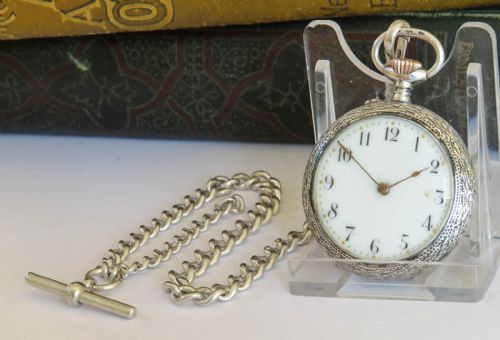
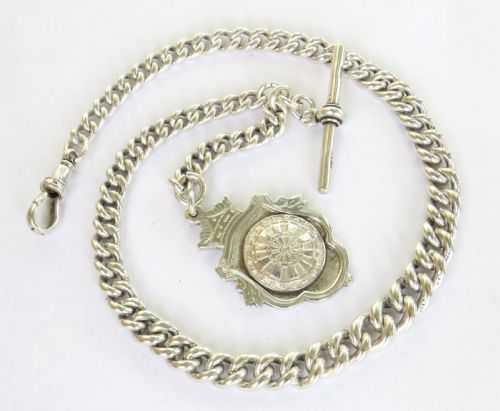
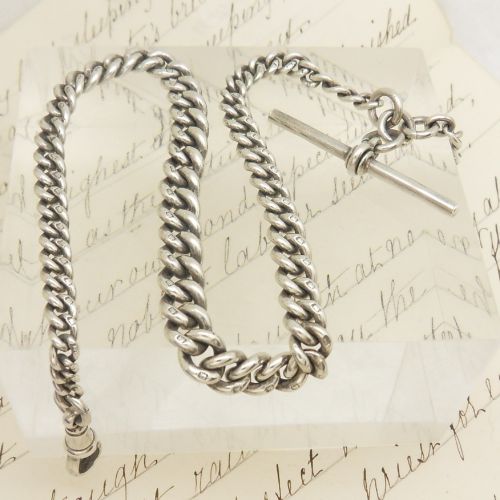
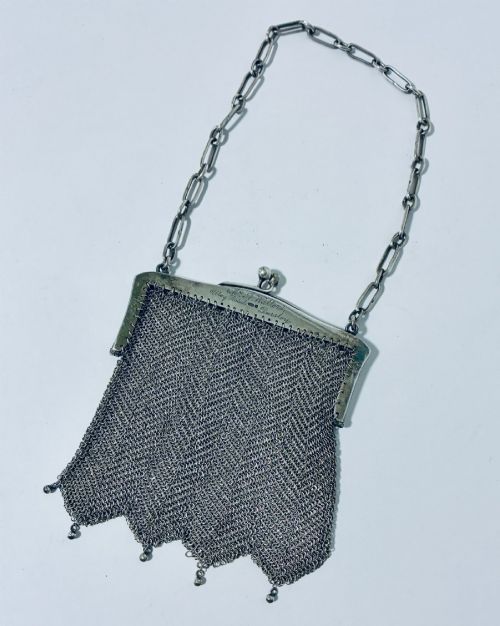
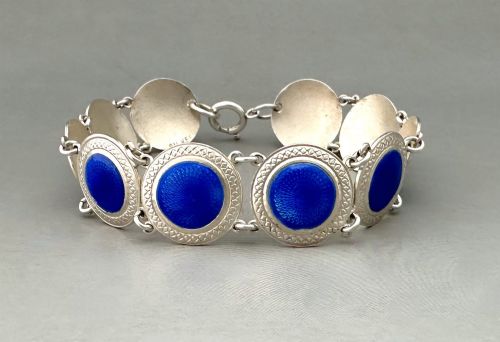
Vintage silver links encompass various interconnected metalwork forms, most notably heavy pocket watch albert chains, charm bracelets, geometric panel bracelets and fine mesh evening purses. You will frequently encounter heavy curb, belcher and trombone link watch chains alongside articulated Art Deco enamel pieces.
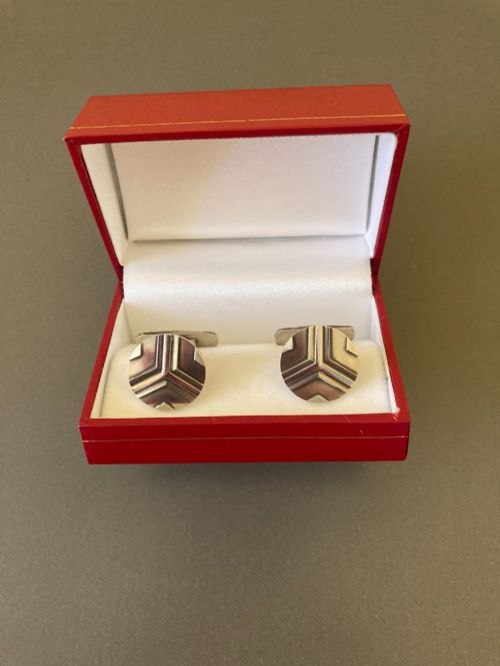
The selection ranges across several decades, capturing the ornate flourishes of Victorian design, the linear geometry of the 1920s and 1930s, and clean Scandinavian Modernist aesthetics. Makers and designers from Britain, Germany, Denmark and France contribute distinct regional styles to these interconnected wearable items.
Materials and construction
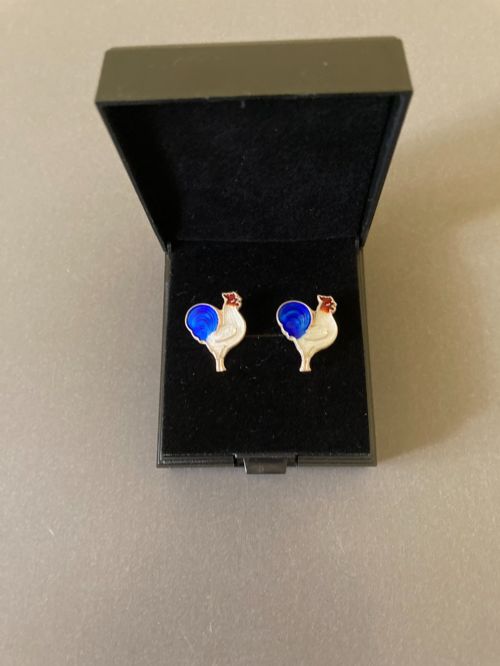
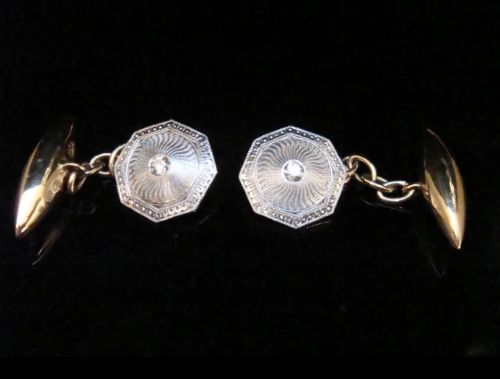
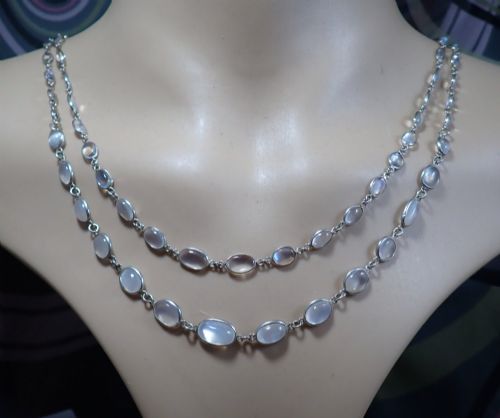
Makers utilised sterling silver and standard silver grades, frequently combining them with vitreous enamel, guilloche work, niello inlay or chrome to add colour and contrast. Gemstones such as diamonds, paste and moonstones appear set into specific link configurations, while glass and steel mesh form flexible purses.
Individual links are cast, stamped, drawn into wire or woven by hand, then joined with soldered rings, dog clips, T-bars or integrated box clasps. Enamelling requires fusing powdered glass to metal surfaces under high heat, whereas filigree construction involves twisting fine silver threads into intricate openwork patterns.
Vintage Silver Links Retail Price Guide 2026
Typical asking prices for vintage silver links among the pieces listed under this phrase on Sellingantiques today, from the lower quarter to the upper quarter. They describe what is for sale here now, not the wider market.
Materials appearing across the inventory range from sterling silver and chrome to vitreous enamel, diamonds, glass, paste and natural moonstones.
Factors of quality
Superior examples demonstrate crisp definition in stamped motifs and secure, tight tolerances at every hinge and connection point. Weight and gauge of the metal dictate durability, with heavier albert chains and solid silver brickwork panels retaining their structural integrity far better than lightweight alternatives.
The preservation of applied finishes such as translucent enamel, niello or original gilding distinguishes a masterwork from a compromised piece. Hallmarks stamped clearly into the metal confirm origin and silver purity, adding archival certainty to the physical build.
Georg Jensen·Jakob Bengel·Murrle Bennett·Robert Cawley·Tavannes
The Vintage Silver Links Glossary
- Albert chain
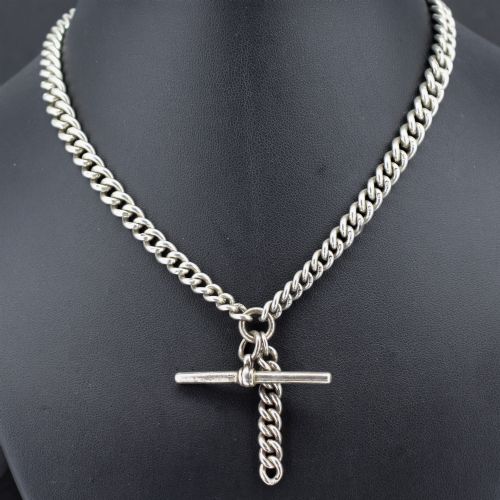
- A pocket watch chain designed to be secured across a waistcoat, often fitted with a T-bar and dog clip. These heavy linked chains frequently convert into modern necklaces.
- Guilloche enamel
- A decorative technique where an intricate geometric pattern is engine-turned into the silver base before transparent enamel is applied over the top. This creates a shimmering, light-reflective surface across individual links.
- Dog clip
- A spring-loaded swivel fastening commonly found on nineteenth and early twentieth-century watch chains and bracelets. It allows the wearer to securely attach fobs, pendants or secure the chain to a garment.
- Trombone link
- A watch chain link design characterised by alternating long rectangular links connected by smaller circular or oval rings. It borrows its visual rhythm from the proportions of musical instruments.
- Niello
- A black metallic alloy of sulphur, silver, copper and lead used as an inlay on engraved silver surfaces. The dark contrast highlights geometric and pictorial motifs against the polished silver background.
Vintage Silver Links: Frequently Asked Questions
How do I wear a vintage albert chain?
Pocket watch albert chains easily transition from traditional waistcoat accessories into statement necklaces. You can fasten the dog clip directly to one of the links or wear them doubled around the neck.
Heavier chains provide a substantial weight and pair well with simple necklines, showcasing the craftsmanship of the individual interlocking units.
How do I clean antique silver links?
Gentle washing with warm water, mild soap and a soft cloth preserves the original patina and protects fragile elements like enamel or inlaid niello. Avoid harsh chemical dips that strip away dark antiquing in recessed areas.
Store your silver pieces individually in soft pouches to prevent scratching between links during storage.
What is the difference between curb and belcher links?
Curb links feature uniform, flattened and twisted links that lie completely flat against the skin or clothing. They offer a sleek, streamlined appearance common in twentieth-century bracelets.
Belcher links consist of broader, symmetrical links that are slightly rounded on the exterior and flat on the inside, providing a heavier, tactile volume.
How can I date my silver link bracelet?
Hallmarks stamped onto the metal provide the most reliable dating evidence, showing assay office symbols, date letters and maker's marks. Stylistic cues such as geometric chrome work point to the 1930s, while dog clips and T-bars indicate Victorian or Edwardian origins.
Comparing construction techniques and clasp types helps narrow down the decade of manufacture when hallmarks are absent or rubbed.