



Vintage Silver Enamel Pendant
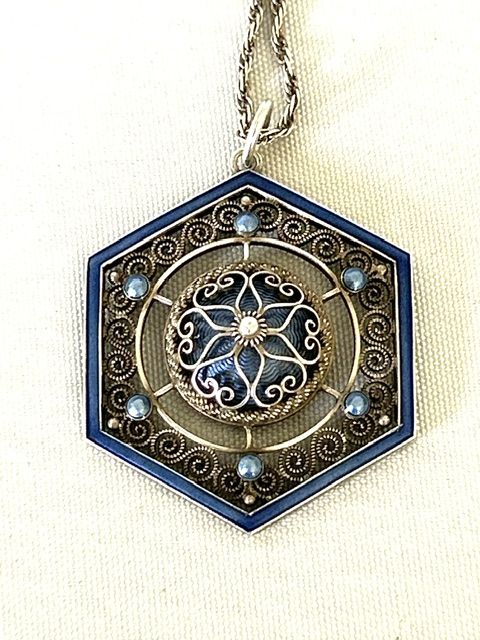
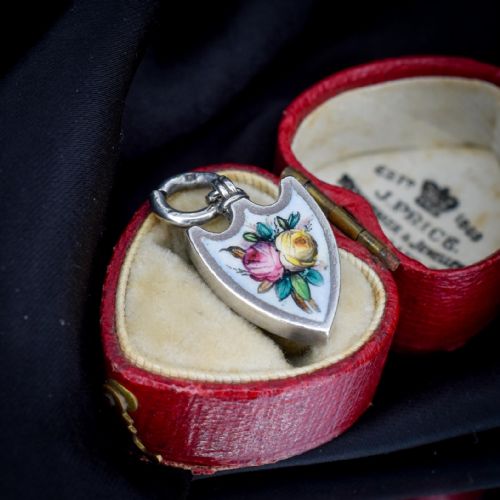
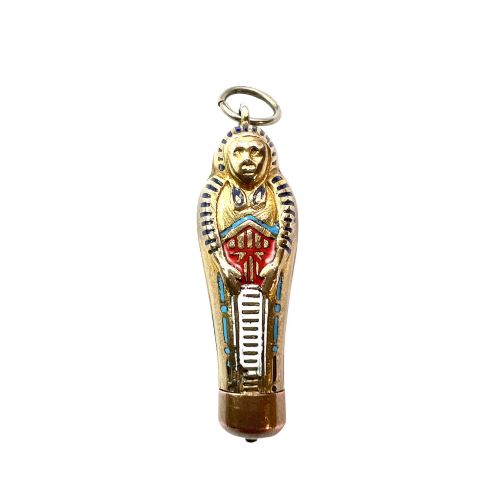
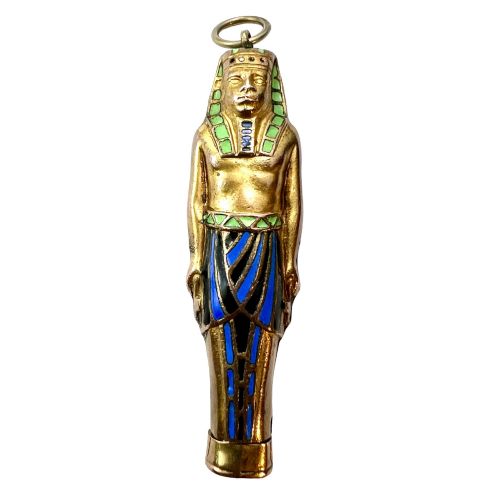
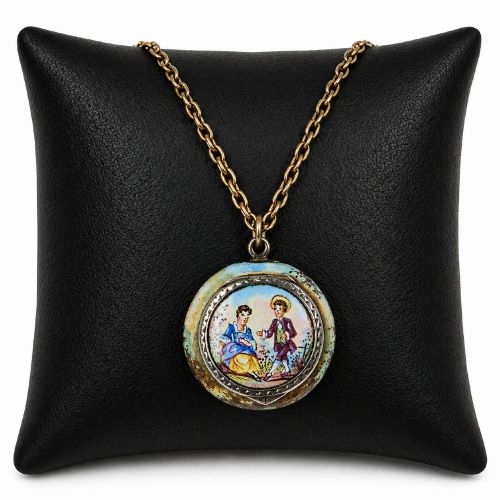
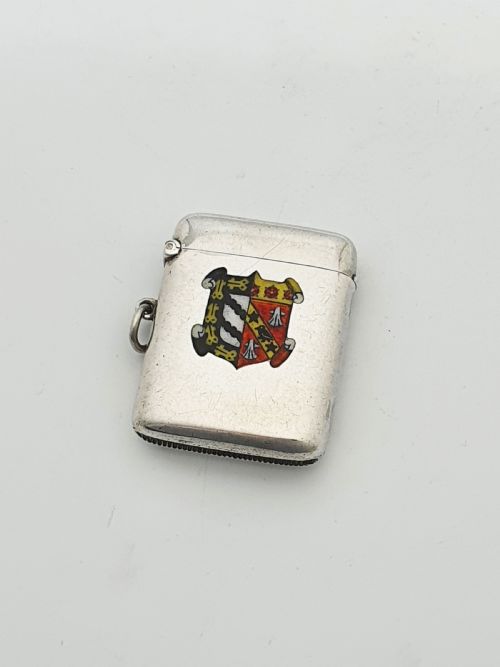
A vintage silver enamel pendant brings together coloured glass fused to metal and polished silver in wearable miniature forms spanning the Art Nouveau, Art Deco, and Arts and Crafts periods.
Vintage Silver Enamel Pendant
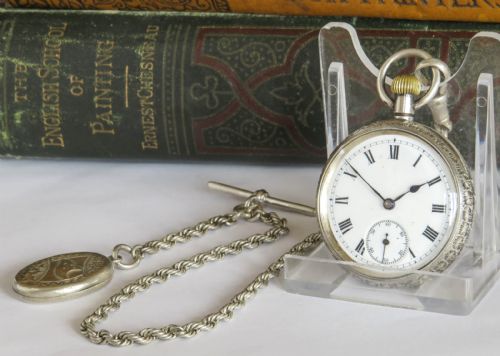
The most common examples on this page date from the 1900 period and reflect the flowing, organic lines of Art Nouveau and the hand-wrought ideals of the Arts and Crafts movement. Alongside standard pendants, the selection includes related items such as lockets, charms, and necklaces that utilise similar metalwork and enamelling techniques.
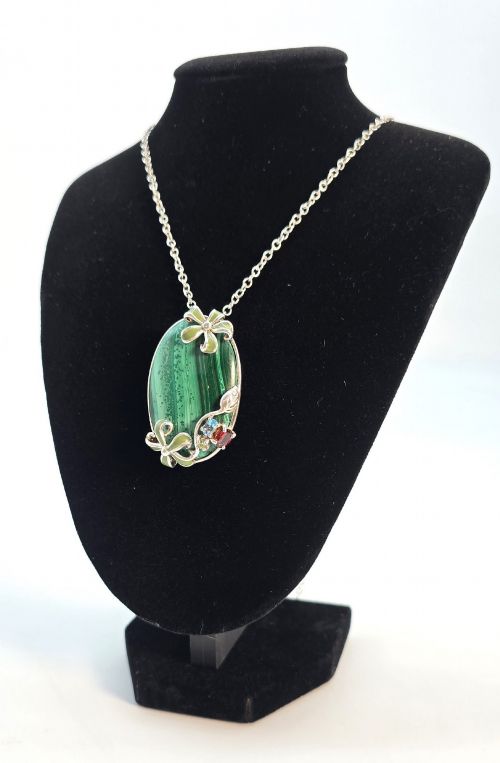
Origins span across Britain, Scandinavia, Austria-Hungary, and Russia, showing diverse regional approaches to metal smithing and colour application. Pieces often incorporate additional elements such as pearls, blister pearls, seed pearls, chalcedony, citrine, amethyst, chrysoprase, and malachite alongside the enamel.
How they were made
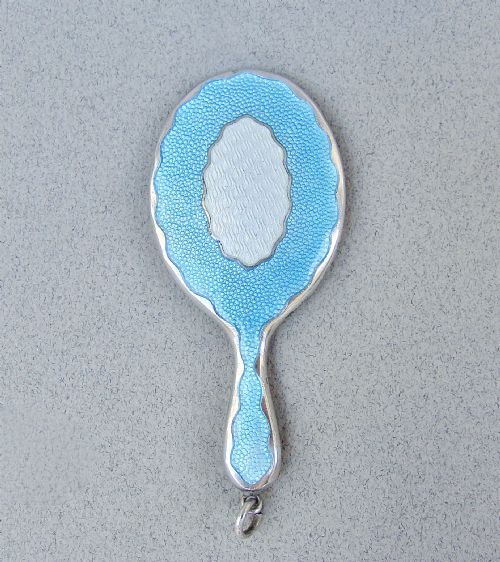
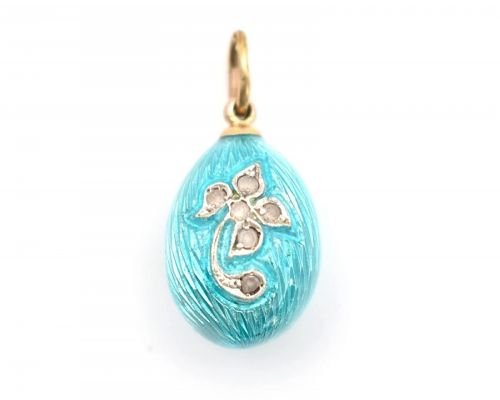
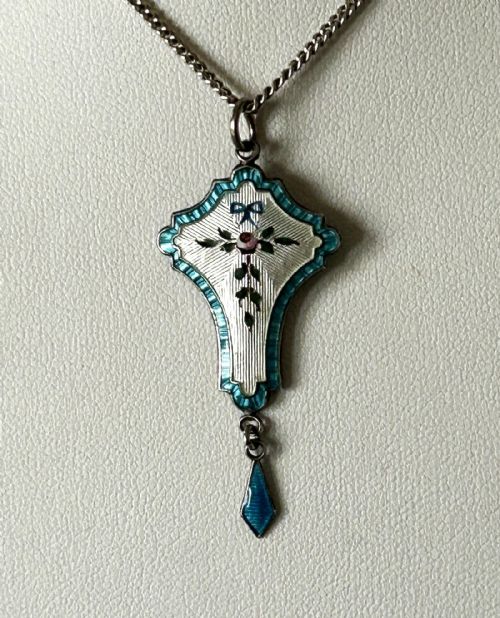
Silversmiths constructed the foundational mount from sterling silver or silver gilt, shaping wire and sheet metal to form the borders and settings for the decorative elements. Pendants frequently incorporate techniques like guilloche, where mechanical patterns are engraved beneath translucent enamel, and cloisonne, which uses wire partitions to contain different coloured pastes.
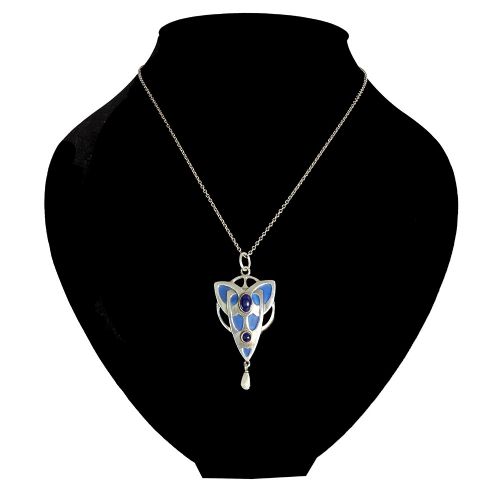
Plique-a-jour enamel appears in numerous examples, creating a translucent, stained-glass effect without a metal backing by firing the enamel within an open wire framework. Vitreous enamel is then applied as a powder and fused to the silver base through repeated high-temperature firings in a kiln.
Gemstones and pearls are hand-set into the silver mounts to complement the enamel colours, completing pieces that often bear maker marks or Birmingham silver assay office hallmarks.
Listings feature silver and enamel work from Scandinavian, British, Austro-Hungarian, and Russian workshops spanning the nineteenth century to the 1960s.
What varies in quality
Quality rests significantly on the complexity of the enamelling technique utilised, with open-backed plique-a-jour and intricate guilloche work requiring a higher degree of artisan skill than flat opaque enamel. The clarity, depth, and evenness of the vitreous glass coating distinguish finer examples from simpler production.
The choice and execution of accompanying materials also drive distinction, where natural pearls, amethyst, citrine, chrysoprase, or diamonds elevate a piece above standard glass or base metal combinations. Maker attribution plays a major role, as items bearing documented signatures from notable workshops or designers command greater attention from collectors.
The integrity of the silver mount and the preservation of the delicate enamel surface without firing cracks or later restorations determine the overall standard of survival.
Marius Hammer·Henry Williamson·Henry Matthews·Henry Perkins and Sons·Archibald Knox·Liberty and Co·Murrle Bennett·David-Andersen·Charles Horner·Meyle and Mayer·Heinrich Levinger·Eduard Loss·Martin Mayer·Ludwig Knupfer·Theodor Fahrner·Bjorn Sigurd Ostern·Hroar Prydz
The Vintage Silver Enamel Pendant Glossary
- Vitreous Enamel
- Glass powder melted and fused to metal at high temperatures. This substance provides the durable, glossy coloured surface seen across these pendants.
- Guilloche
- A decorative technique involving precise mechanical engraving on metal. Enamel applied over this pattern creates shimmering, wave-like reflective effects.
- Plique-a-jour
- An enamelling method resembling miniature stained glass. The transparent enamel has no backing metal, allowing light to pass directly through the colours.
- Cloisonne
- A style where thin metal wires are soldered to a metal base to create compartments. These cells are filled with coloured enamel paste prior to firing.
- Silver Gilt
- Silver that has been coated with a thin layer of gold. This treatment provides a warm golden tone while retaining a silver core.
Vintage Silver Enamel Pendant: Frequently Asked Questions
How do I identify an Art Nouveau pendant?
Art Nouveau pendants display asymmetrical, flowing lines inspired by natural forms like flowers, insects, and vines. They frequently incorporate plique-a-jour enamel and cabochon gemstones.
These pieces typically date from around 1900 and often feature characteristic whip-lash curves and delicate wirework.
What is guilloche enamel?
Guilloche is an enamelling method where the silver base is mechanically engraved with a geometric or radiating pattern before translucent enamel is applied.
The underlying engraving shows through the glass, producing a shimmering texture that shifts with the light.
Are these pendants marked with hallmarks?
Many British pieces carry hallmarks indicating the silver standard, assay office city such as Birmingham, and date letter. Continental and Scandinavian items often feature maker marks and silver purity stamps instead of British assay marks.
Unmarked pieces rely on style, construction methods, and material testing for attribution.
How should I care for enamel jewellery?
Vitreous enamel is essentially glass and requires gentle handling to prevent chipping or scratching against hard surfaces. Store pendants individually in soft pouches away from other metal items.
Clean them using a soft cloth and warm soapy water, avoiding harsh chemical dips or ultrasonic cleaners.