


Vintage Silver Clock Case
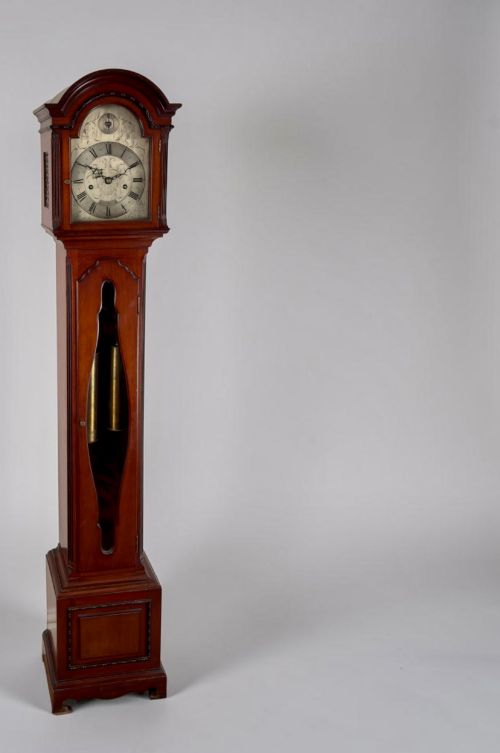
A vintage silver clock case houses a portable timekeeper in solid metal or silver-mounted wood, offering a refined desktop or travel accessory.
Vintage Silver Clock Case
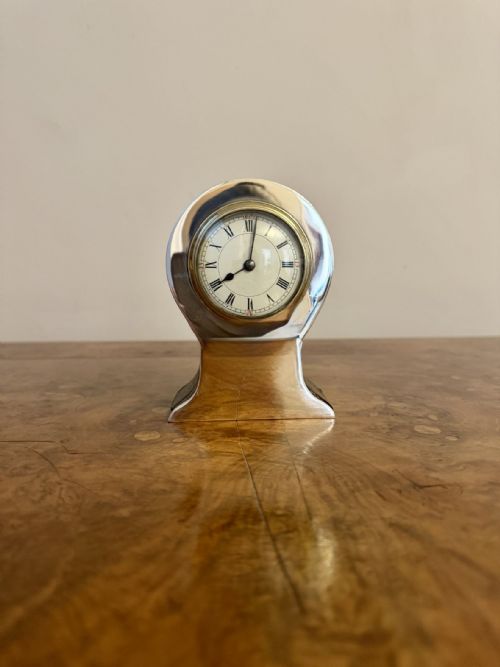
A vintage silver clock case protects and displays a portable mechanism, ranging from small pocket travel pieces to boudoir timepieces and larger desk accessories. When searching for a vintage silver clock case, collectors encounter examples spanning the Edwardian era, the 1920s, and the 1930s Art Deco period.
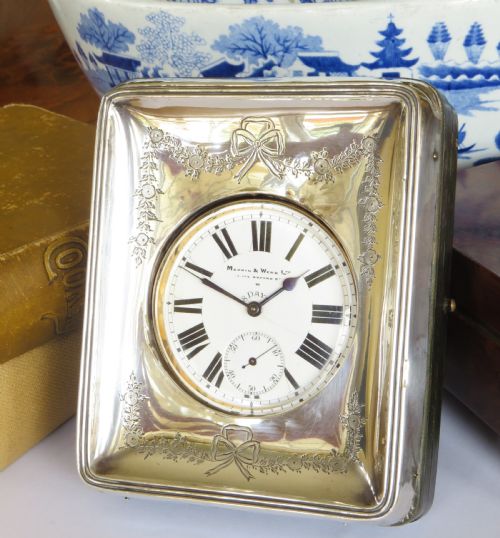
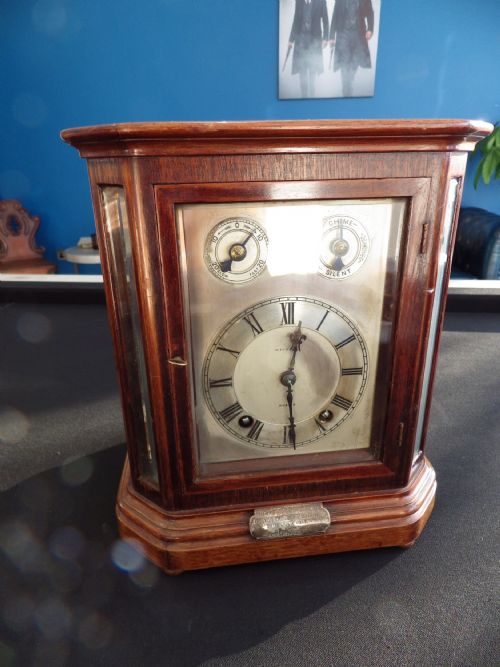
The assortment includes hallmarked silver folding designs intended for travel alongside solid silver-cased easel desk clocks and chased boudoir models. These items often integrate glass viewing panels, silvered dials, and wooden or leather supports.
Origins stretch from early twentieth-century British workshops to mid-century Swiss designs, reflecting shifts in taste from ornate floral enamelling to geometric modernist lines.
Evaluating craftsmanship and condition
Quality rests upon the crispness of the silver hallmarks, the depth of hand-chased decorative details, and the structural integrity of hinges and easel backs. Superior examples retain unblemished glass panels and securely fitted internal movements without distortion to the outer metal shell.
The weight of the silver casing and the precision of the joinery distinguish standard utilitarian travel items from luxury retailer pieces produced by notable makers.
Listings span the eighteenth century through the 1950s, incorporating brass, mahogany, glass, and sterling silver across diverse formats.
Mappin and Webb·Gillett and Johnston·Winterhalder and Hofmeier·Jaeger Le Coultre·Harrods of London
The Vintage Silver Clock Case Glossary
- Hallmark
- An official stamp applied by an assay office to indicate the purity of precious metal, confirming silver content.
- Boudoir clock
- A small, decorative timekeeper designed for a private bedroom or dressing room, often housed in an ornate silver case.
- Easel clock
- A timepiece featuring a hinged rear strut that allows the case to stand upright on a desk or table surface.
- Silvered dial
- A metal clock face treated with a silver compound to produce a matte, reflective finish behind the numerals.
- Chased
- Decorated by hammering or pressing patterns into the surface of the metal rather than engraving or cutting away material.
Vintage Silver Clock Case: Frequently Asked Questions
How do I date a silver clock case?
Dating relies primarily on official silver hallmarks stamped onto the metal frame, which indicate the assay office and exact year of testing. Stylistic cues such as Edwardian floral chasing or 1930s Art Deco geometric forms also narrow down the period of manufacture.
Makers' marks provide further context, linking the piece to specific workshops and retailers active during the nineteenth and twentieth centuries.
Were these clock cases made for travel?
Many silver-cased timepieces were specifically engineered for mobility, featuring folding outer covers, secure travel clasps, and compact dimensions to protect the glass and movement in transit.
Other heavier desk models and easel clocks remained stationary, designed strictly for domestic display on mantelpieces or library tables.
What is a folding travel clock?
A folding travel clock incorporates a hinged silver case that closes like a book to completely enclose and shield the dial and glass during journeys.
Opening the case reveals the clock face, often supported by an integrated prop or easel stand attached to the rear.
How do I care for a silver clock case?
Maintenance requires gentle cleaning with a soft microfibre cloth to remove dust and tarnish from the silver surfaces without disturbing the movement or scratching the glass panels.
Aggressive metal polishes should be kept away from delicate hinges, dials, and any inscribed presentation text to preserve the original finish.