



Vintage Silver Butterfly Pin
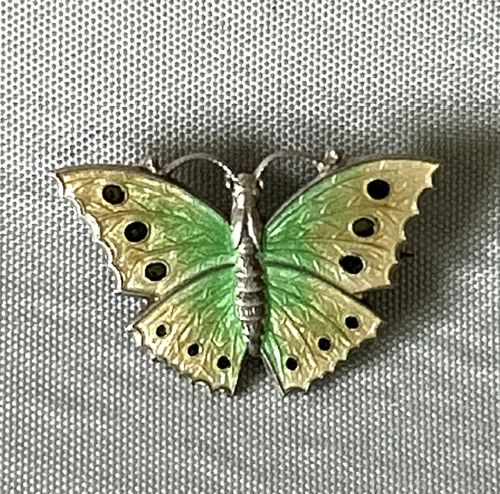
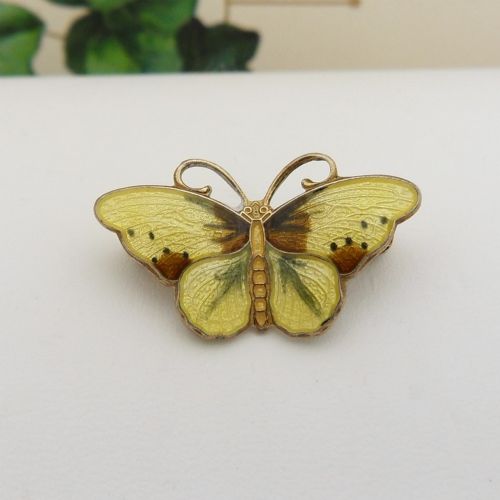
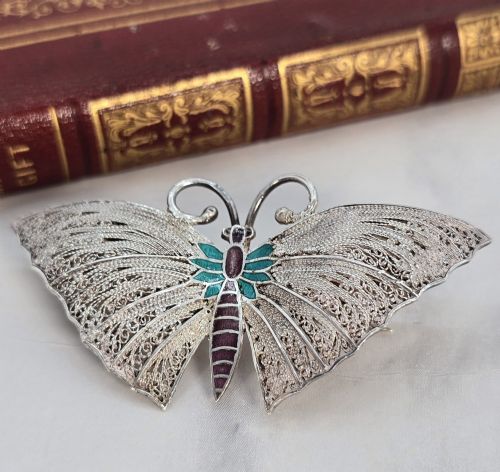
These vintage silver butterfly pin examples bring together delicate metalwork and vibrant colour, making them a charming addition to any lapel.
Vintage Silver Butterfly Pin
A vintage silver butterfly pin is a decorative brooch designed in the form of a butterfly, using sterling silver or silver gilt as the primary metal base. These pieces span several decades, drawing on Victorian traditions as well as Art Deco and Mid-Century Scandinavian aesthetics.
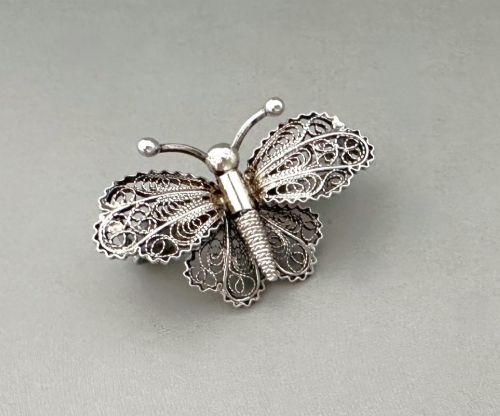
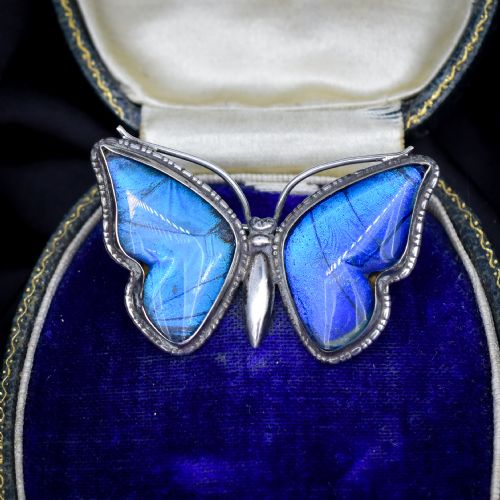
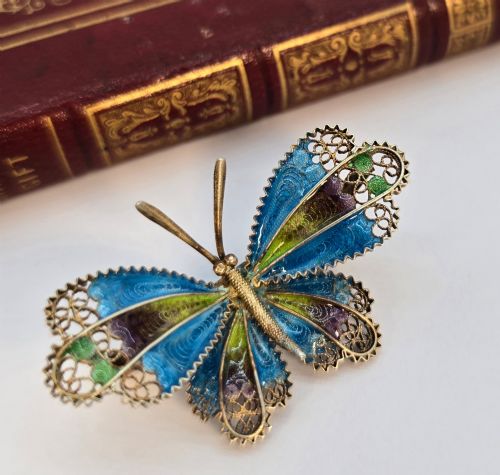
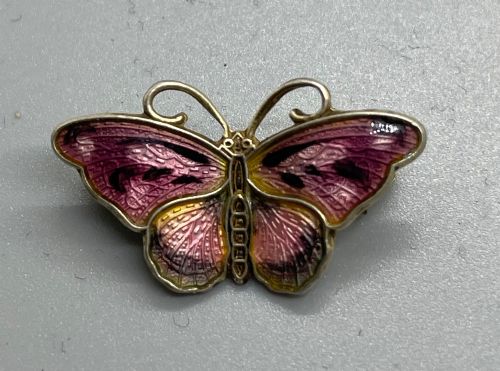
The most common versions encountered on this page date from around 1930 and incorporate guilloche enamel or butterfly wing panels. Such pieces range from tiny Norwegian designs to larger Chinese export filigree creations.
Collectors encounter various styles including Art Nouveau curves and precise geometric Art Deco lines. Brooches and pins appear interchangeably in the listings, frequently uniting silver wirework with colourful wings or vitreous enamel.
Judging quality and execution
Quality in a vintage silver butterfly pin rests upon the crispness of the filigree work and the smoothness of the enamel surface. Superior pieces display even colour distribution without pitting or cracking in the vitreous layers.
The precision of the metal soldering determines how well the delicate antennae and wing veins survive decades of wear. Maker attribution, such as work originating from established Norwegian workshops, also influences the standing of an item.
Balance and proportion set finer examples apart from simpler souvenirs, ensuring the insect appears natural yet decorative rather than stiff or overly heavy.
Several of these tiny silver insects have travelled further across the globe in modern shipping boxes than their makers ever managed.
Hroar Prydz·David Andersen
The Vintage Silver Butterfly Pin Glossary
- Silver gilt
- Silver that has been coated with a thin layer of gold. This technique gives the metal a warm golden appearance while retaining a silver core.
- Guilloche
- A decorative technique where a precise repeating pattern is mechanically engraved into a metal surface. Translucent enamel is then applied over the top to let the pattern show through.
- Filigree
- Delicate ornamental work made from fine silver wire soldered together in open scroll or lace-like patterns. It is commonly used to form the lightweight framework of butterfly wings.
- Butterfly wing
- A material technique popular in the early twentieth century where real tropical butterfly wings are sealed beneath bevelled glass. This creates a vibrant iridescent effect that shifts in the light.
Vintage Silver Butterfly Pin: Frequently Asked Questions
How do I wear a vintage silver butterfly pin?
Pin the brooch securely to the lapel of a jacket, the collar of a blouse, or even onto a woollen scarf. The sturdy pin mechanism at the back supports the weight of the silver and enamel.
Because these pieces are delicate, avoid fastening them through thick, coarse fabrics that might bend the pin stem or strain the filigree frame.
Are these pins made of solid silver?
Most examples use sterling silver or silver gilt as the main structural metal. Some pieces are marked accordingly to indicate the silver standard used by the workshop.
Silver gilt versions feature a gold wash over the silver base, which protects against tarnishing and provides a rich golden hue.
What is butterfly wing jewellery?
Butterfly wing jewellery utilises the natural iridescent scales of tropical butterflies preserved beneath glass. This technique produces shimmering blue and pink tones that catch the light.
Craftsmen often combined these wing panels with sterling silver mounts during the Art Deco period to create realistic insect forms.
How can I tell the period of a brooch?
Stylistic details provide the main clues for dating a piece, such as the geometric lines of Art Deco items or the clean minimalist aesthetic of Mid-Century Scandinavian design. Victorian examples often rely on heavier metalwork and naturalistic forms without enamel.
Markings on the reverse, where present, can also point towards specific decades of production and regional workshop practices.